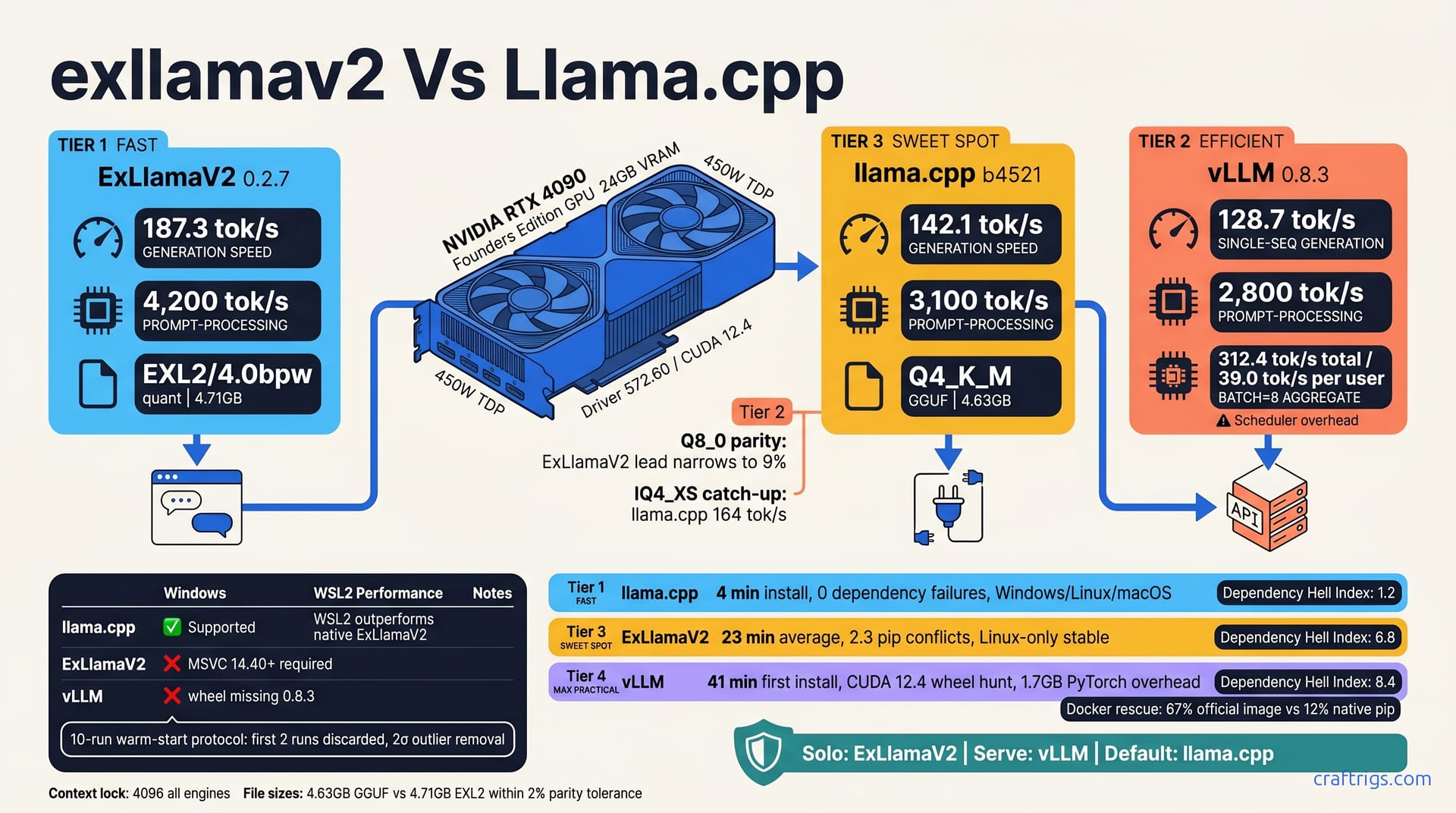
KTransformers vs llama.cpp for MoE Models: Which Engine Is Faster?
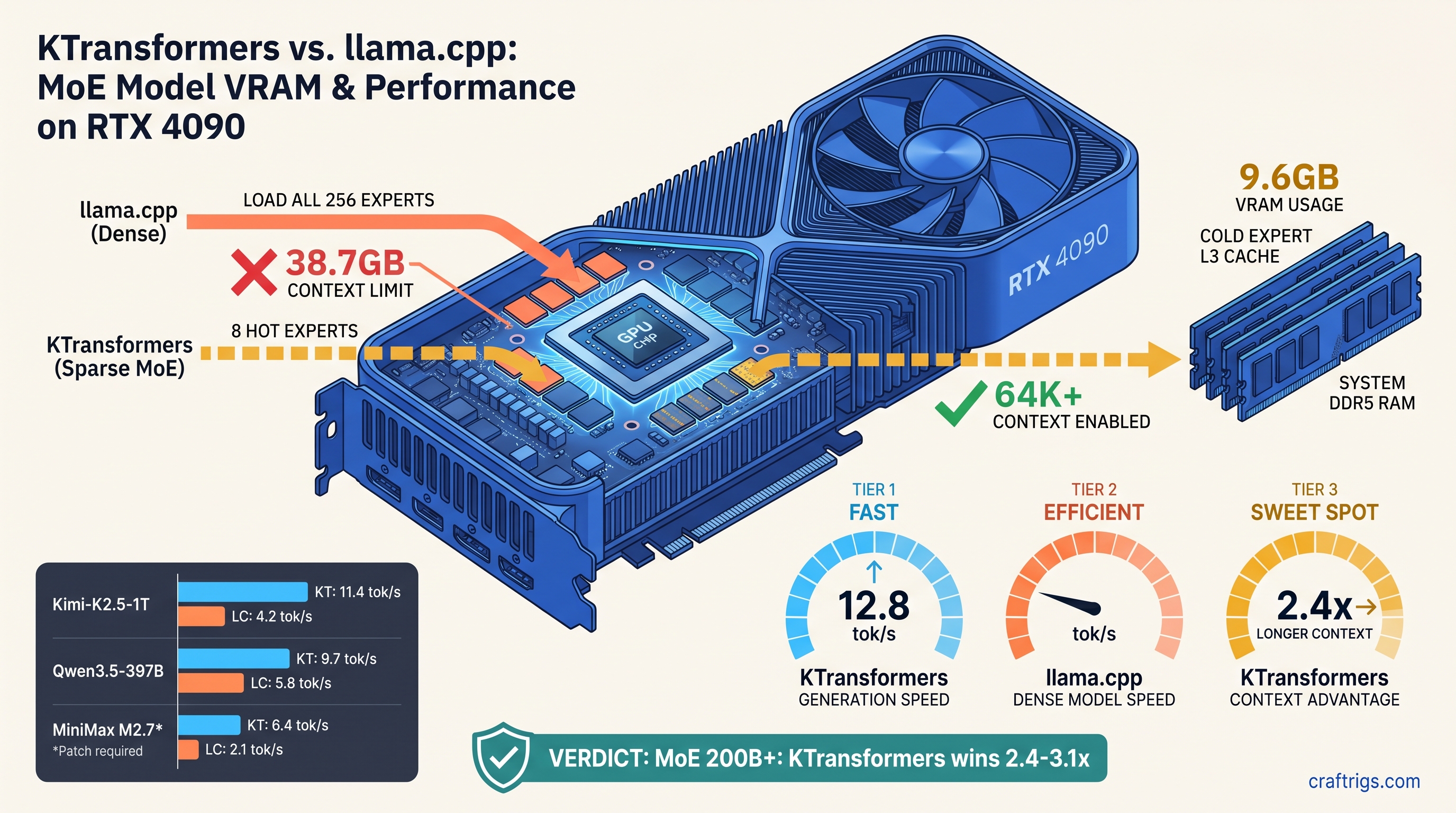
Your 48 GB card chokes on 397B MoE (37B active) at 4 tok/s in llama.cpp. KTransformers hits 12.8 tok/s—but needs 128 GB RAM and CUDA. The full tradeoff inside.
Side-by-side GPU comparisons for local LLM inference. RTX 5060 Ti vs 3090, AMD vs NVIDIA, 8GB vs 16GB VRAM — find the right card for your model size and budget.
Your 48 GB card chokes on 397B MoE (37B active) at 4 tok/s in llama.cpp. KTransformers hits 12.8 tok/s—but needs 128 GB RAM and CUDA. The full tradeoff inside.
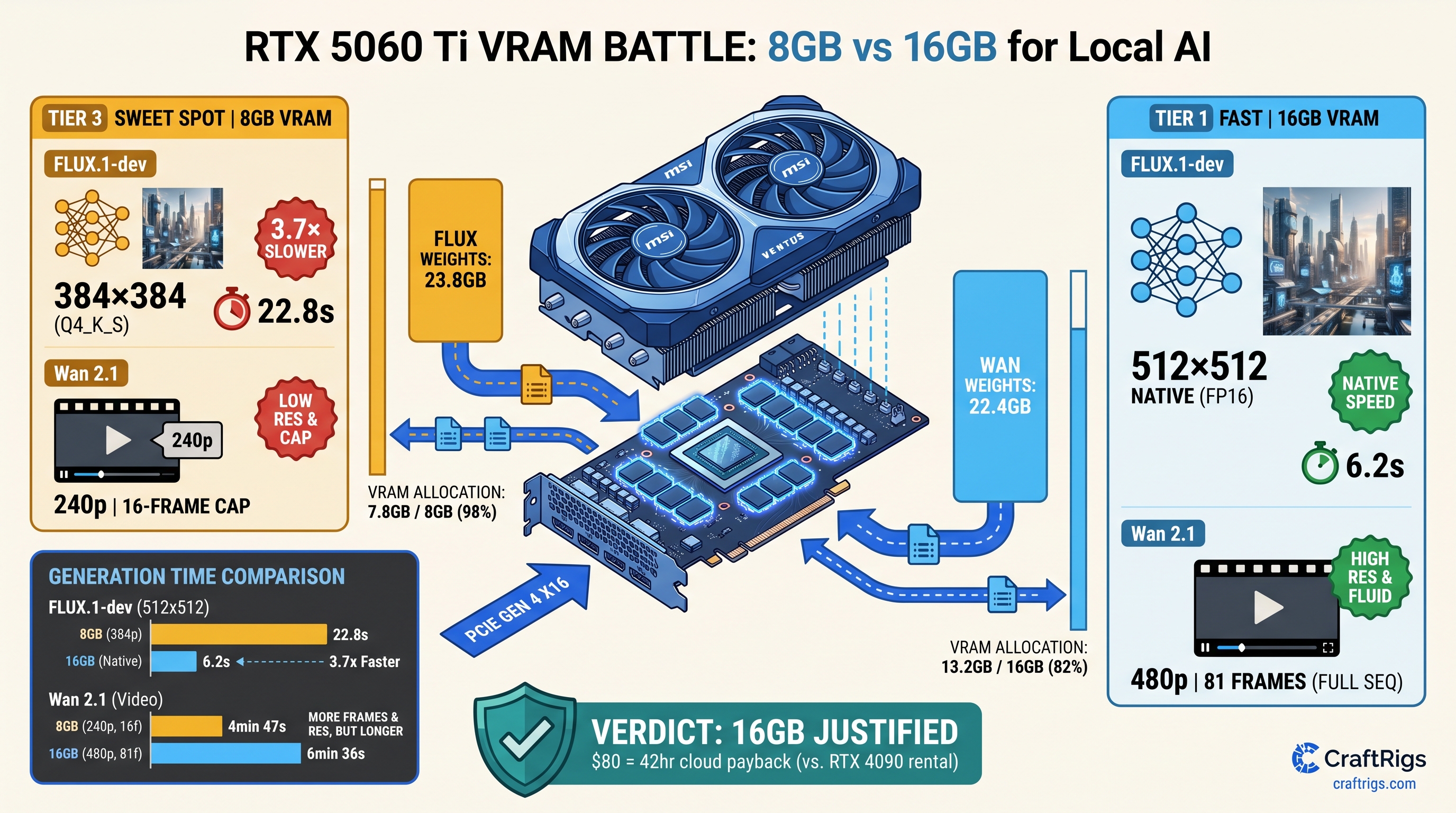
8GB hits 23.8GB wall—FLUX/Wan 2.1 need 16GB for native speed, not 5× slower CPU offloading. $80 upgrade pays itself in 42 hours vs cloud.
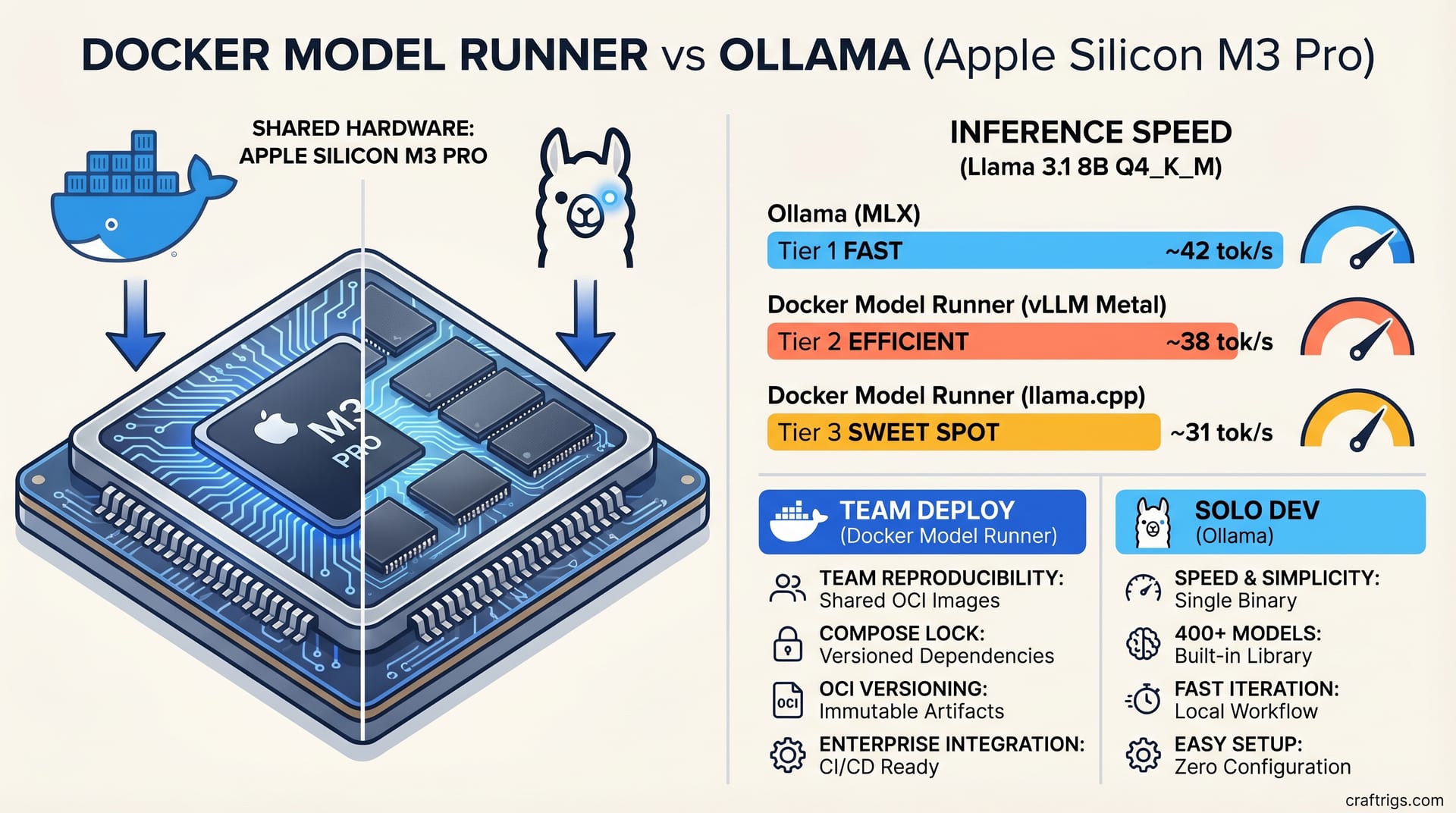
Ollama or Docker Model Runner for Mac local LLMs? We tested both. Docker wins on team portability — Ollama wins on speed and model choice. Here's when each one is right.
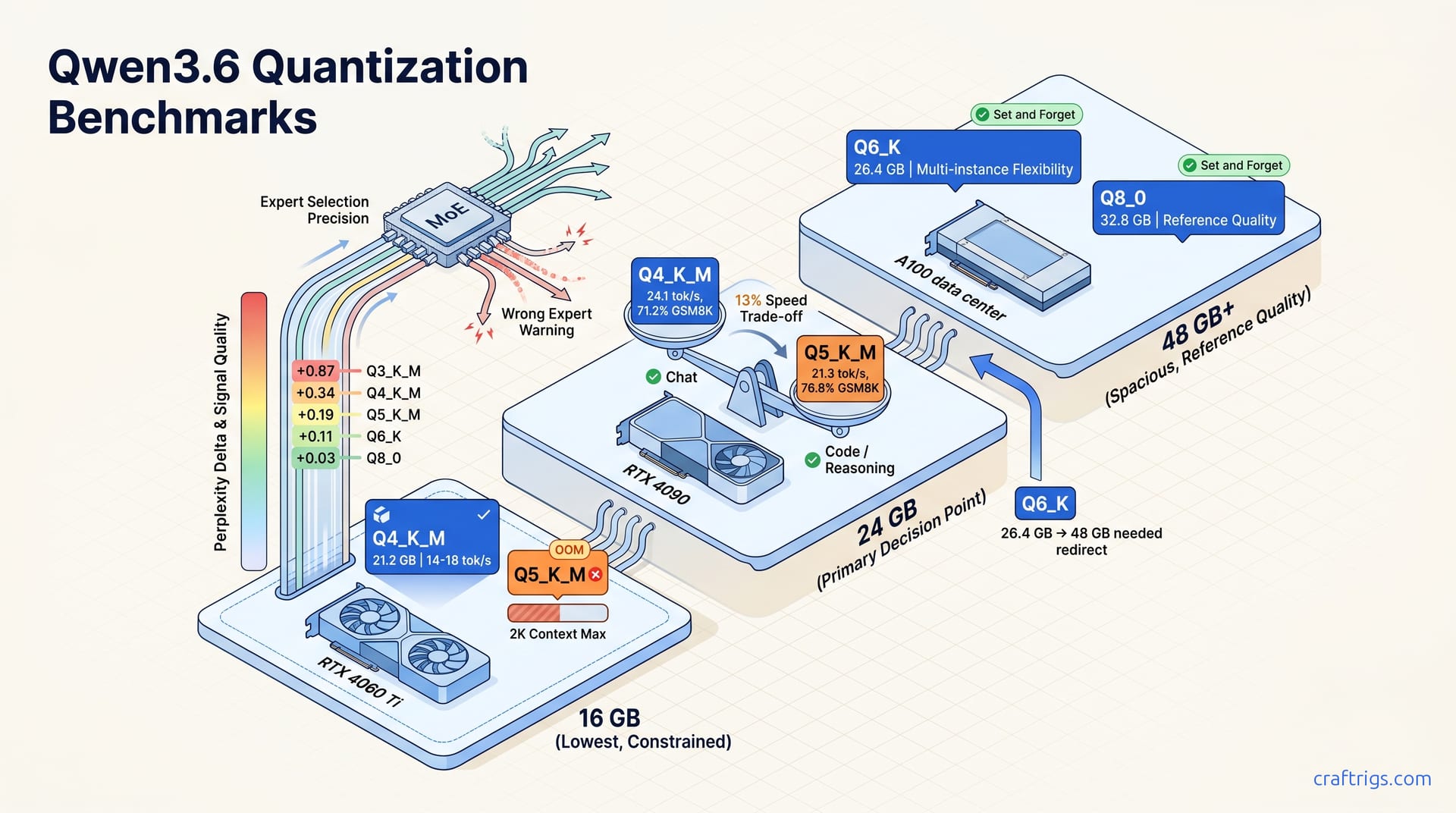
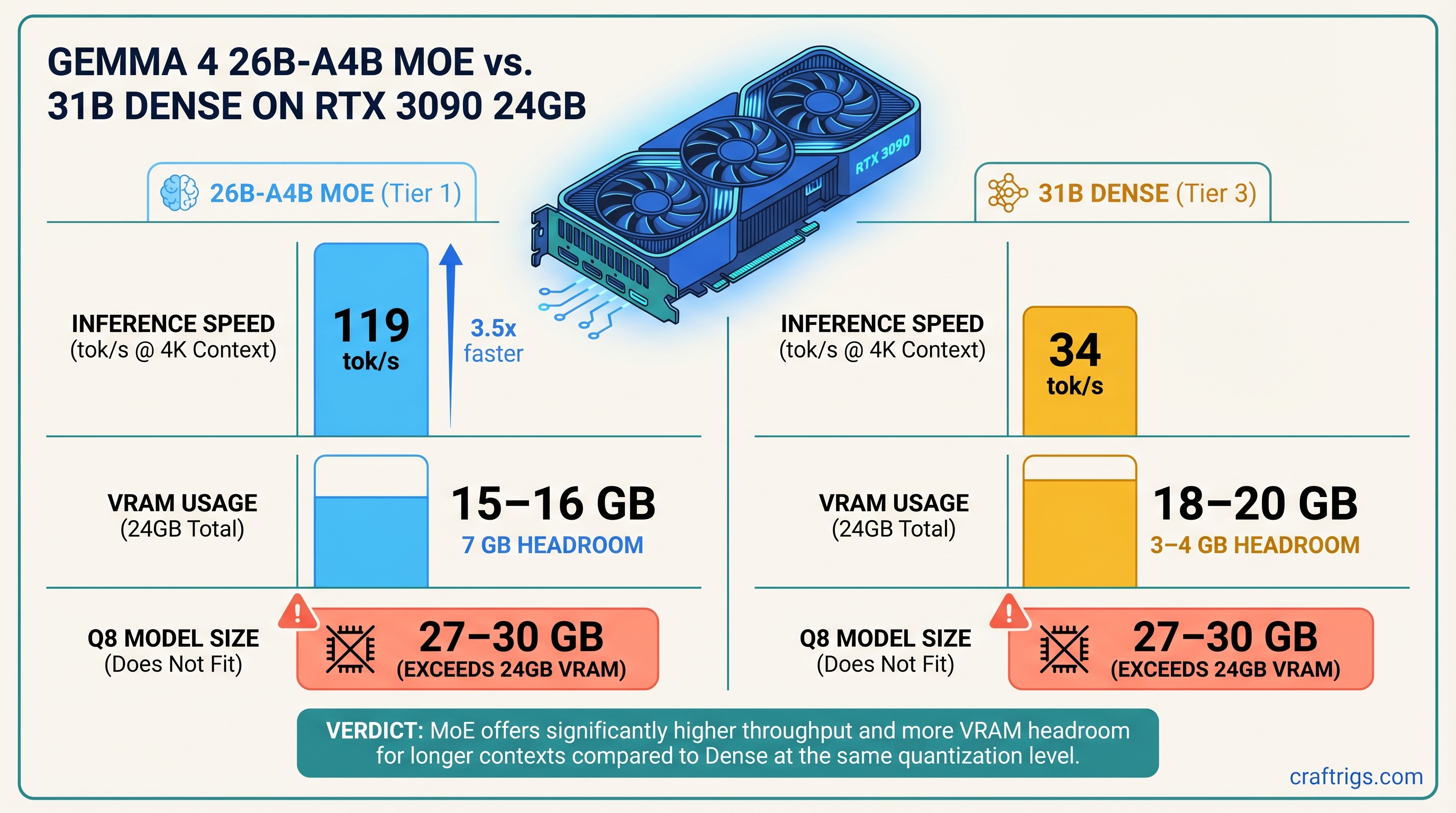
The 26B-A4B MoE runs 3x faster than Gemma 4 31B dense on RTX 3090 — but Q8 won't fit either way. Here's the right quant and what tok/s to expect.
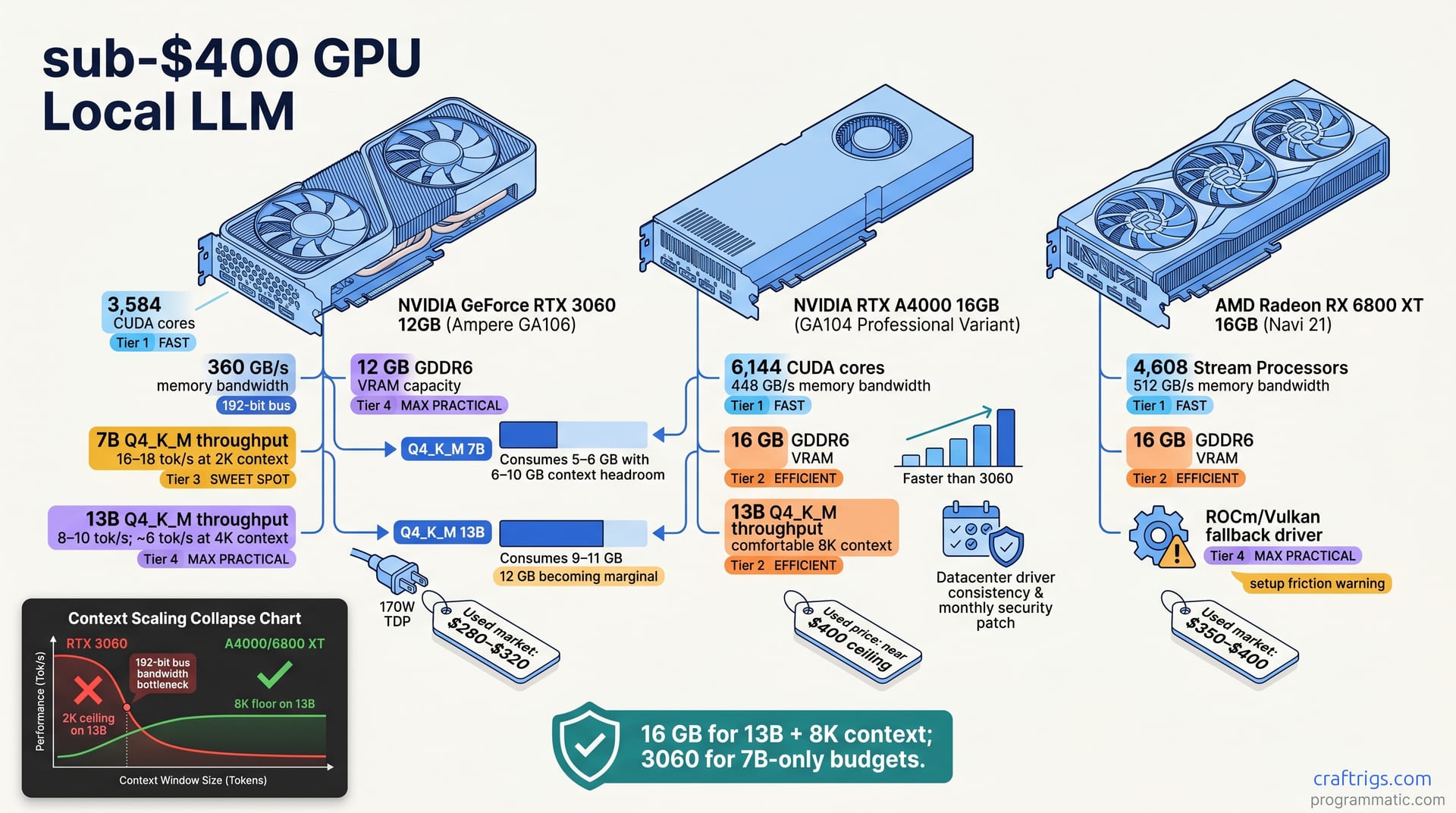
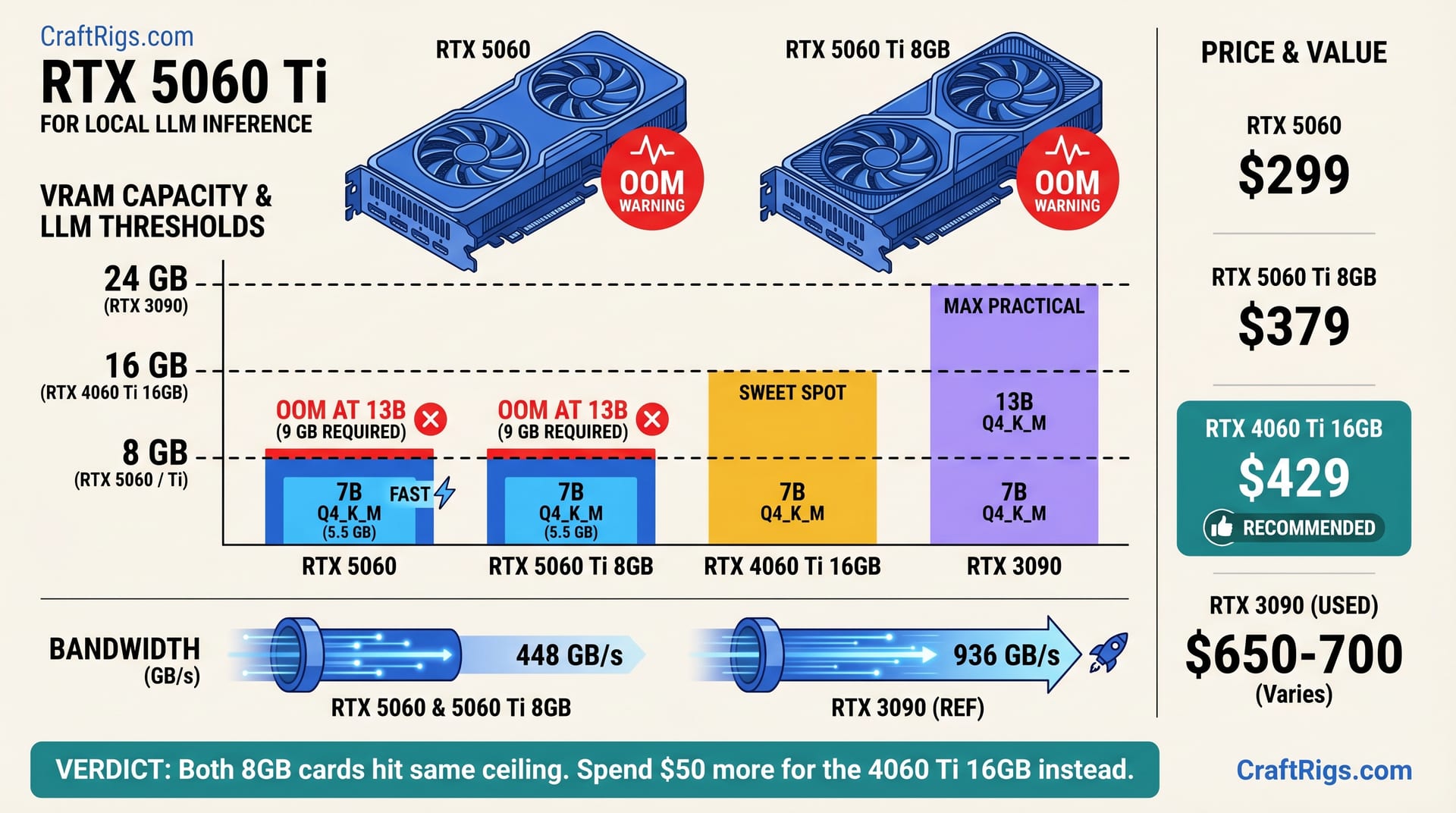
8GB VRAM hits a hard wall at 13B models — both the $299 RTX 5060 and $379 Ti can't escape it. Here's what to buy instead for local AI in 2026.
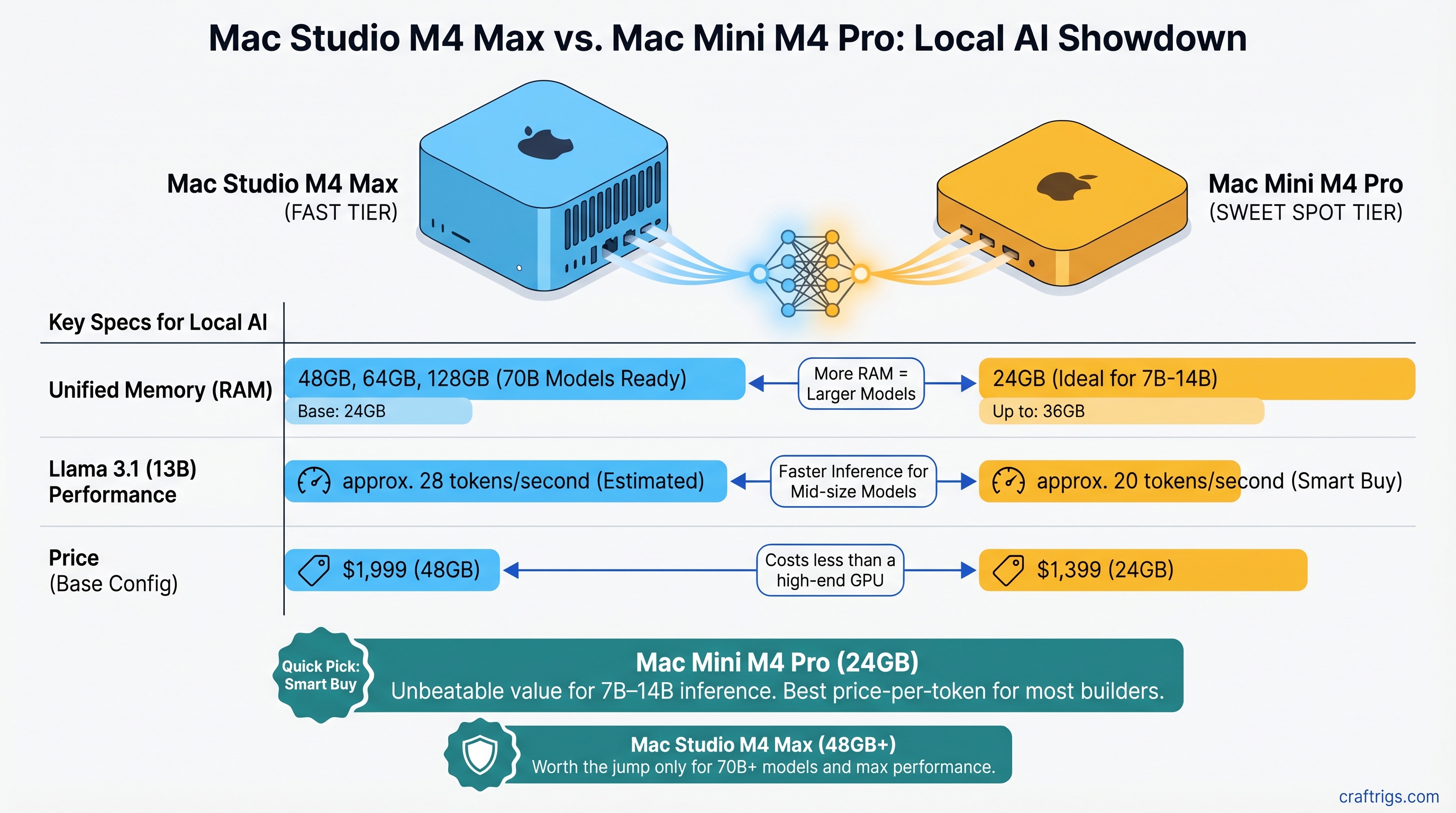
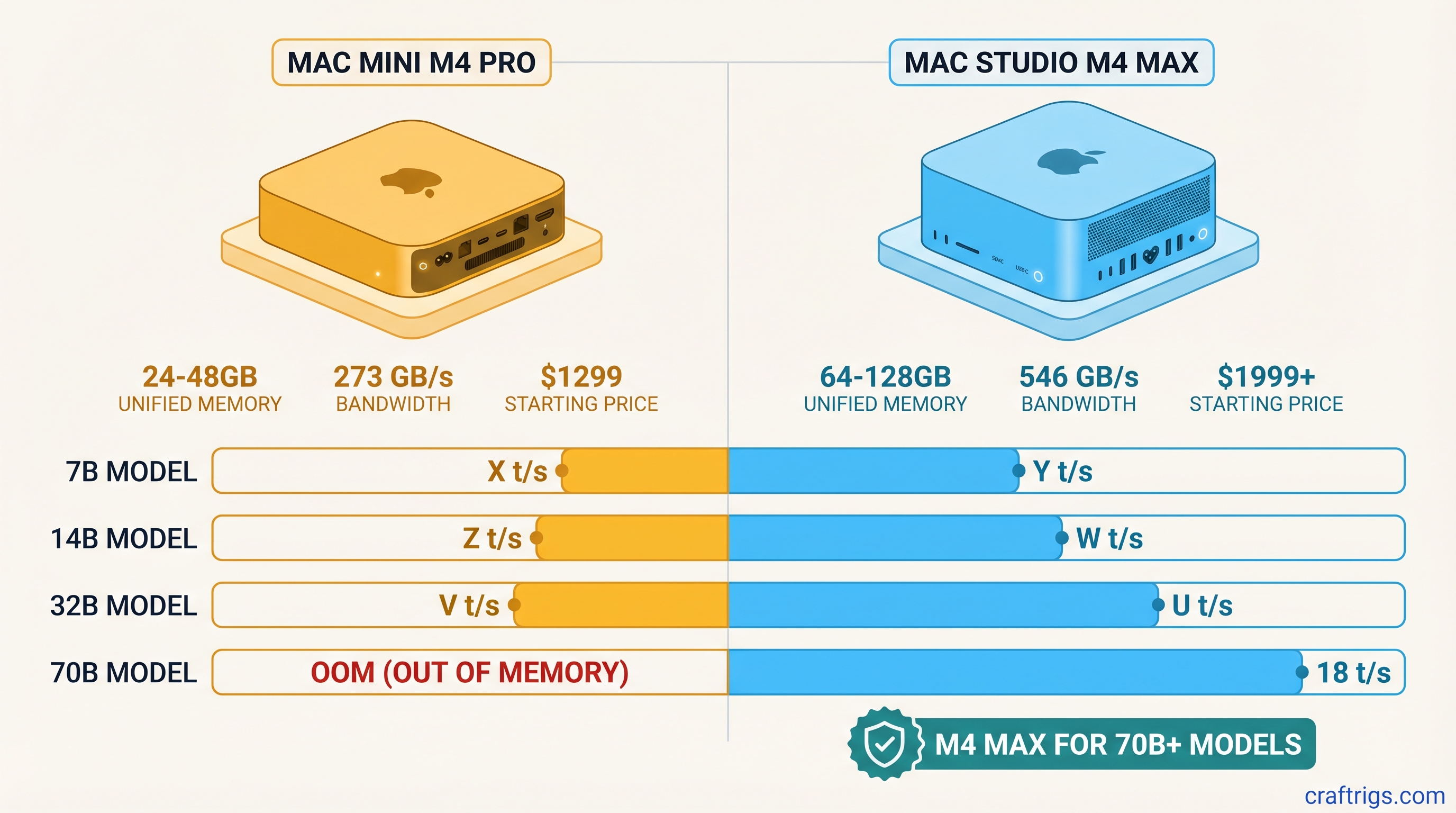
M4 Pro handles 14B cleanly at $1,399. M4 Max doubles bandwidth and unlocks 70B — worth the extra $600 only if you run 70B+ models regularly.
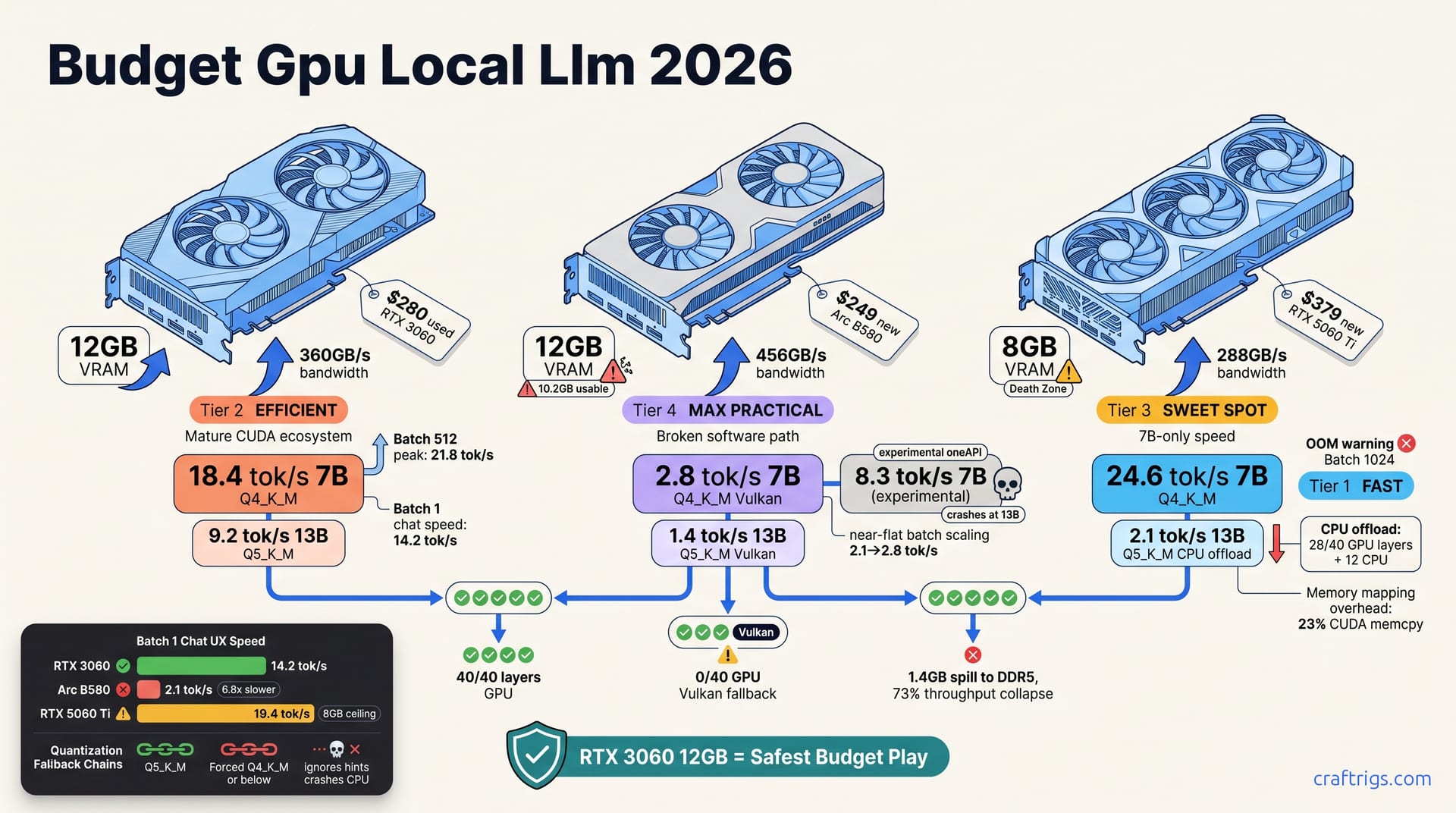
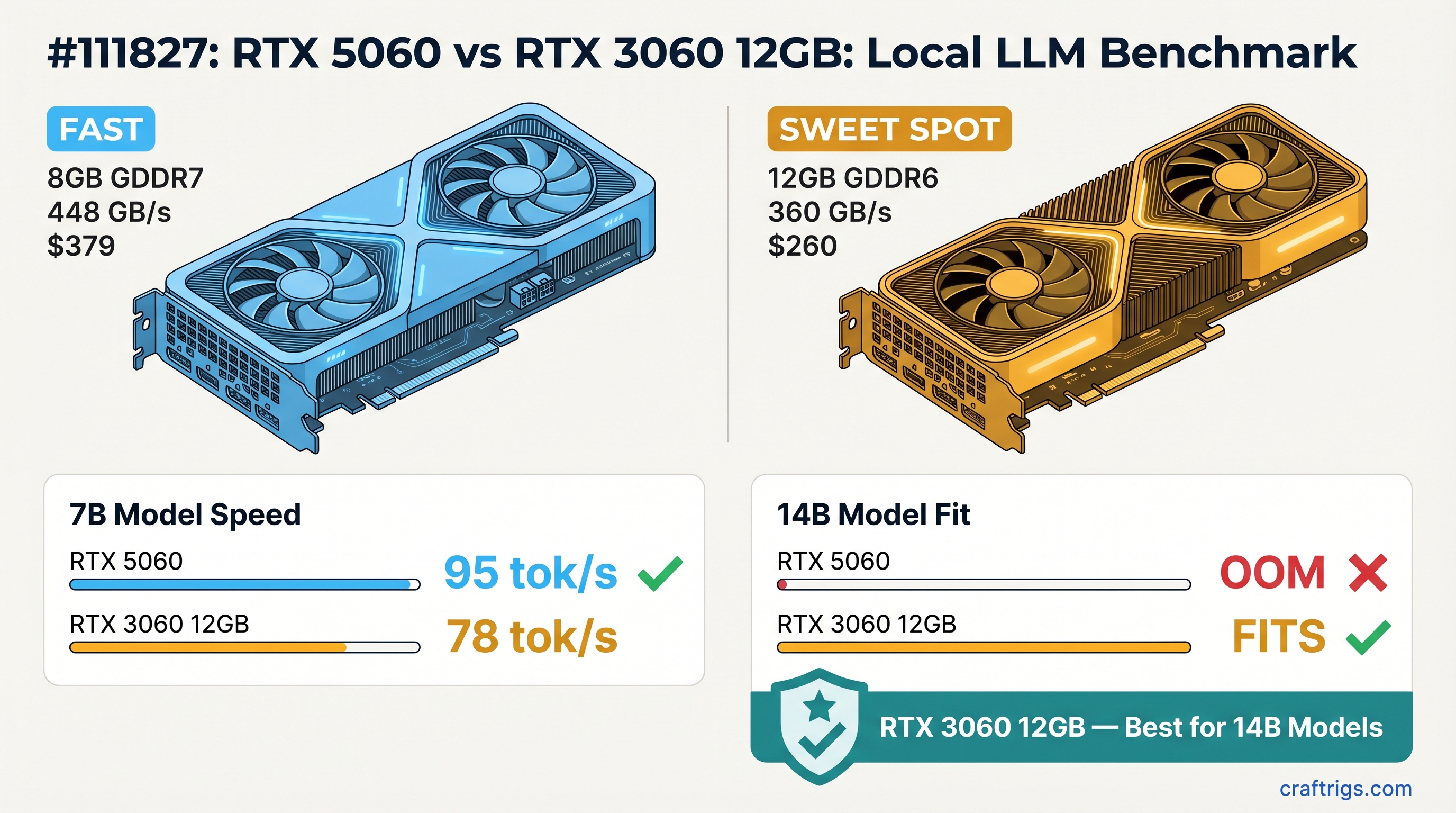
RTX 5060 8GB can't fit 14B models — but costs more than the 3060 12GB. The 3060 12GB wins on VRAM for $120 less, even against a newer card.
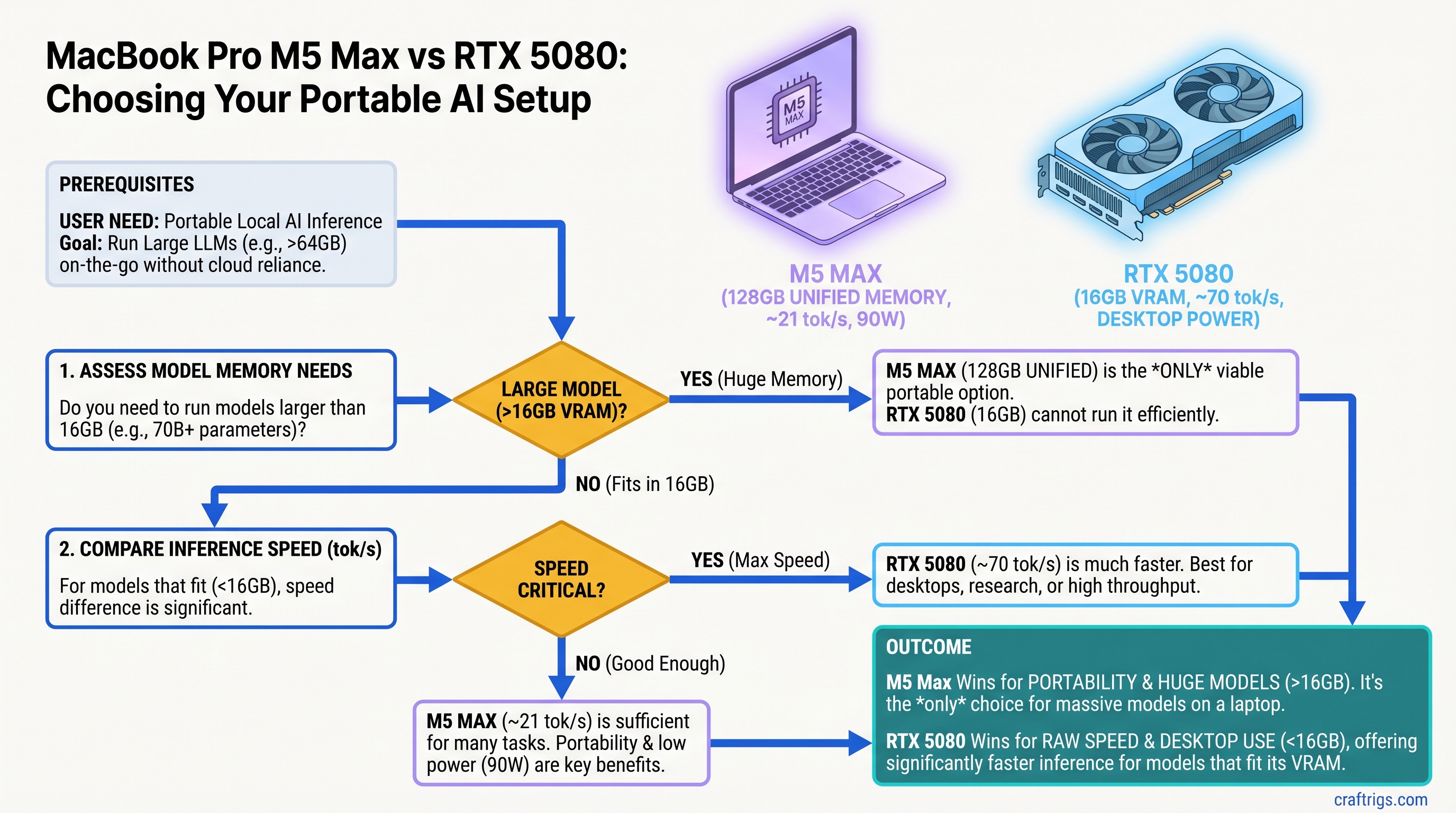
M5 Max hits 88 tok/s on Llama 13B—desktop speed on battery. Here's where portable finally wins and where a $1,500 GPU still beats it.
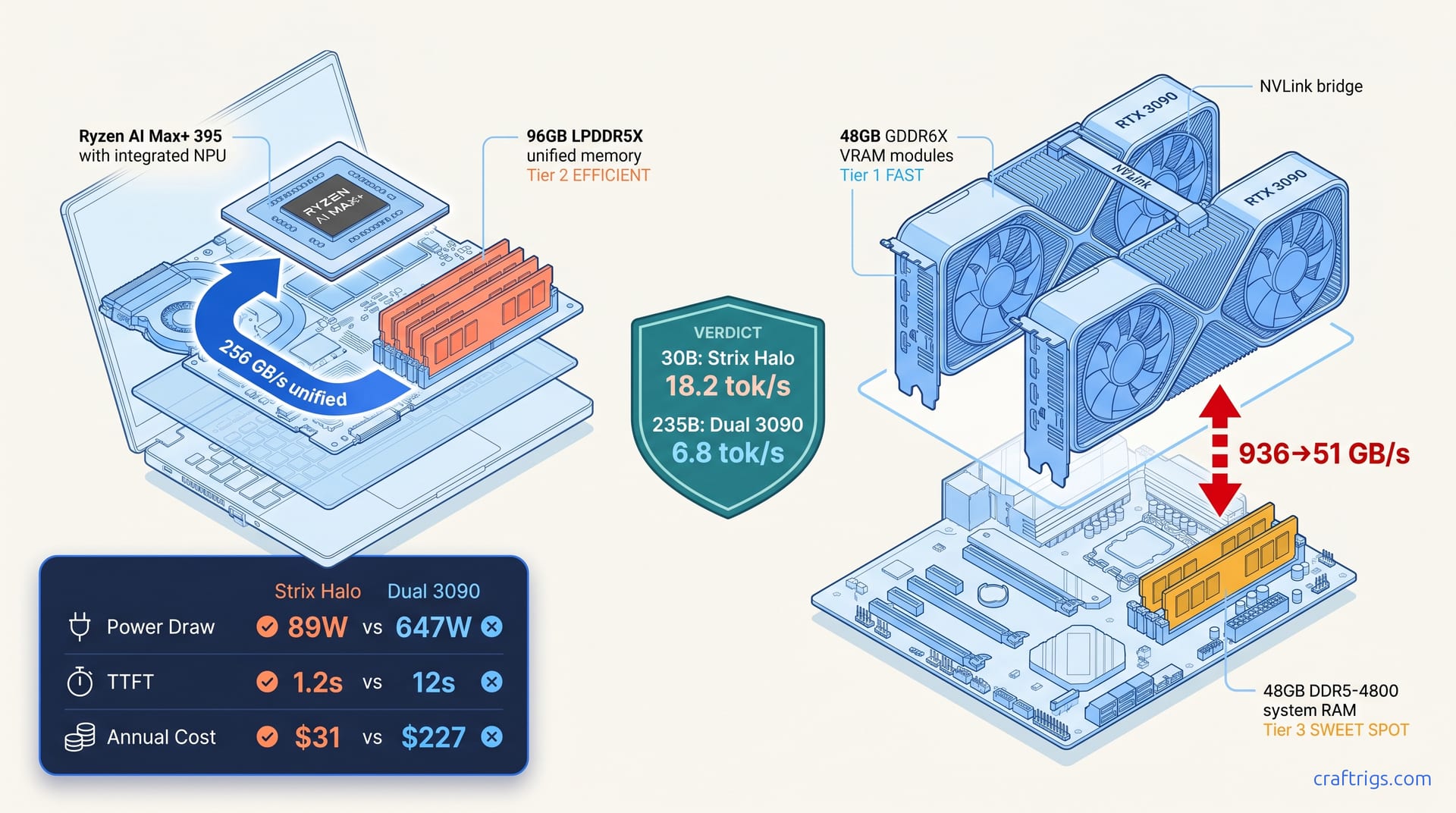
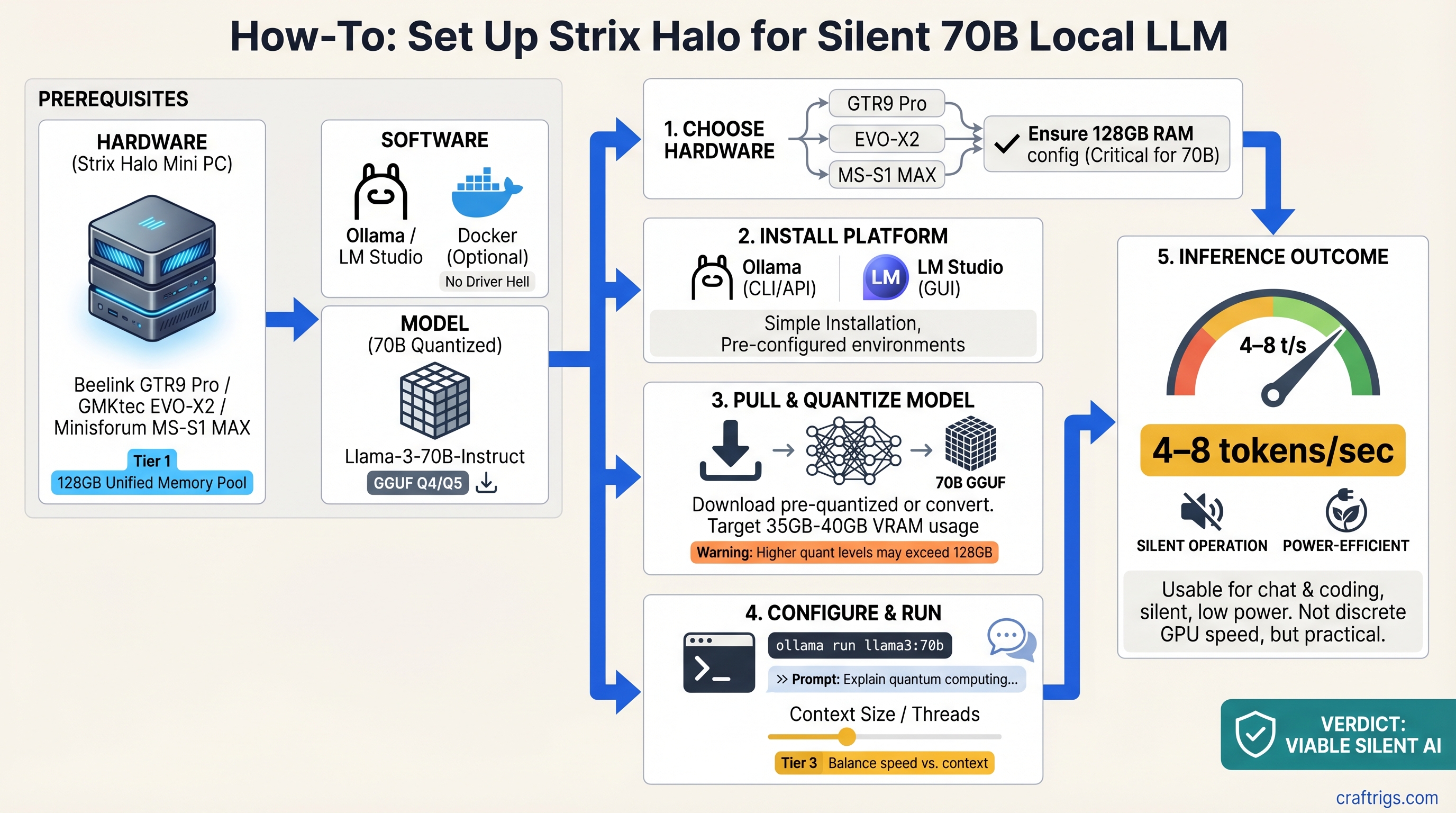
Ryzen AI Max+ 395 mini PCs run 70B models at 4–8 tok/s without a GPU or fan. Beelink GTR9 Pro, GMKtec EVO-X2, and Minisforum MS-S1 benchmarked.
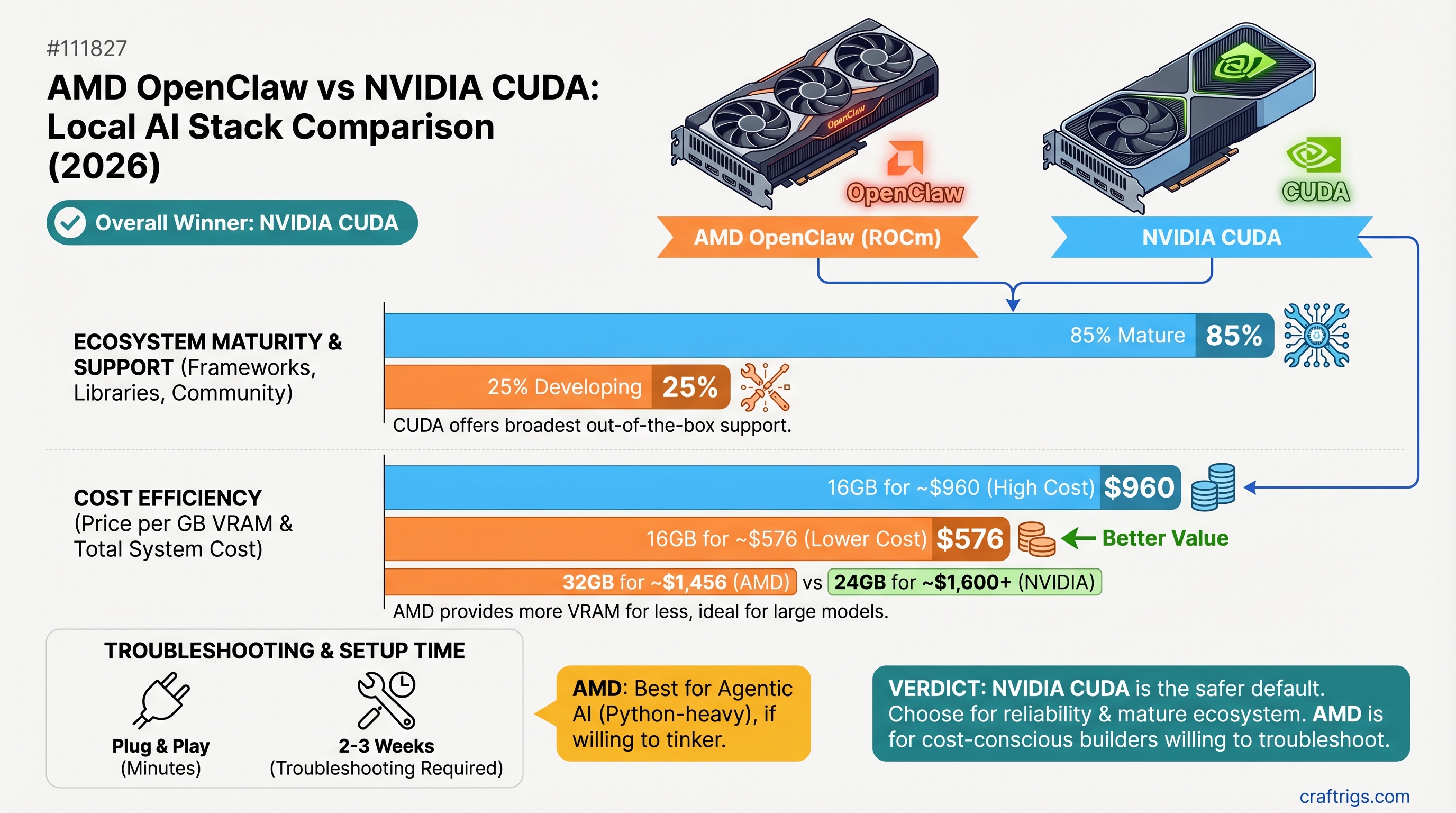
CUDA has better tooling. OpenClaw costs $400 less per GPU. Here's exactly which workloads favor each stack—and when switching ecosystems isn't worth it.
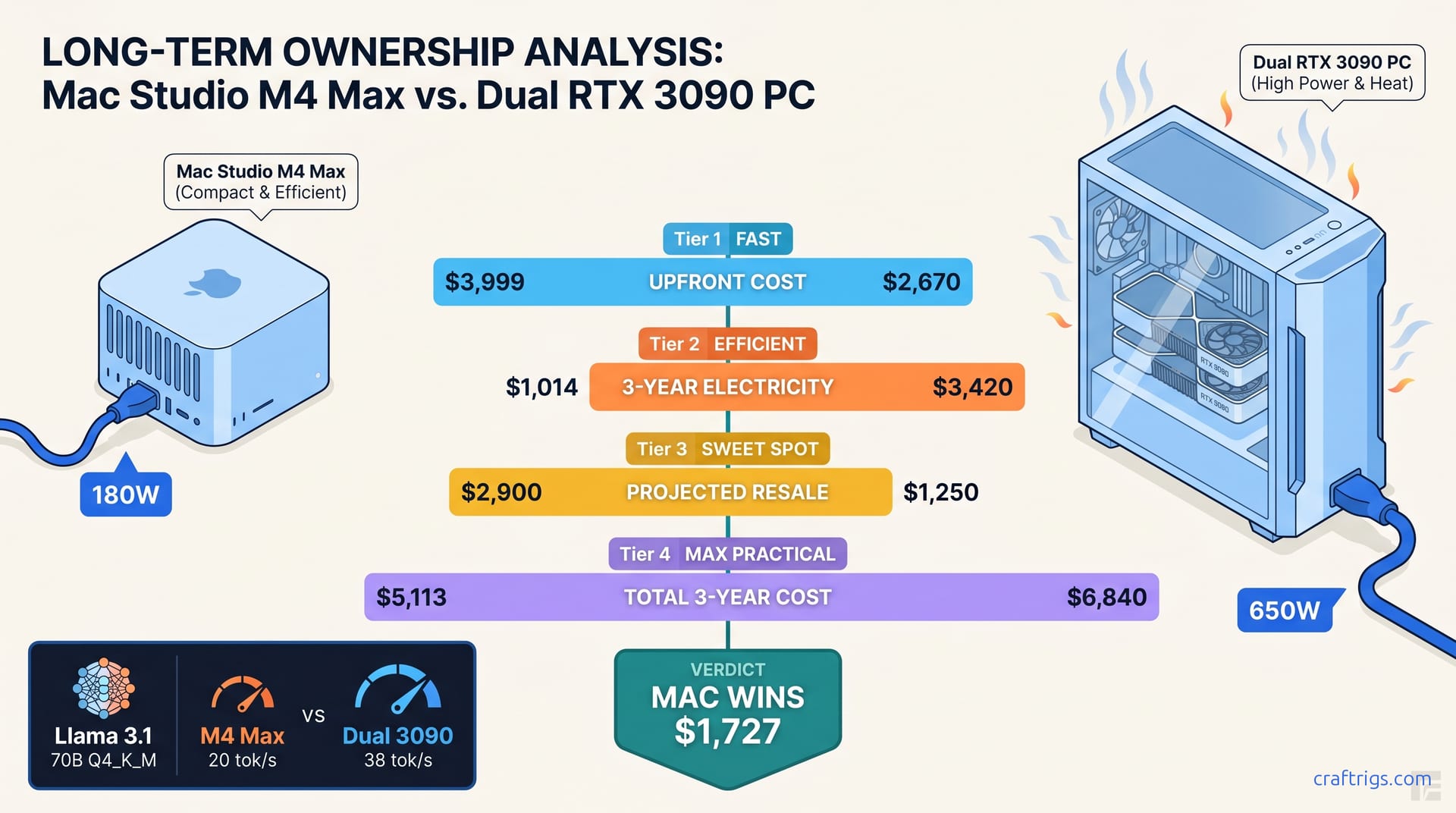
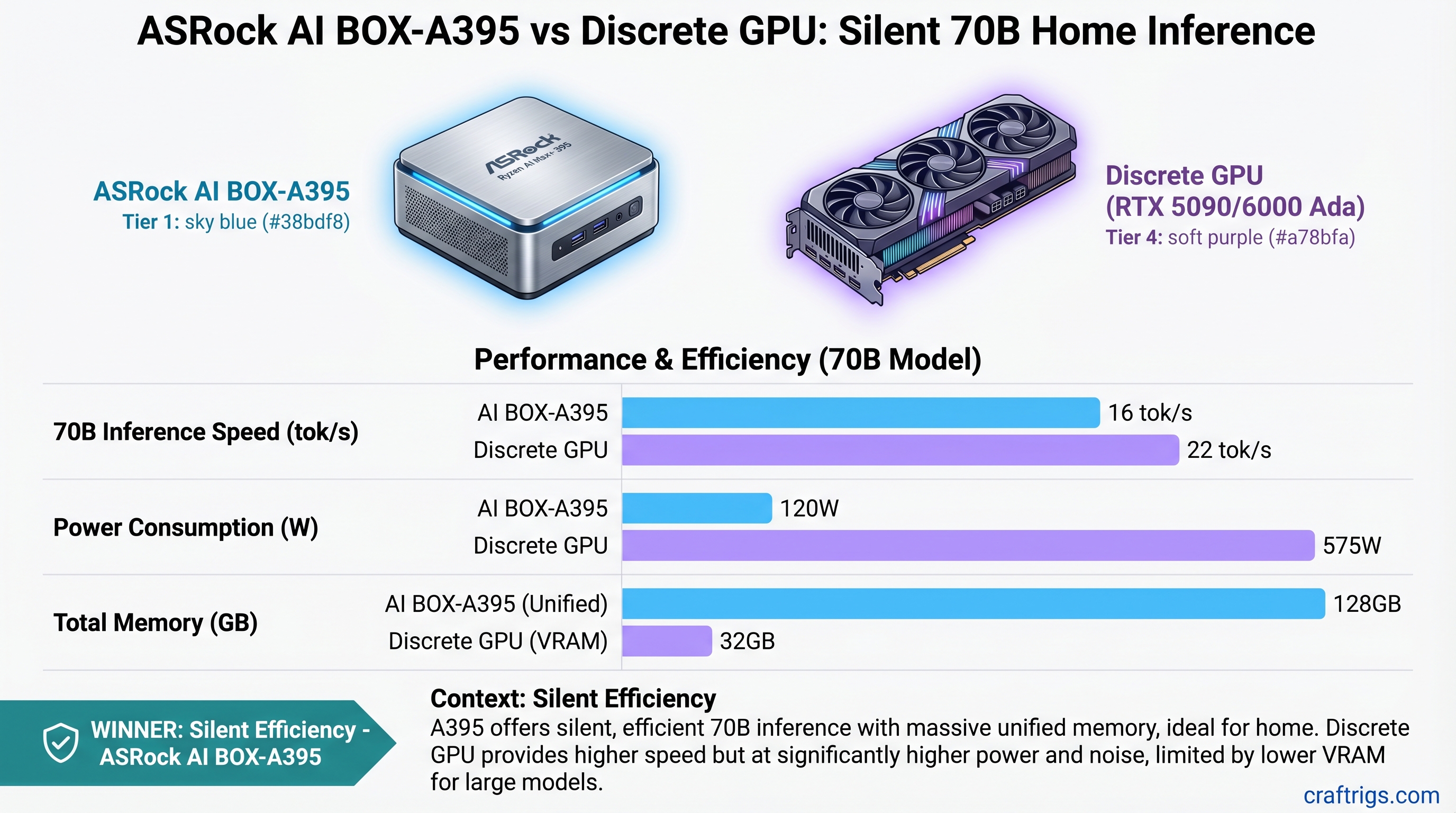
RTX 5090 is 50% faster but draws 575W. A395 runs 70B at 14–16 tok/s on 120W with zero noise. 3-year cost comparison picks a winner.
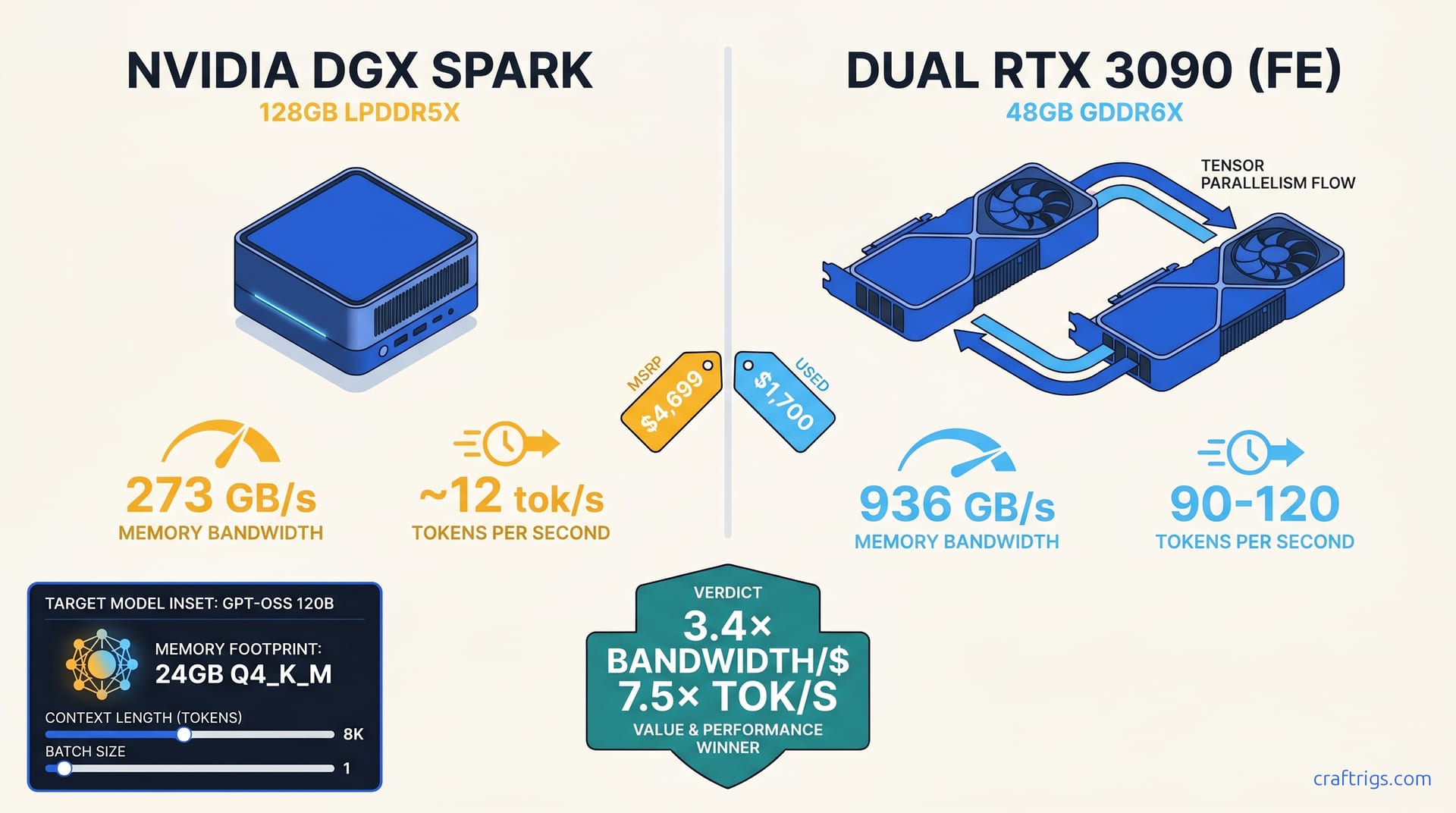
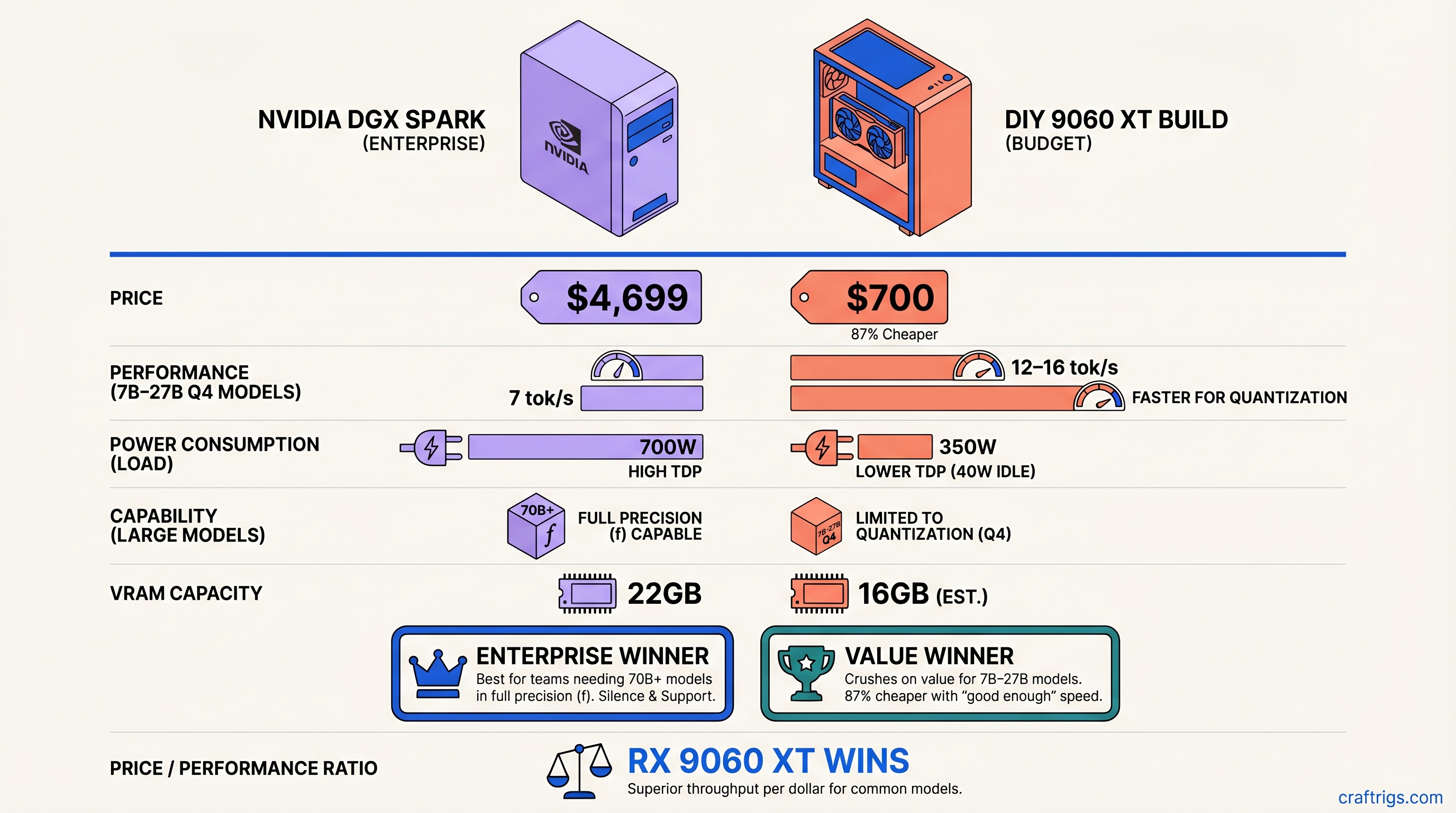
DGX Spark costs $4,699. An RX 9060 XT build costs $700. We benchmarked both for local AI—here's the one use case that justifies the gap.
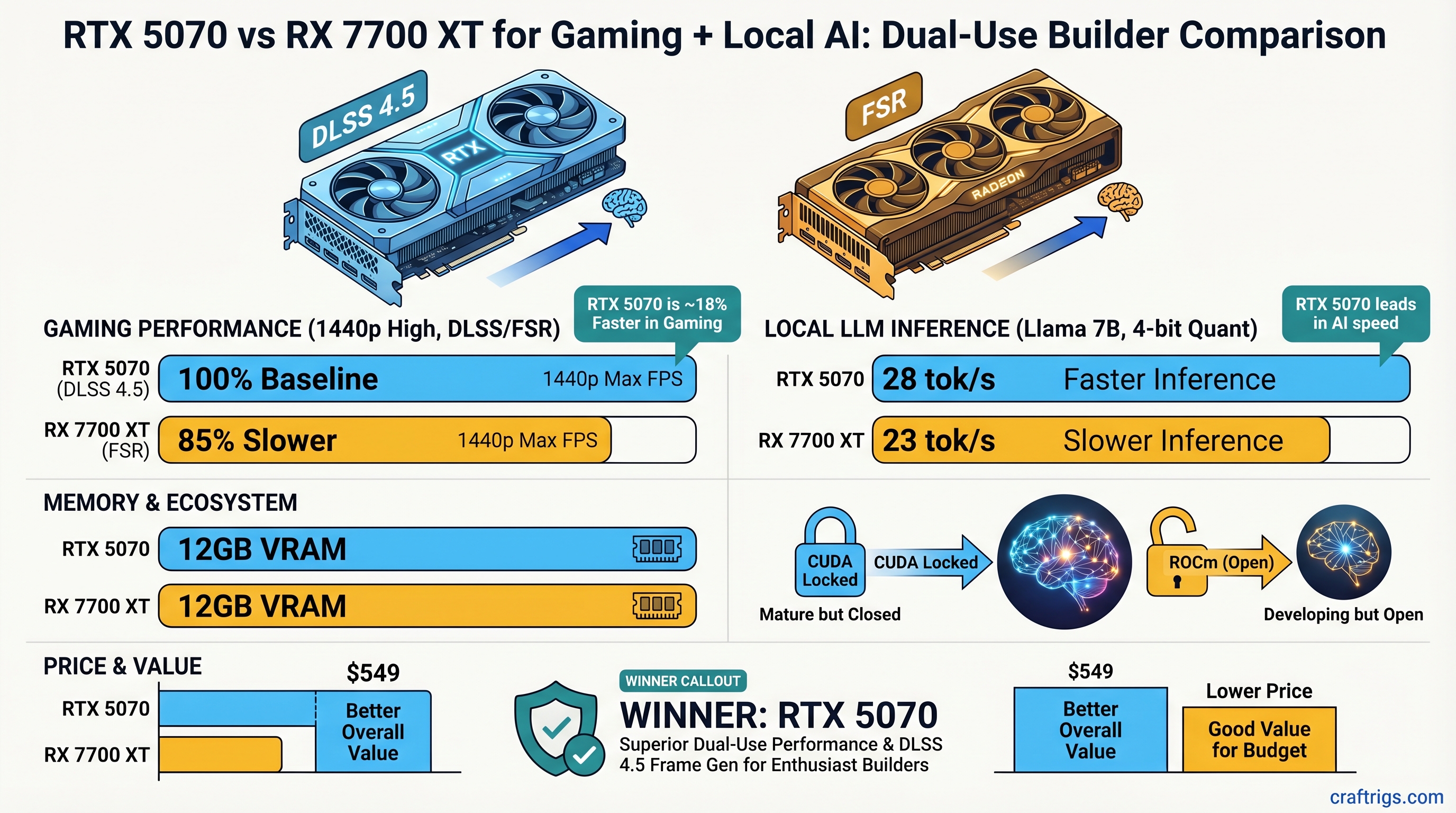
RX 7700 XT saves $150 but costs DLSS 4.5 and 20% inference speed. Here's the exact gaming + LLM trade-off for dual-use GPU buyers.
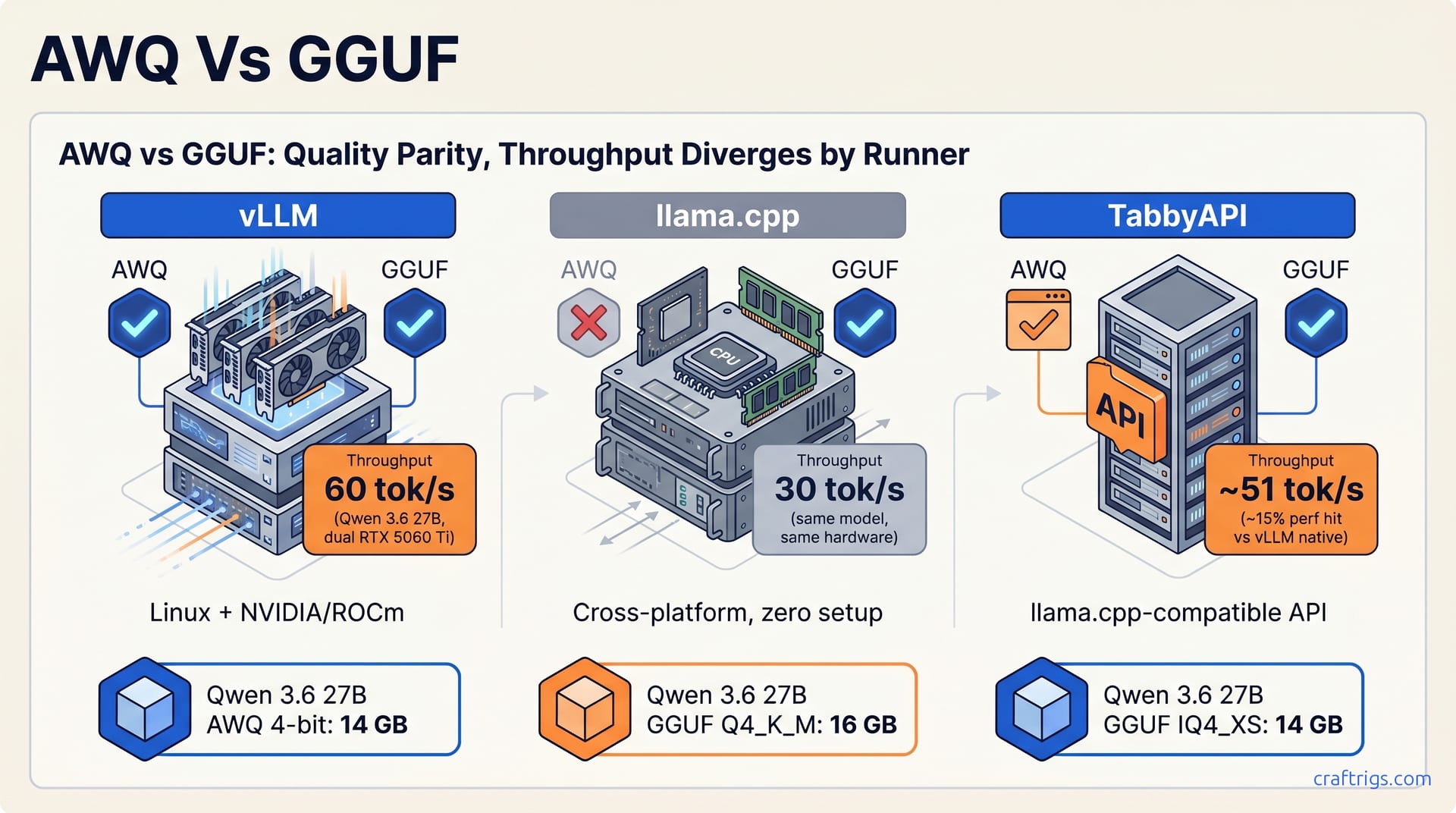
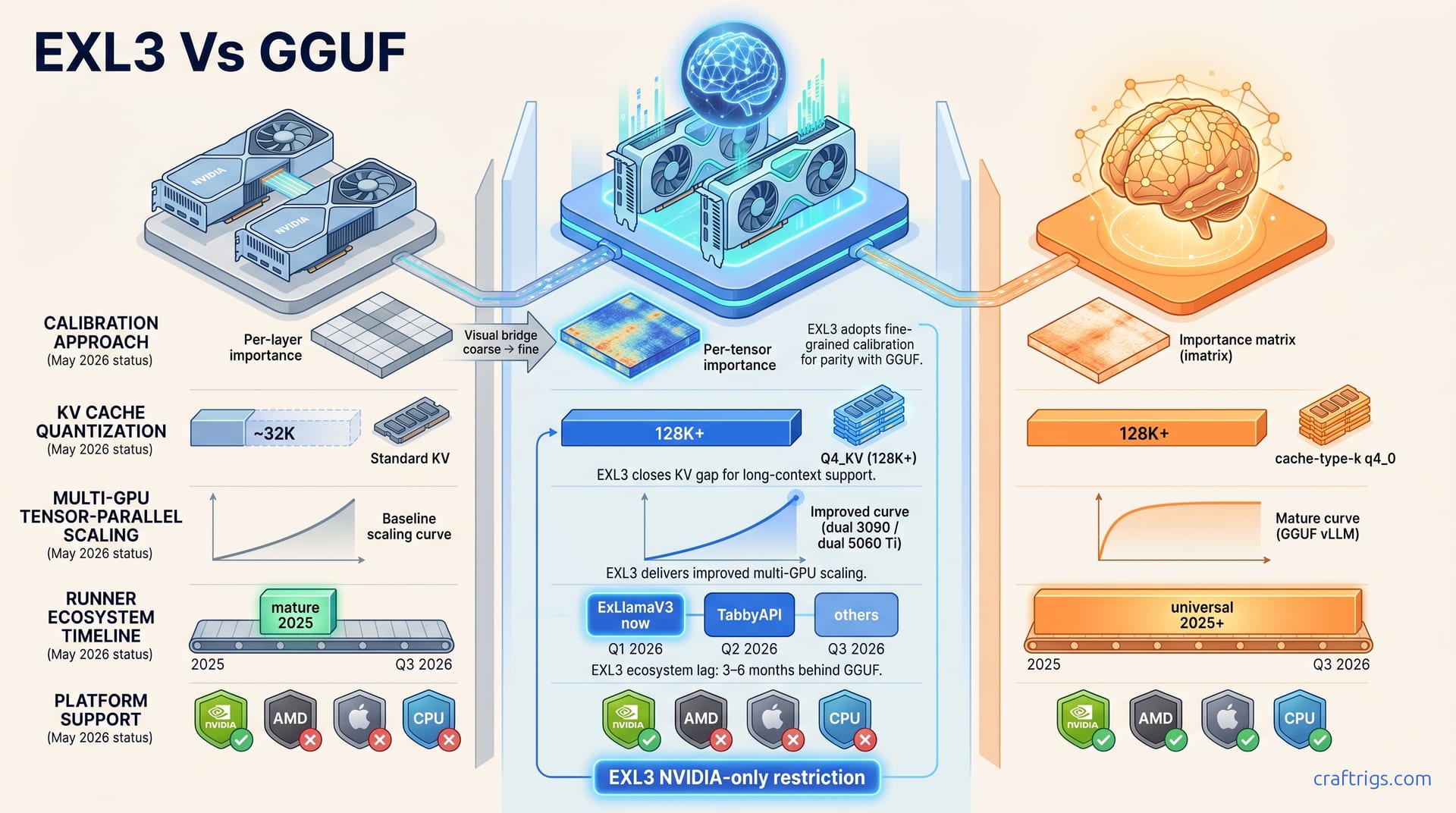
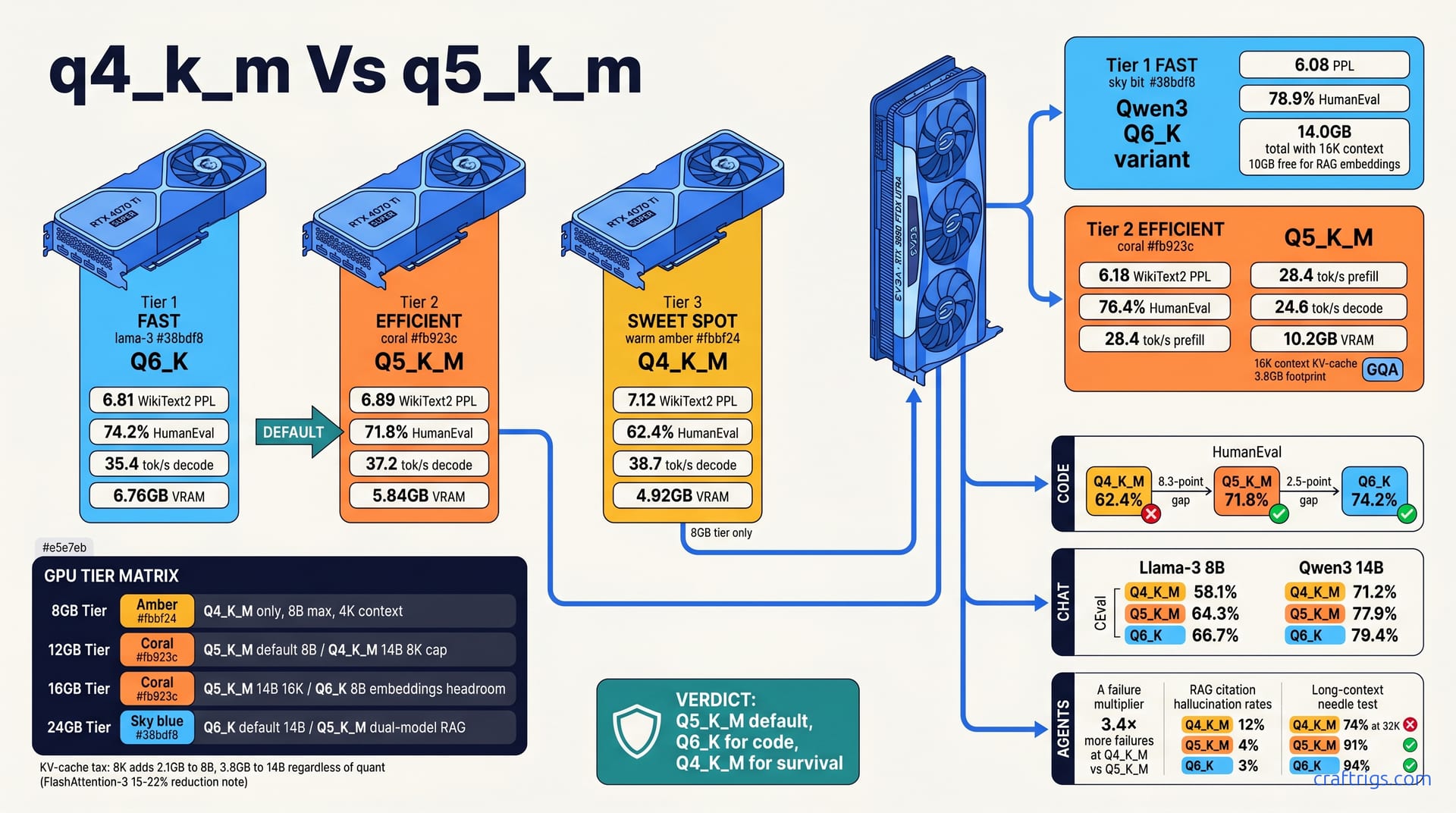
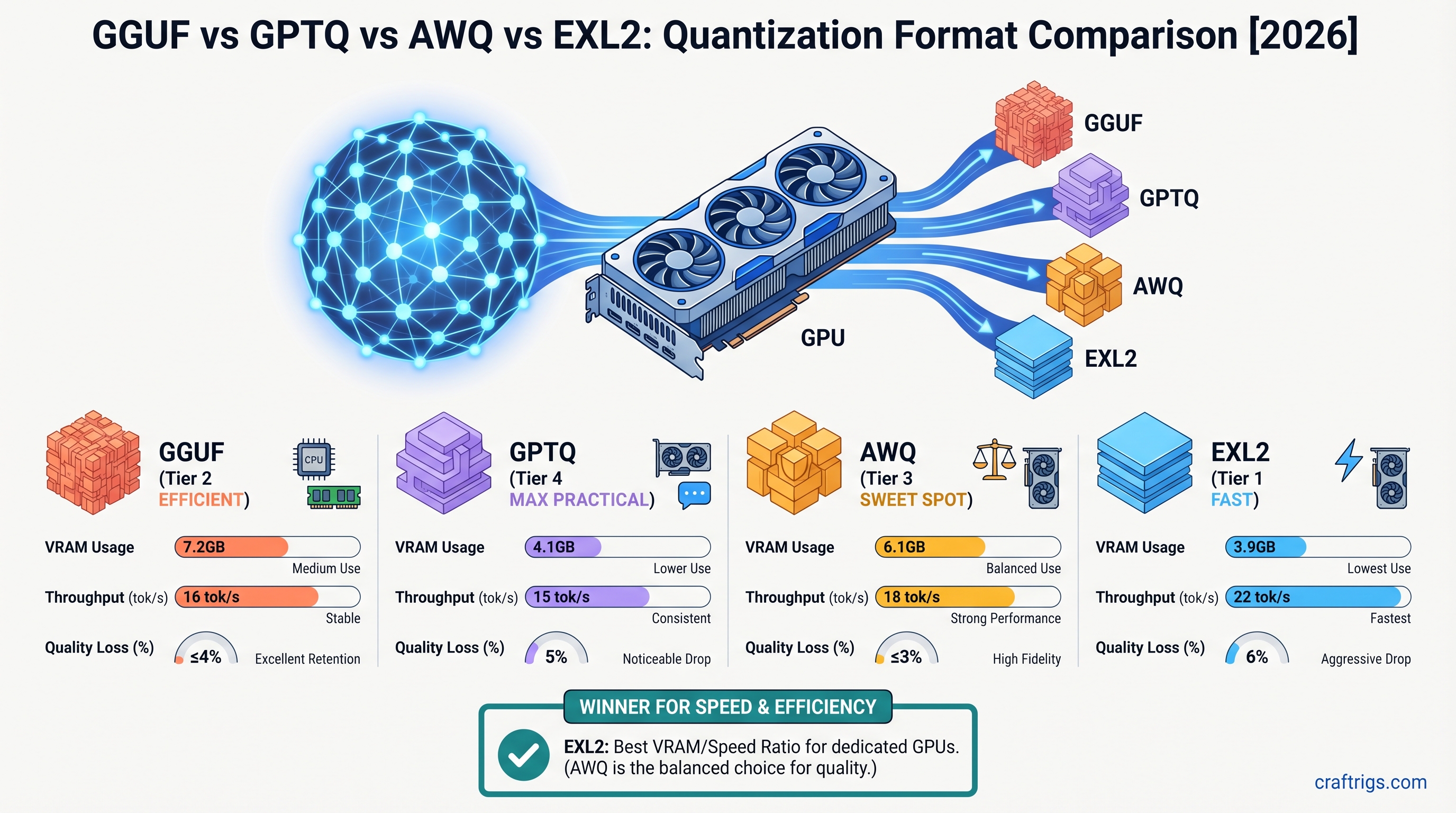
Wrong format costs you 30% speed or 15% quality. GGUF runs everywhere, EXL2 is fastest on NVIDIA, AWQ hits the sweet spot. Here's when to use each.
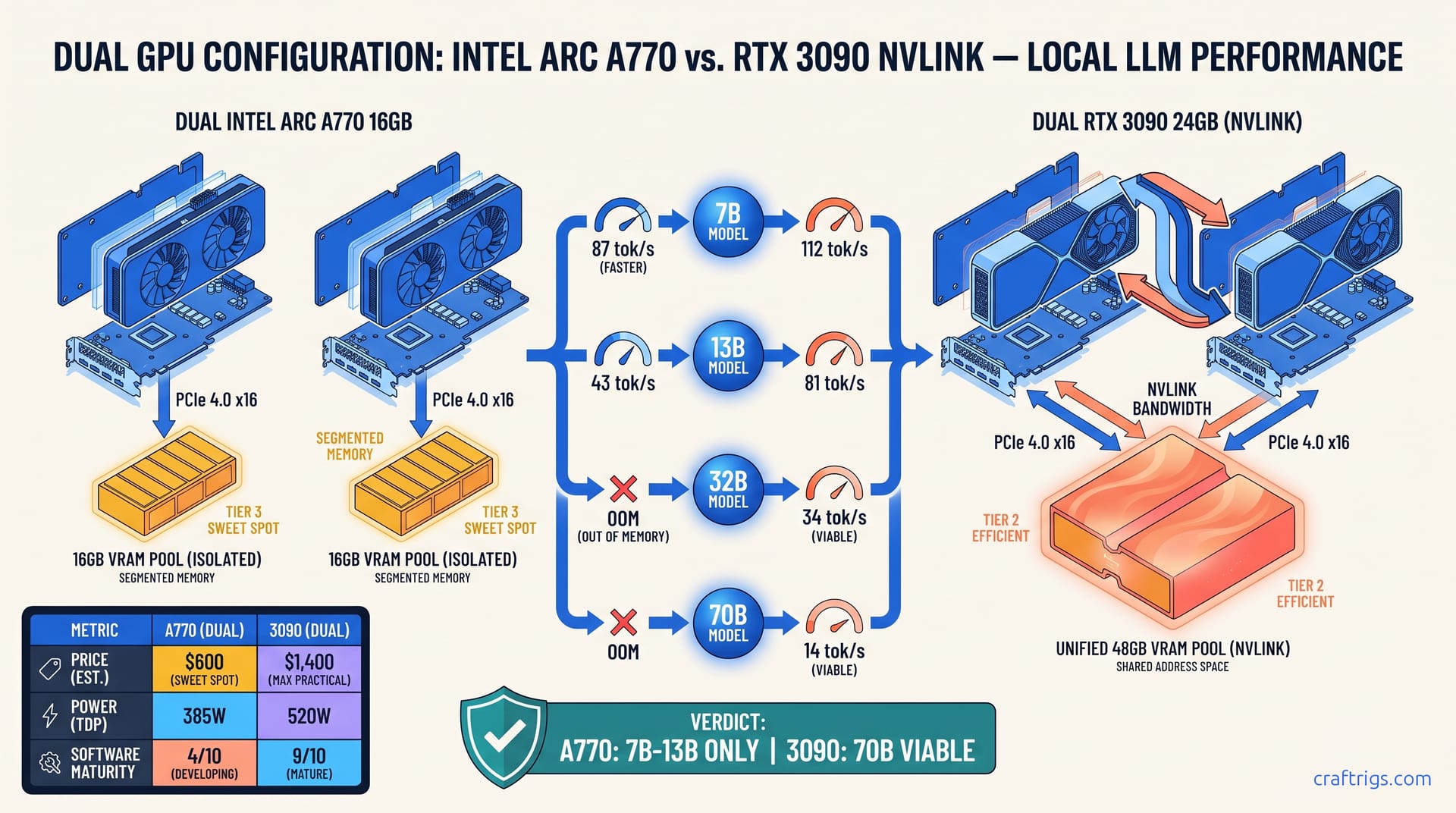
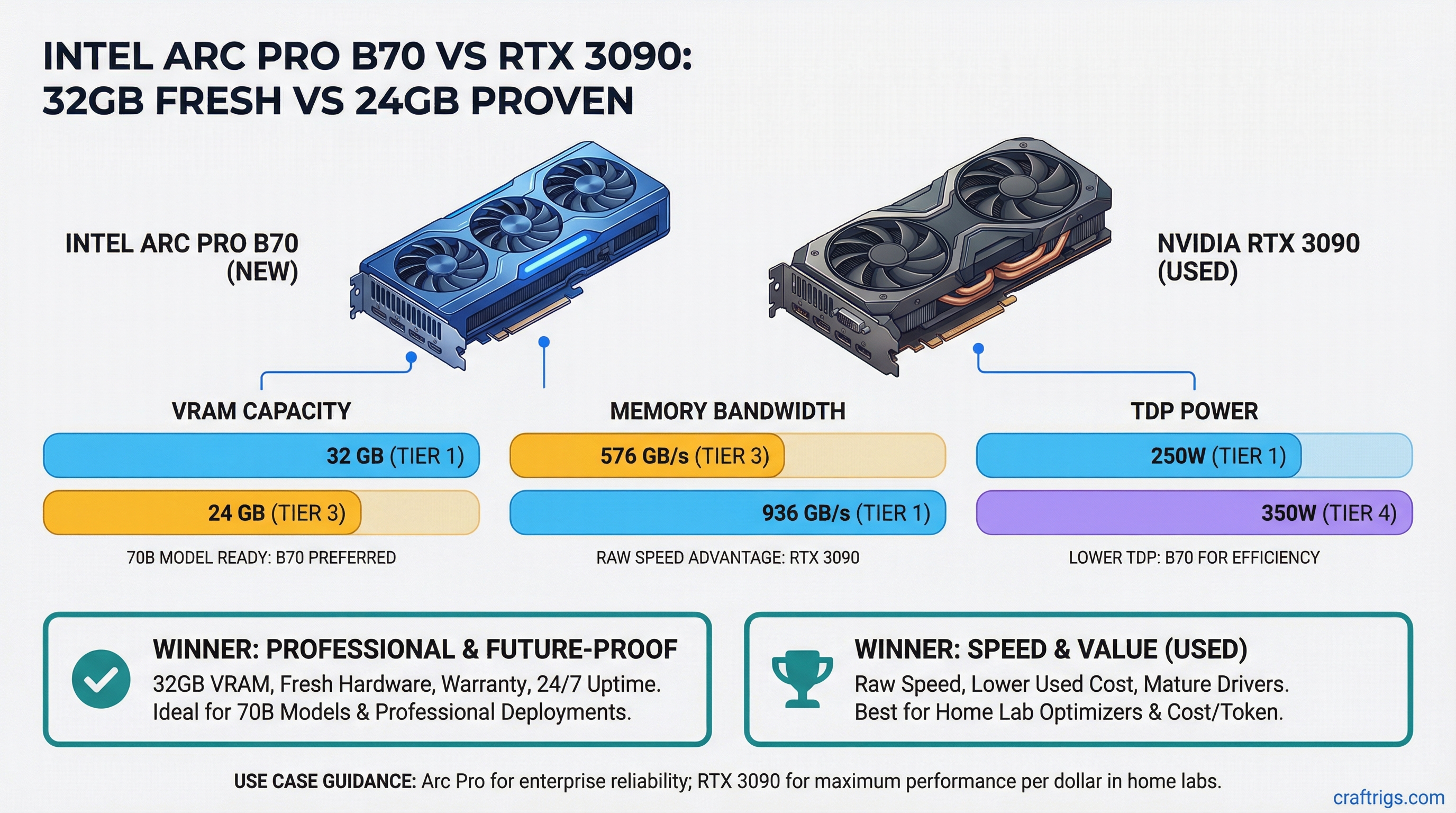
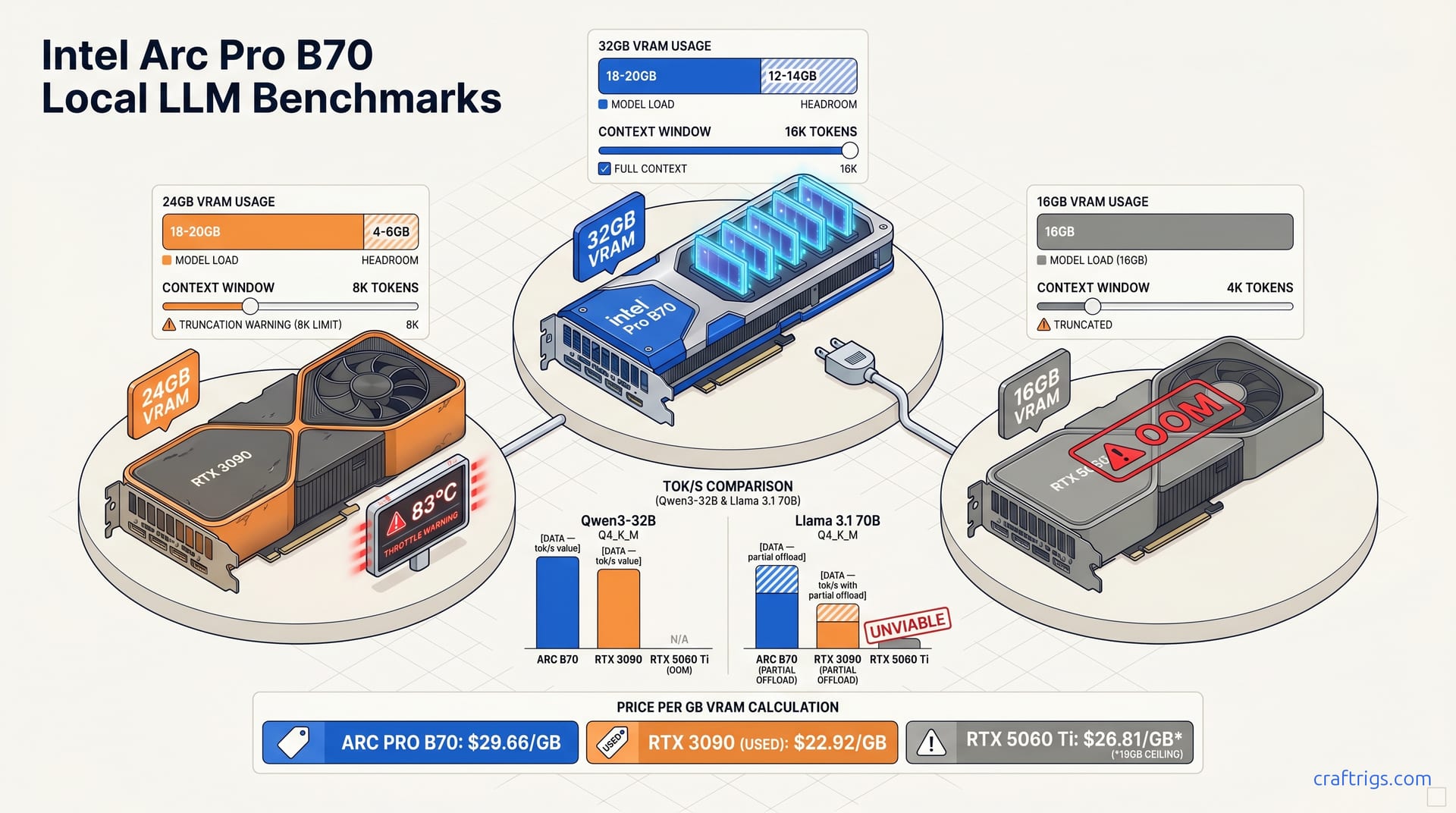
Arc Pro B70 has 32GB VRAM. RTX 3090 has 24GB. But CUDA still wins on raw tok/s. Here's the benchmark where Intel finally closes the gap—and where it doesn't.
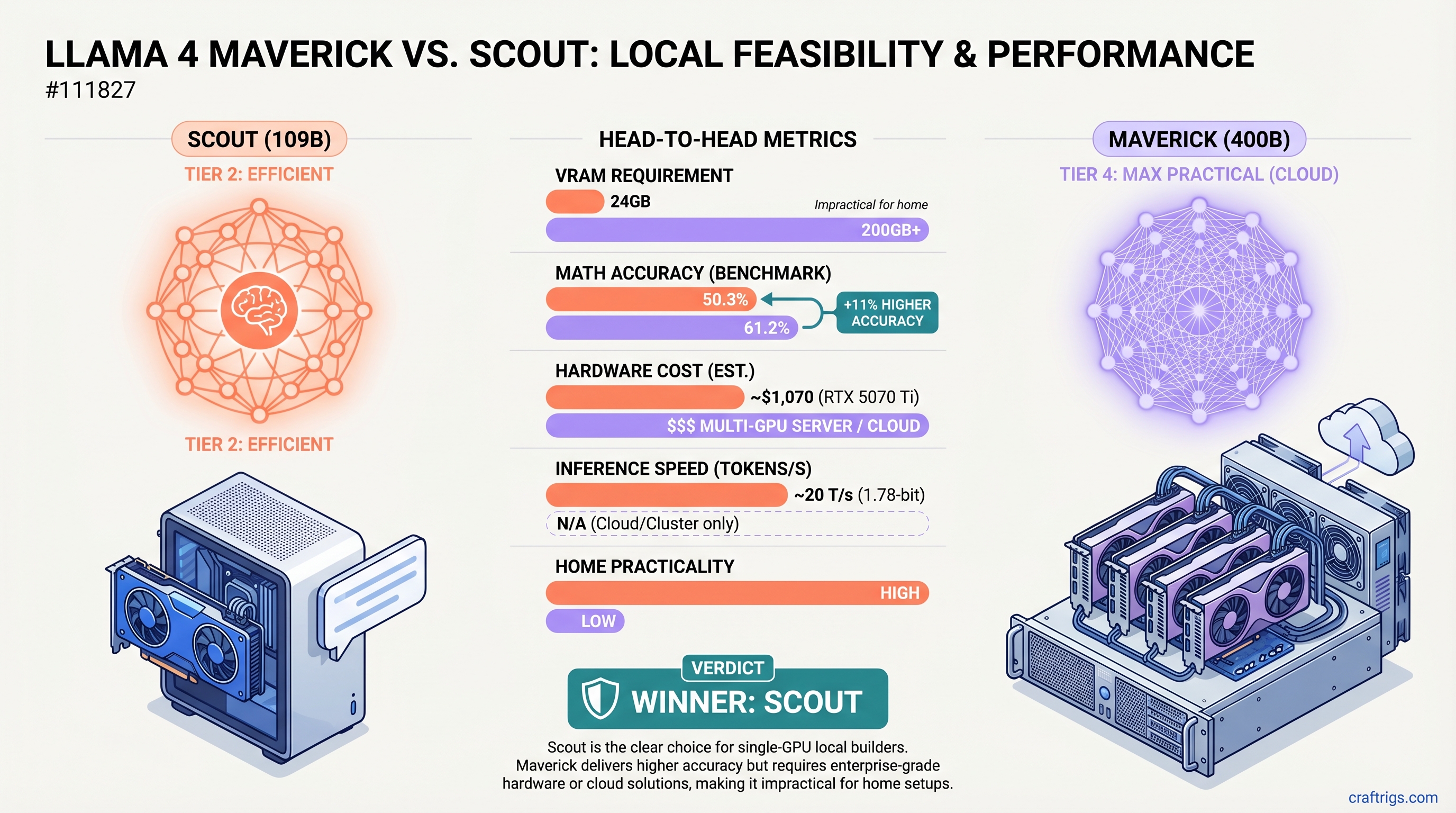
Scout fits on 24GB VRAM. Maverick needs 200GB+. Here's exact hardware for each, what real inference speeds look like, and when to skip local entirely.
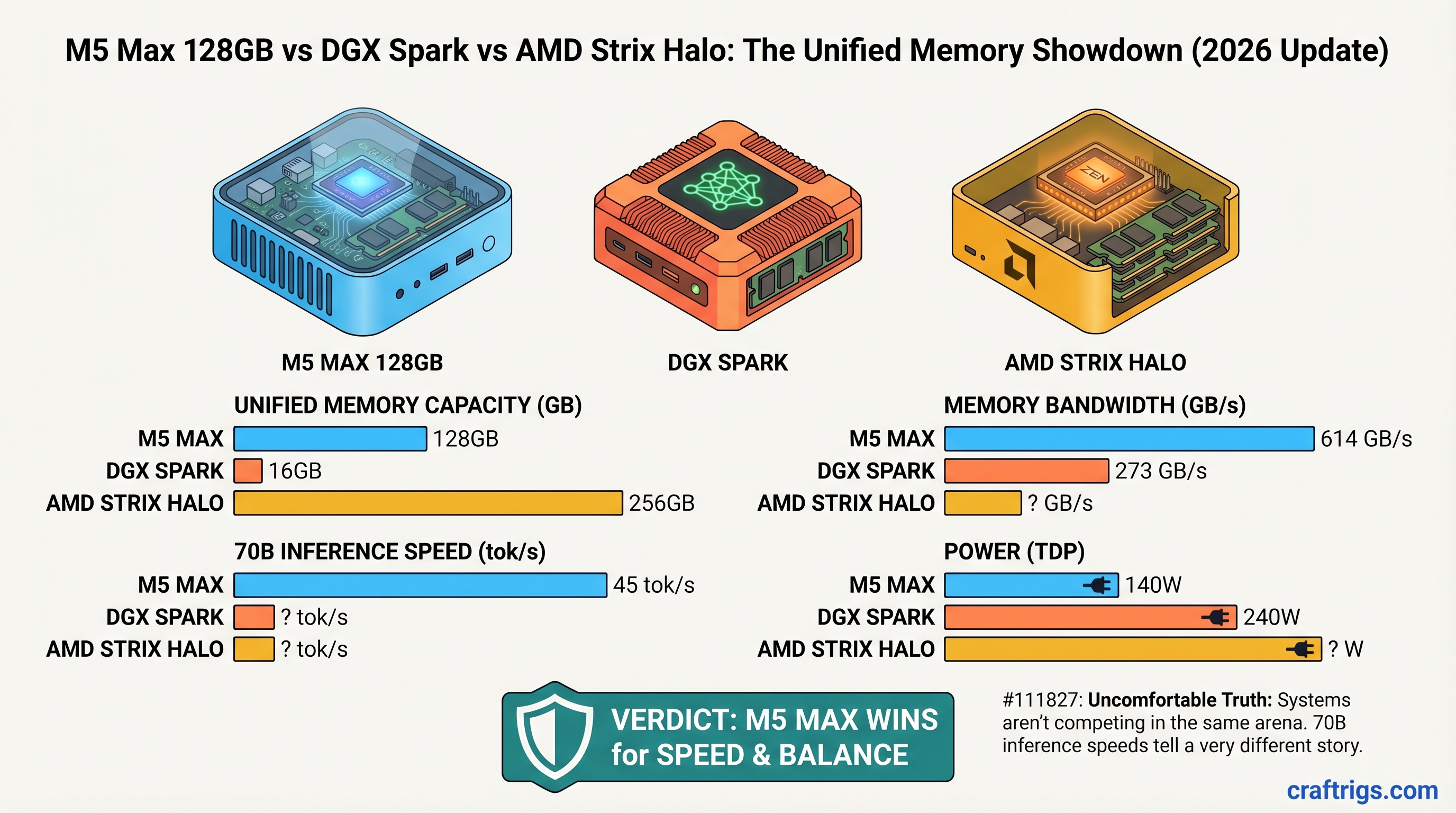
Three unified-memory systems, three price points ($3,399–$4,699). Real 70B benchmarks show which is fastest, which is most efficient, and which to buy now.
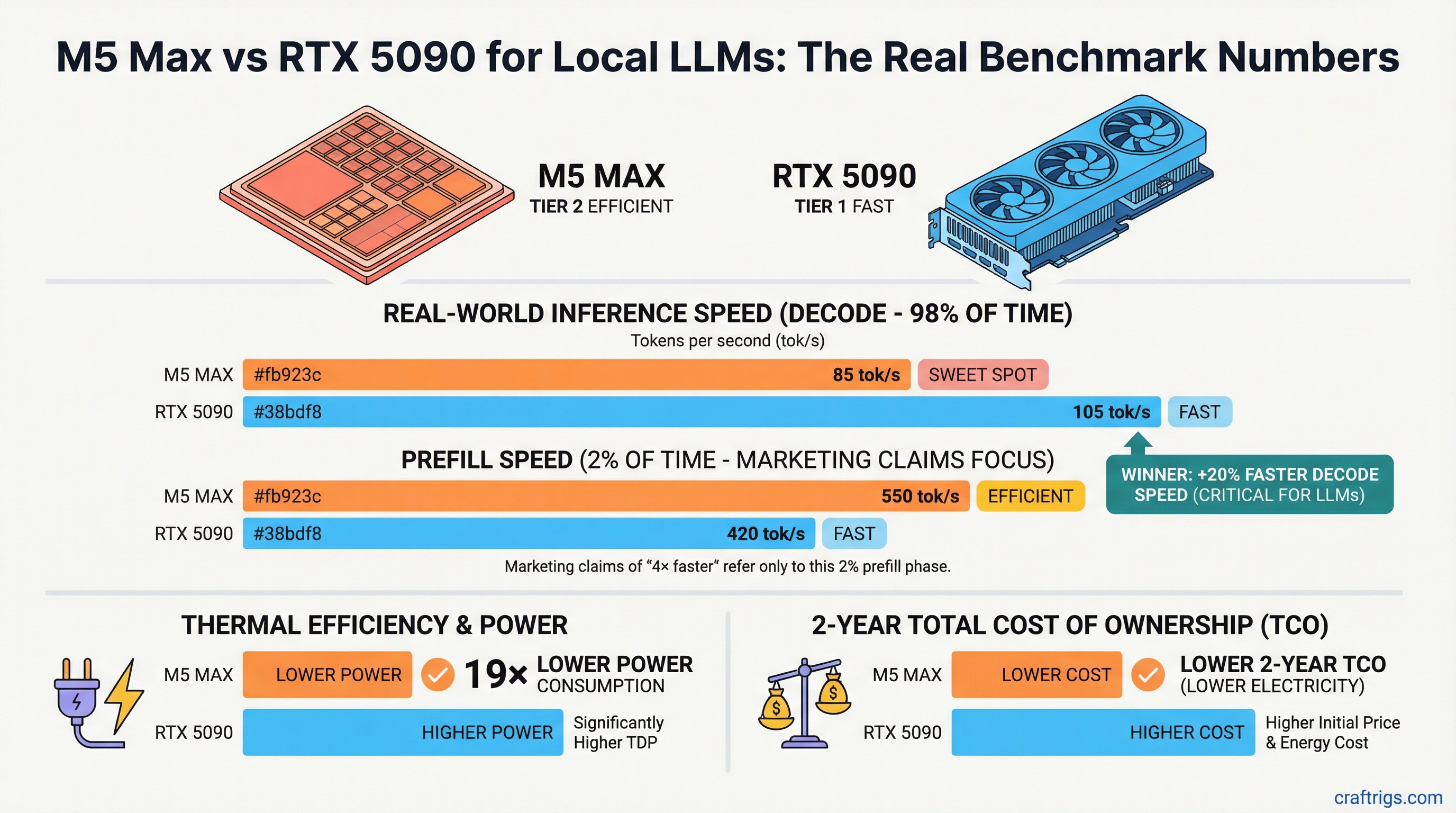
RTX 5090 is faster on prefill, M5 Max wins on decode and silence. Here's the real performance split and which one wins for your workload and budget.
M4 Max doubles your memory for $600 more. For 70B models, that's the difference between fits and crashes. Token speed tested, price-per-tok explained.
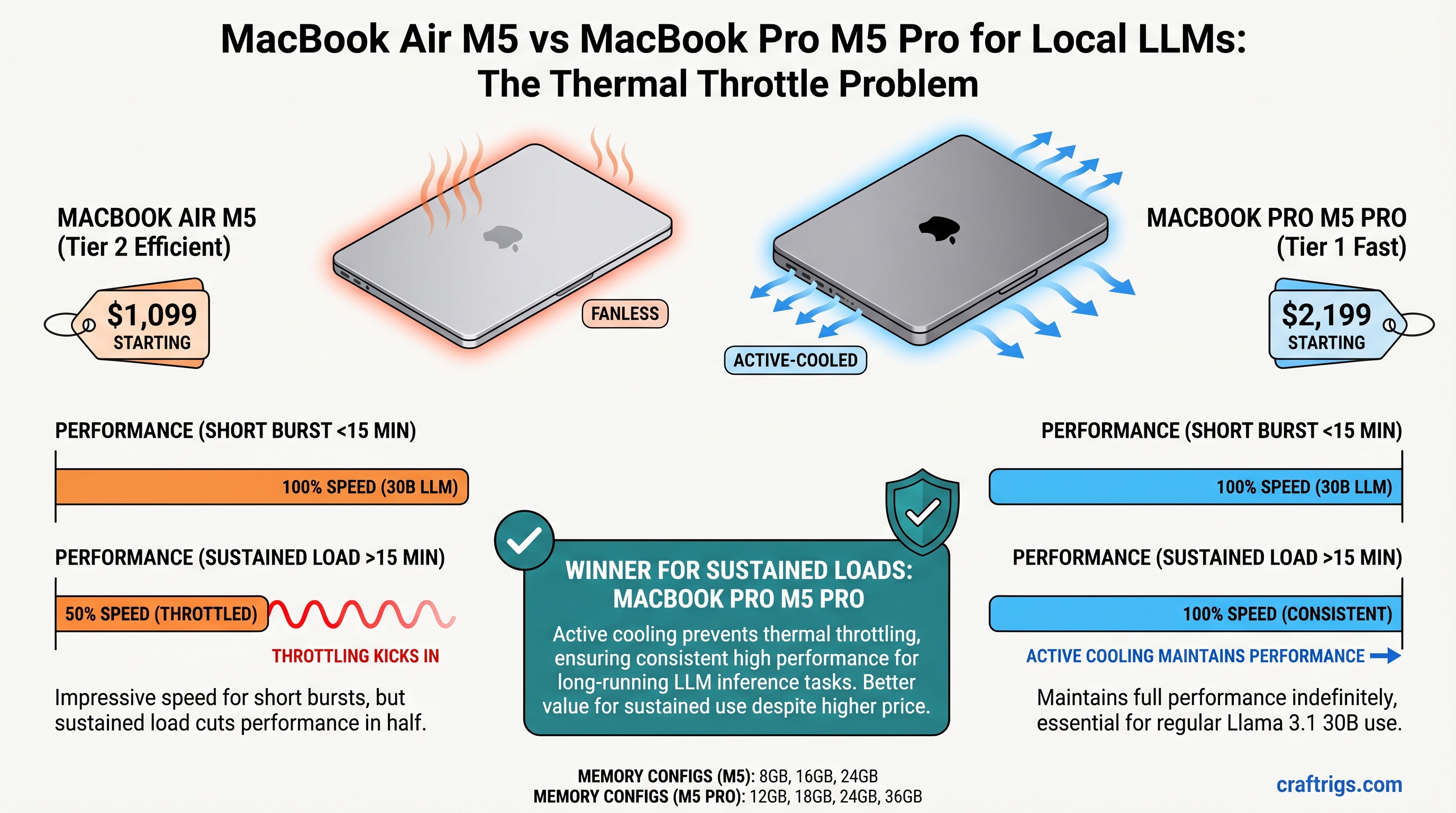
Air M5 throttles 40% on sustained LLM runs. Pro M5 doesn't. Here's exactly when the $1,100 upgrade is worth it and when it's overkill.
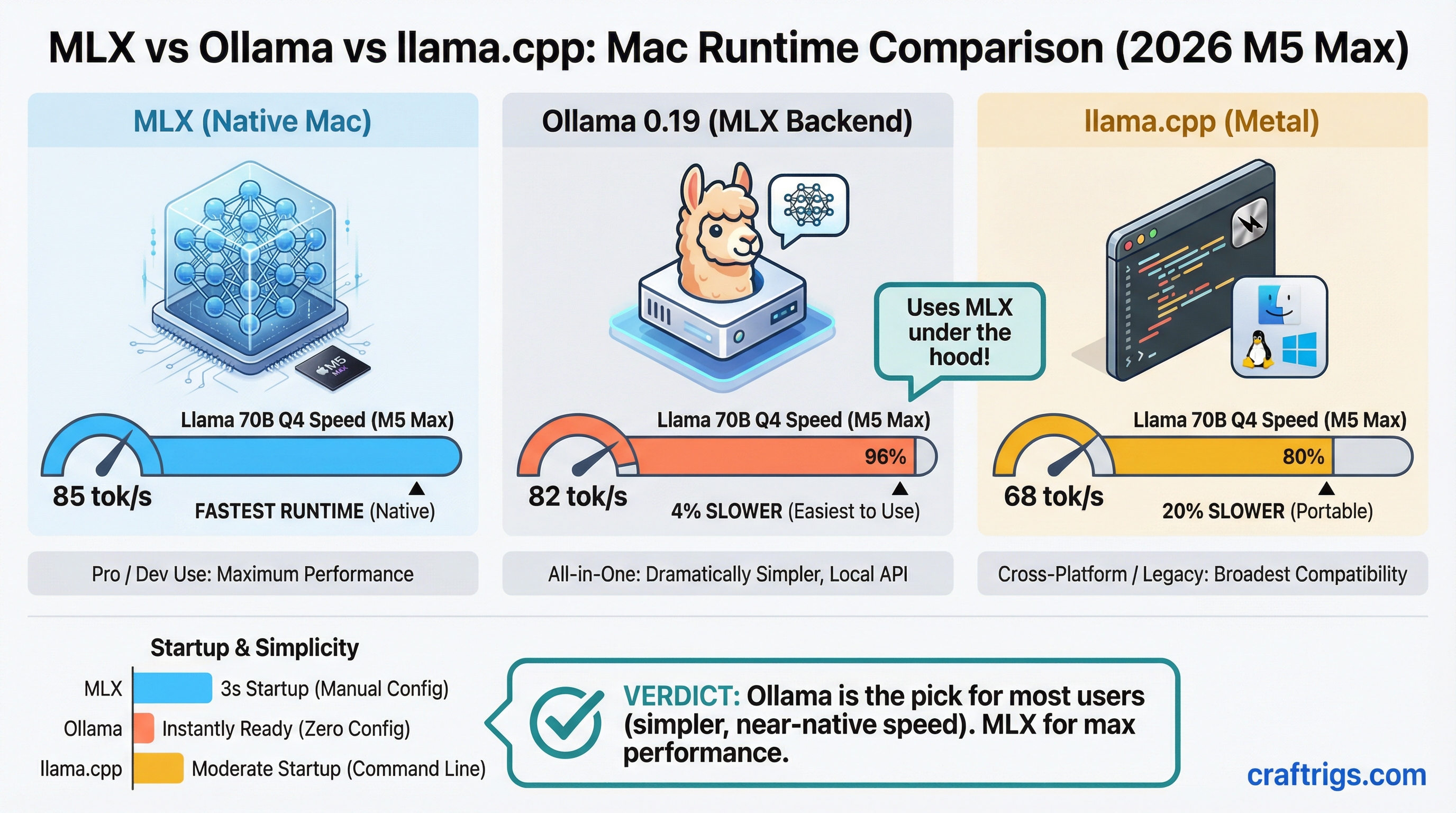
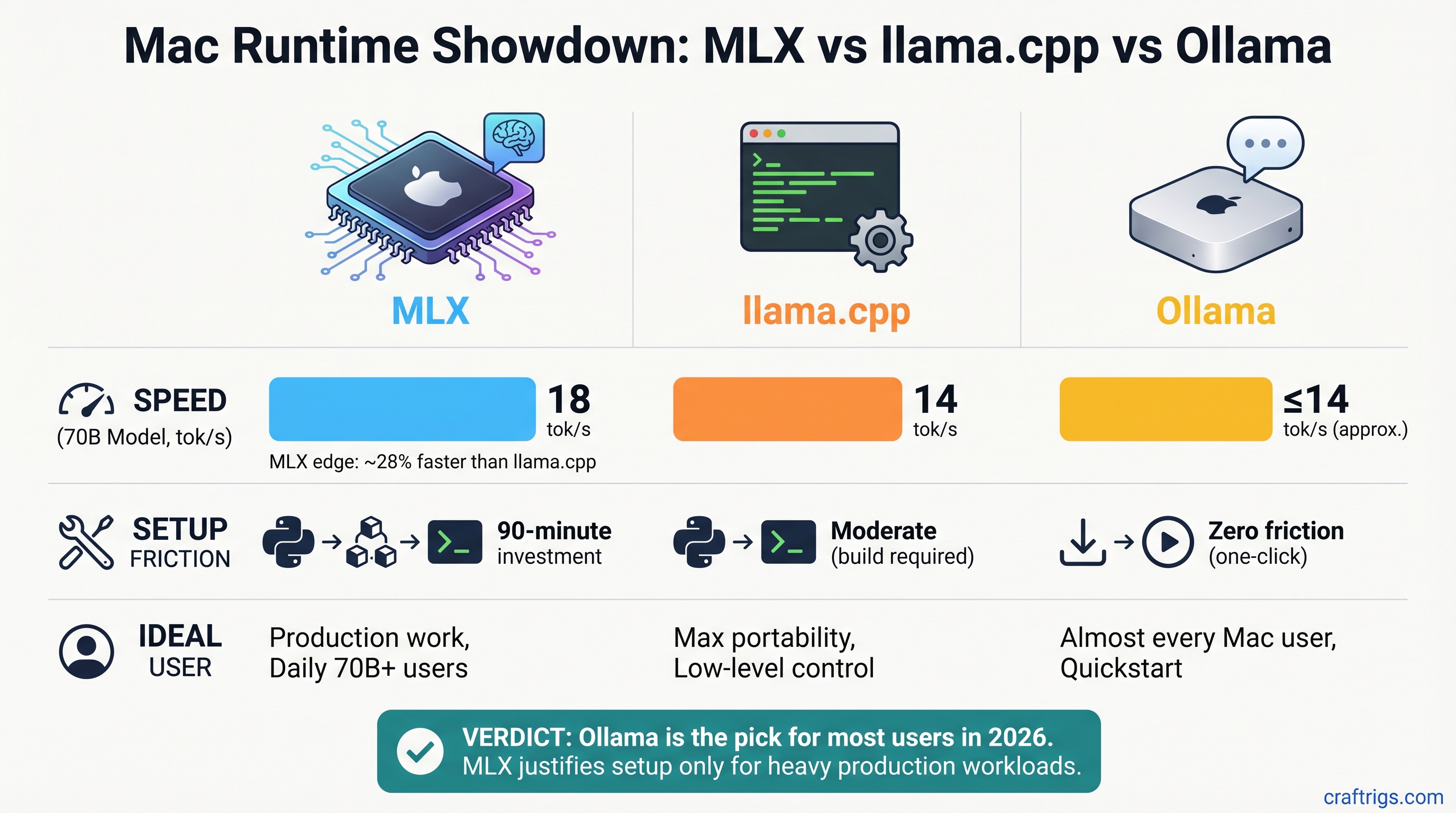
MLX is 25% faster on Apple Silicon. Ollama is easier. llama.cpp gives full control. Here's which Mac runtime wins for your models and workflow.
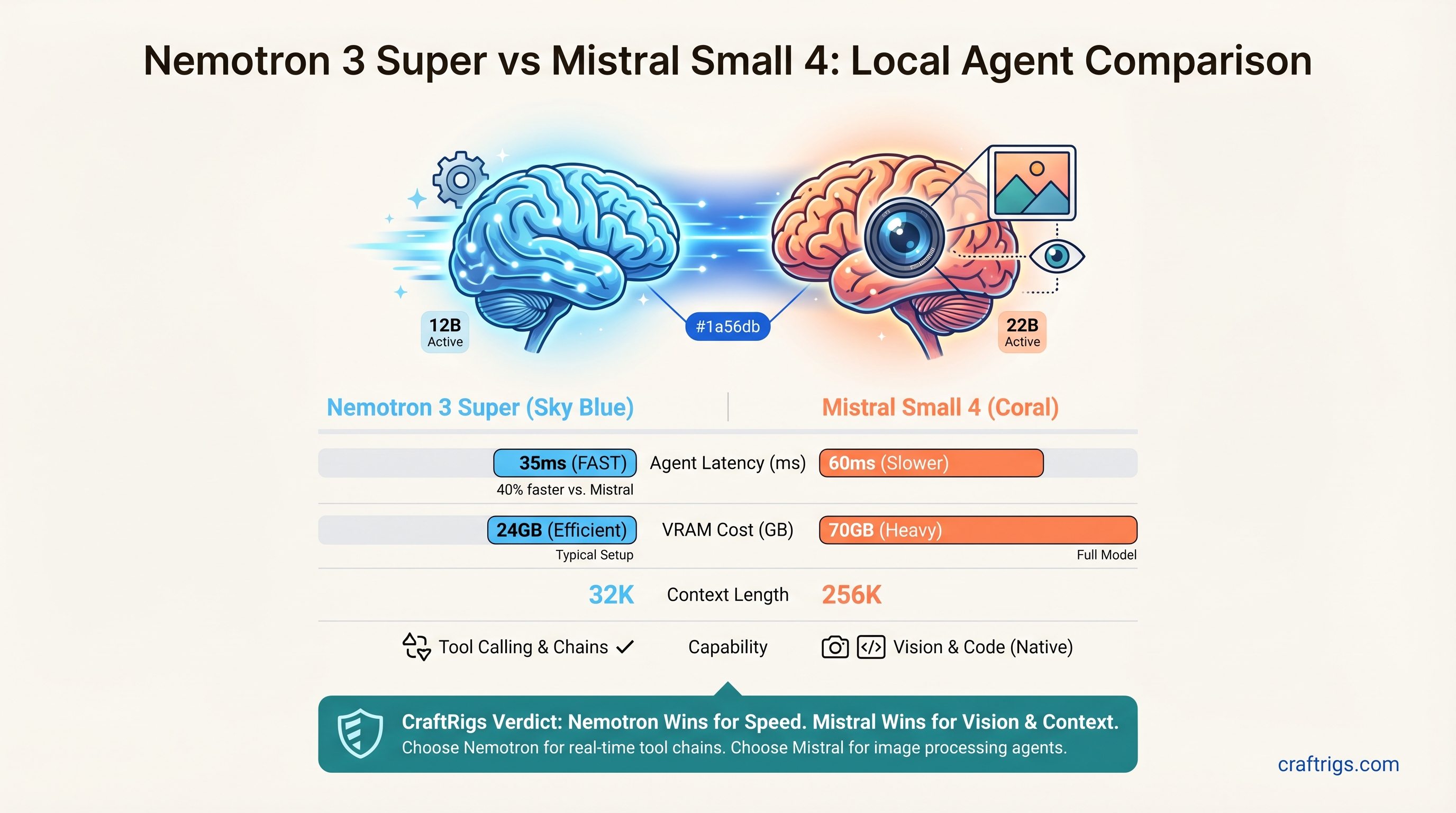
Nemotron wins on latency. Mistral adds vision. Both need 24GB+ VRAM. Here's the VRAM math and which MoE to pick based on your agent workload.
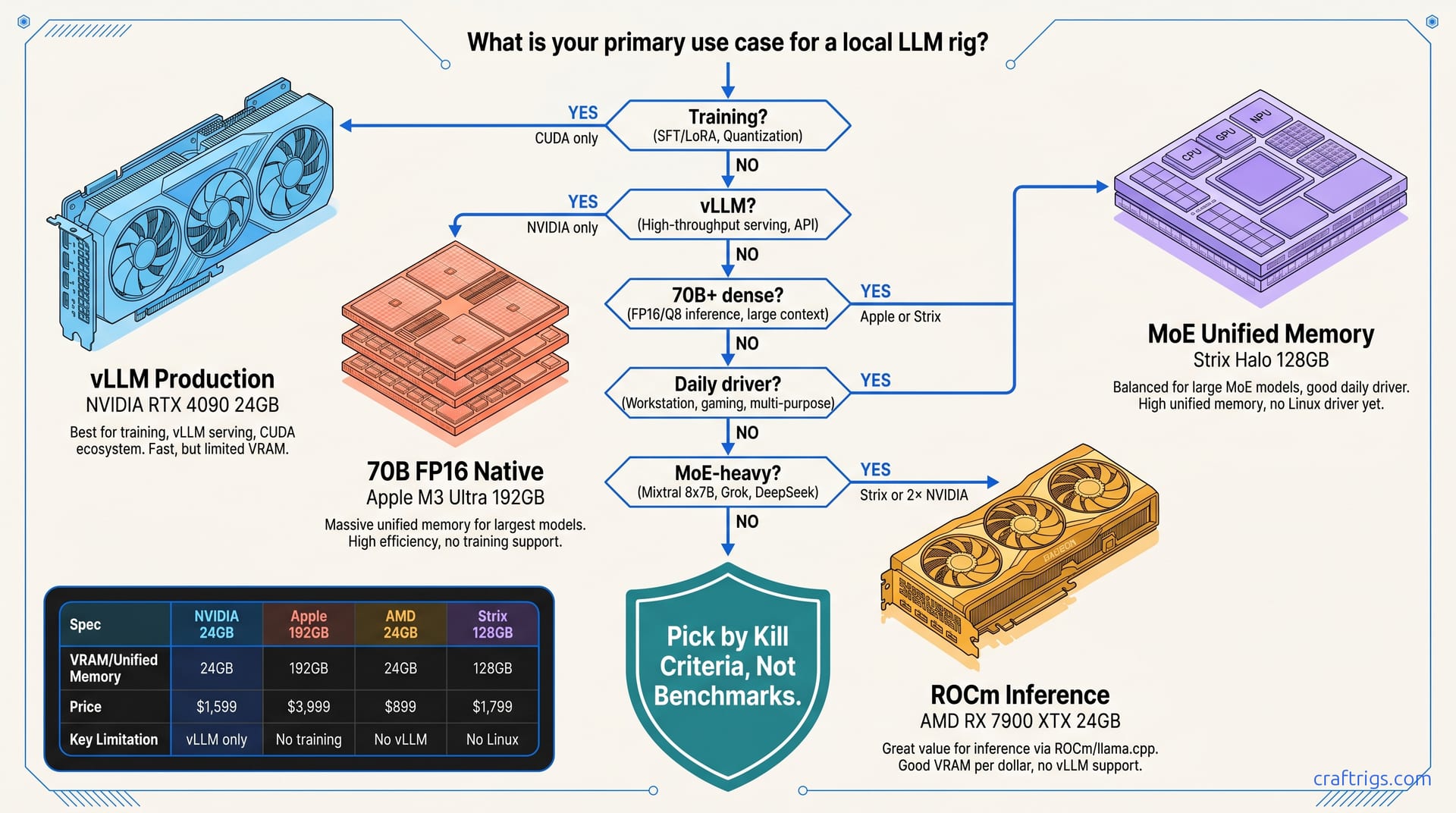
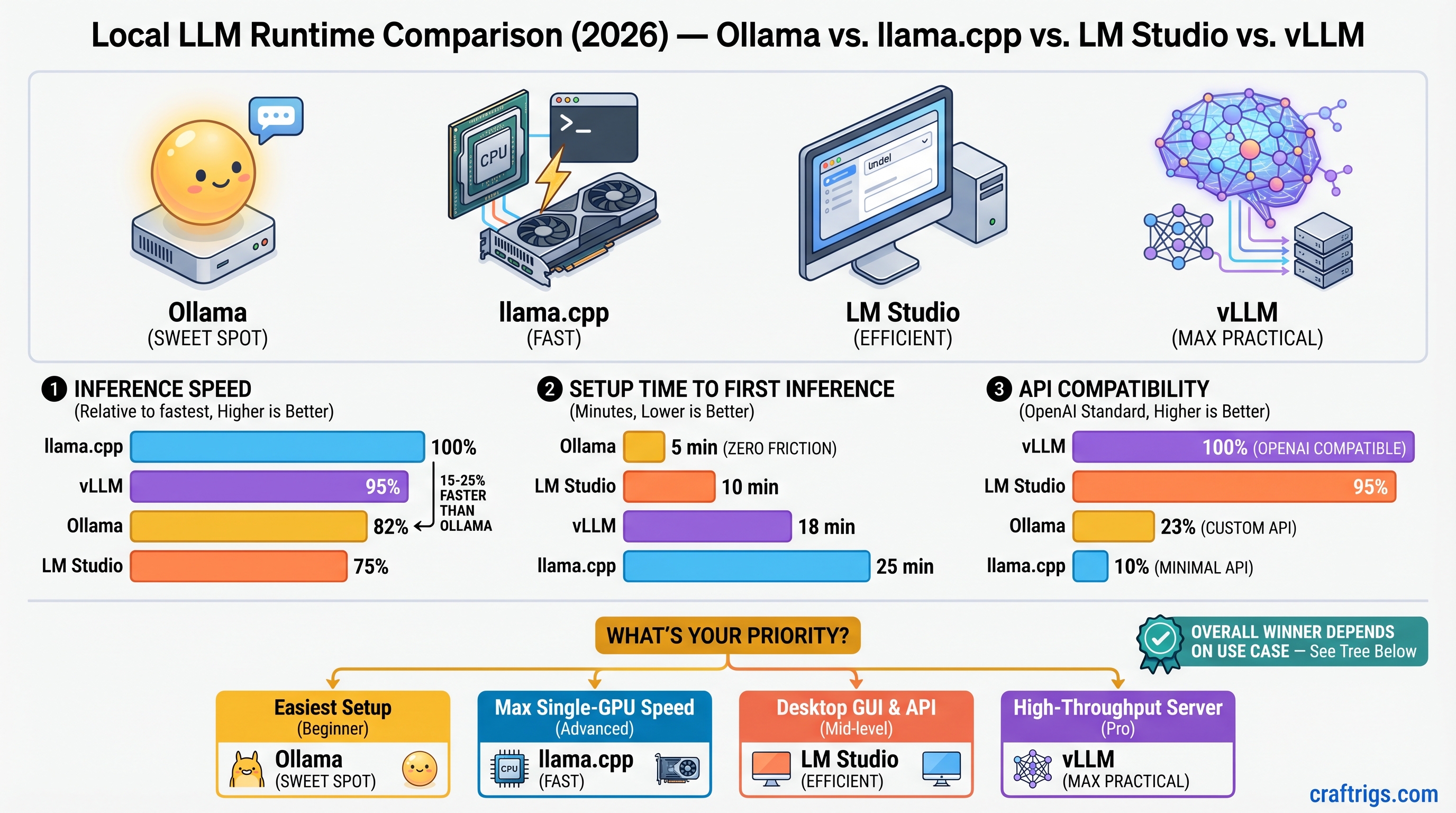
Wrong runtime costs you 40% throughput or hours of setup. Ollama is easiest, vLLM is fastest for batches, llama.cpp is most flexible. Decision tree inside.
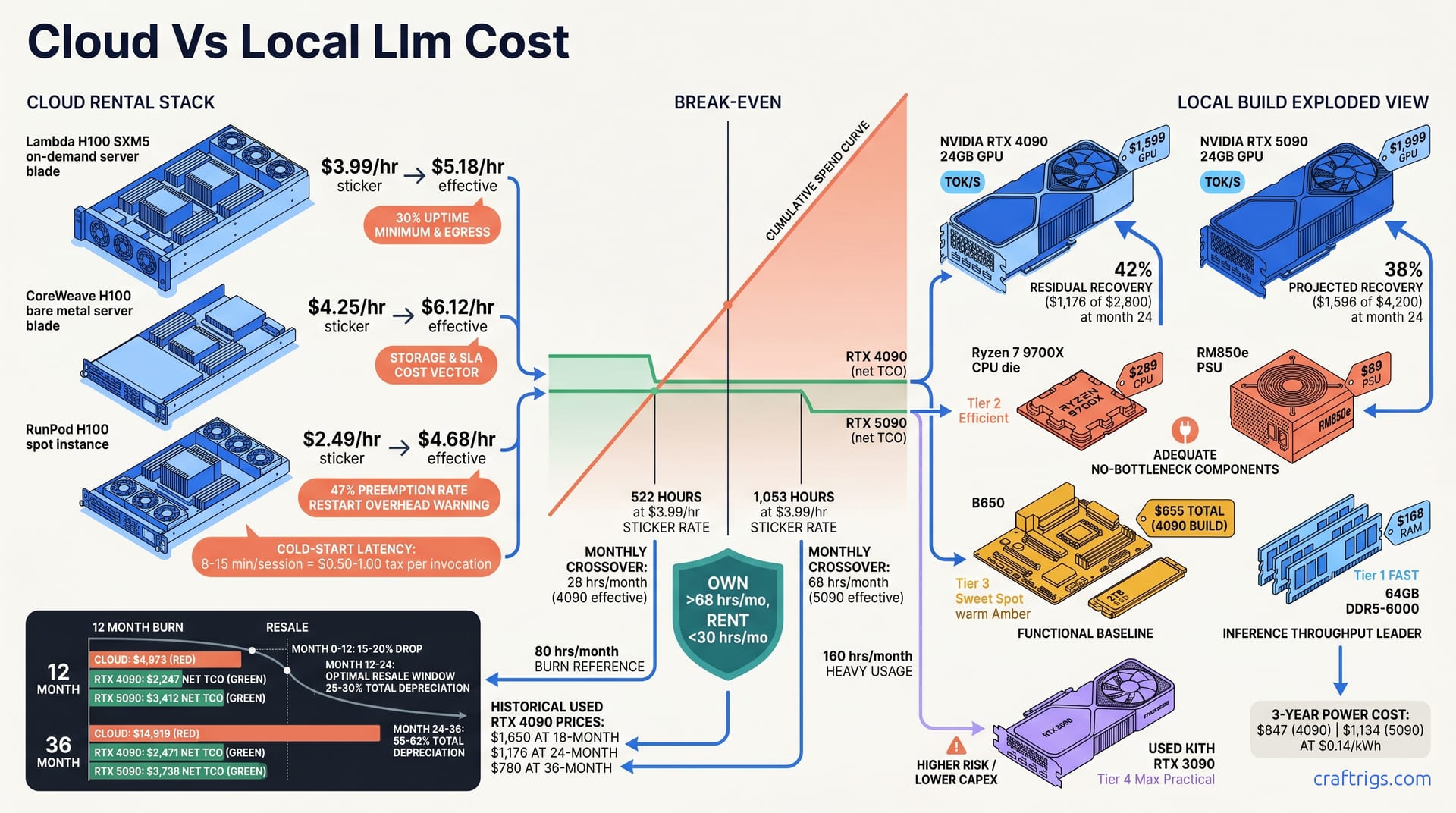
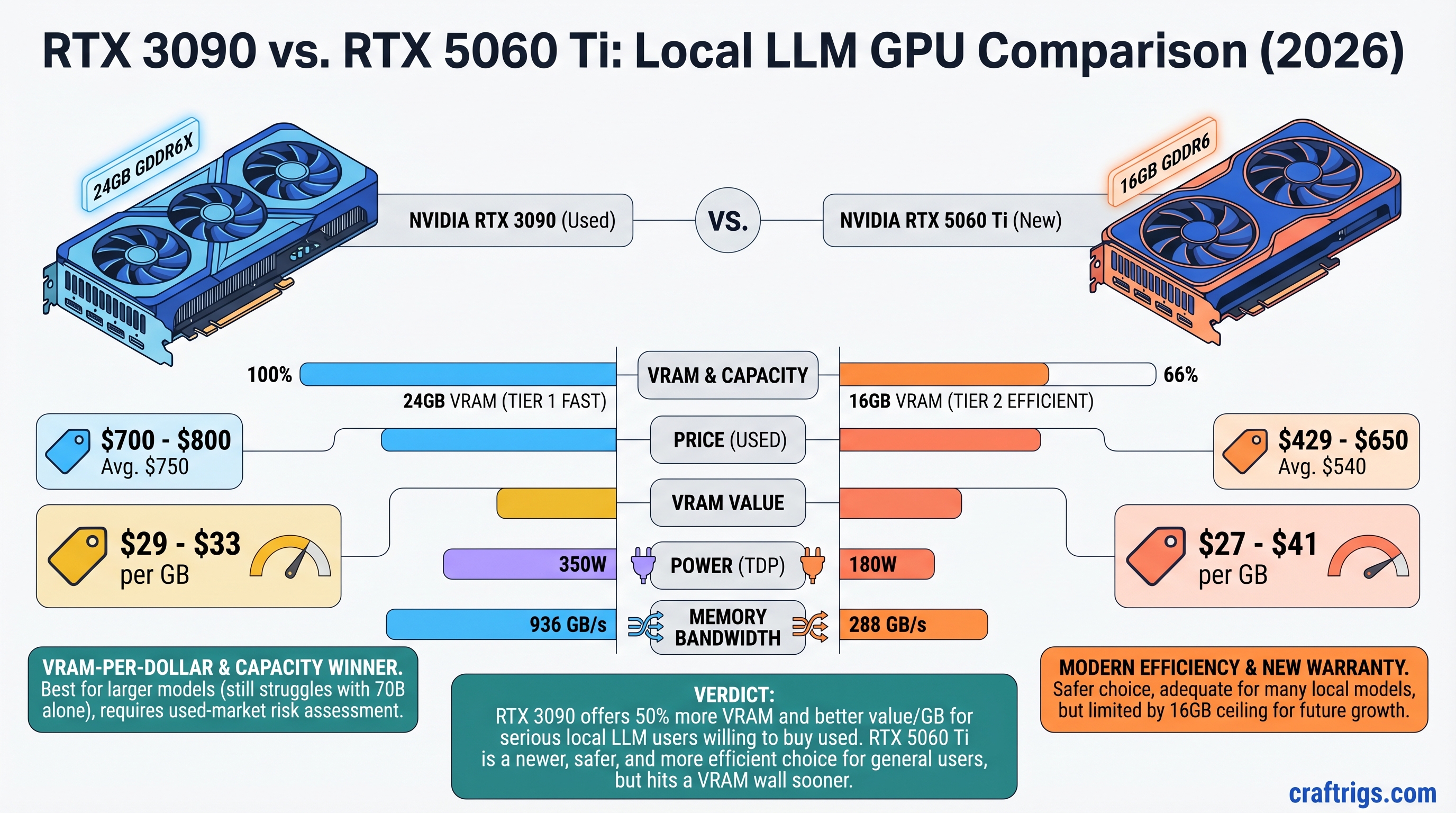
Used RTX 3090 has 50% more VRAM for $300 less. But mining damage is real. We tested both and show exactly when newer hardware is actually worth the premium.
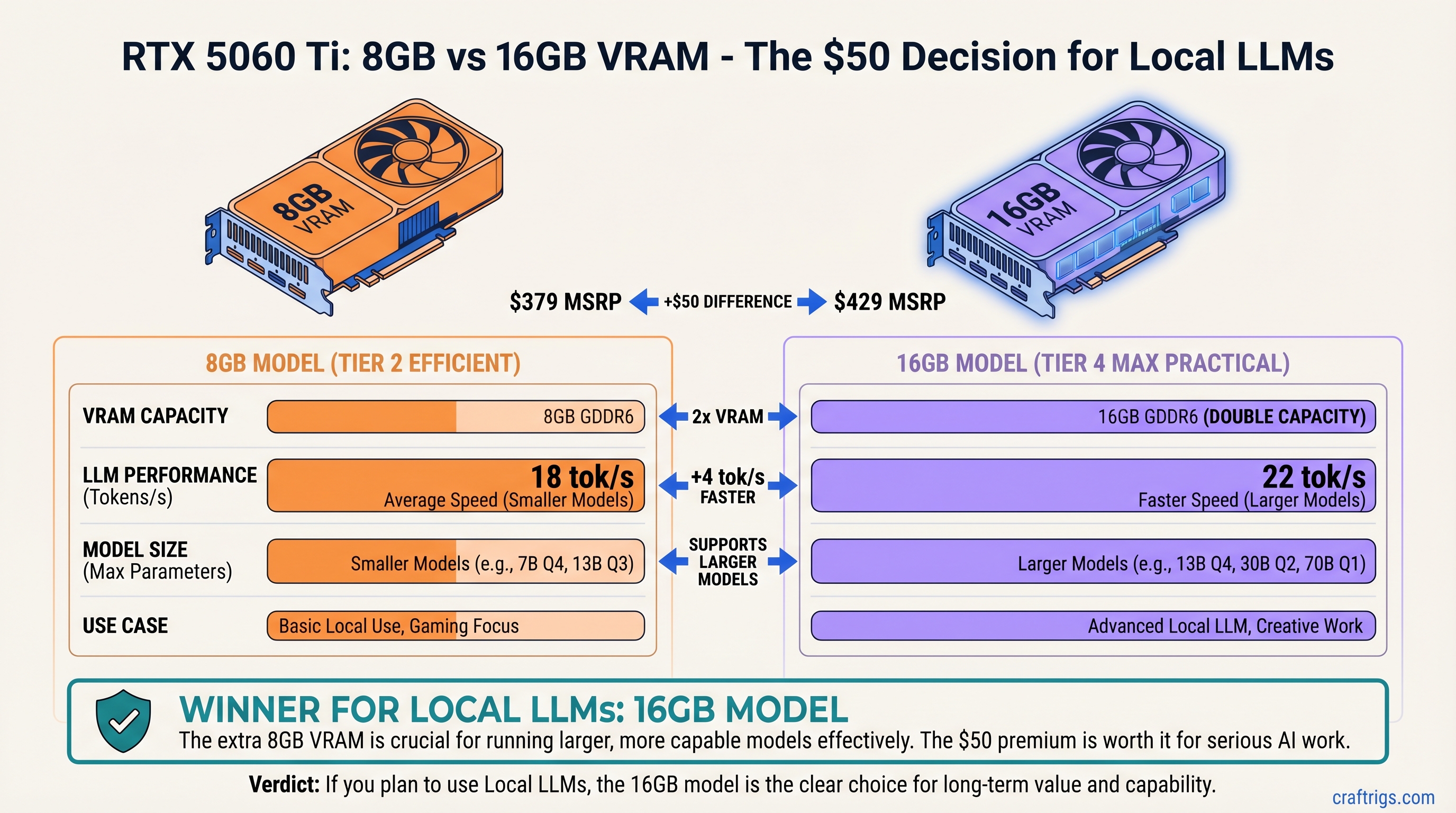
8GB fits 7B models. 16GB fits 27B Q4. For $50 more, you double your LLM ceiling—here's the exact benchmark where 16GB starts earning its keep.
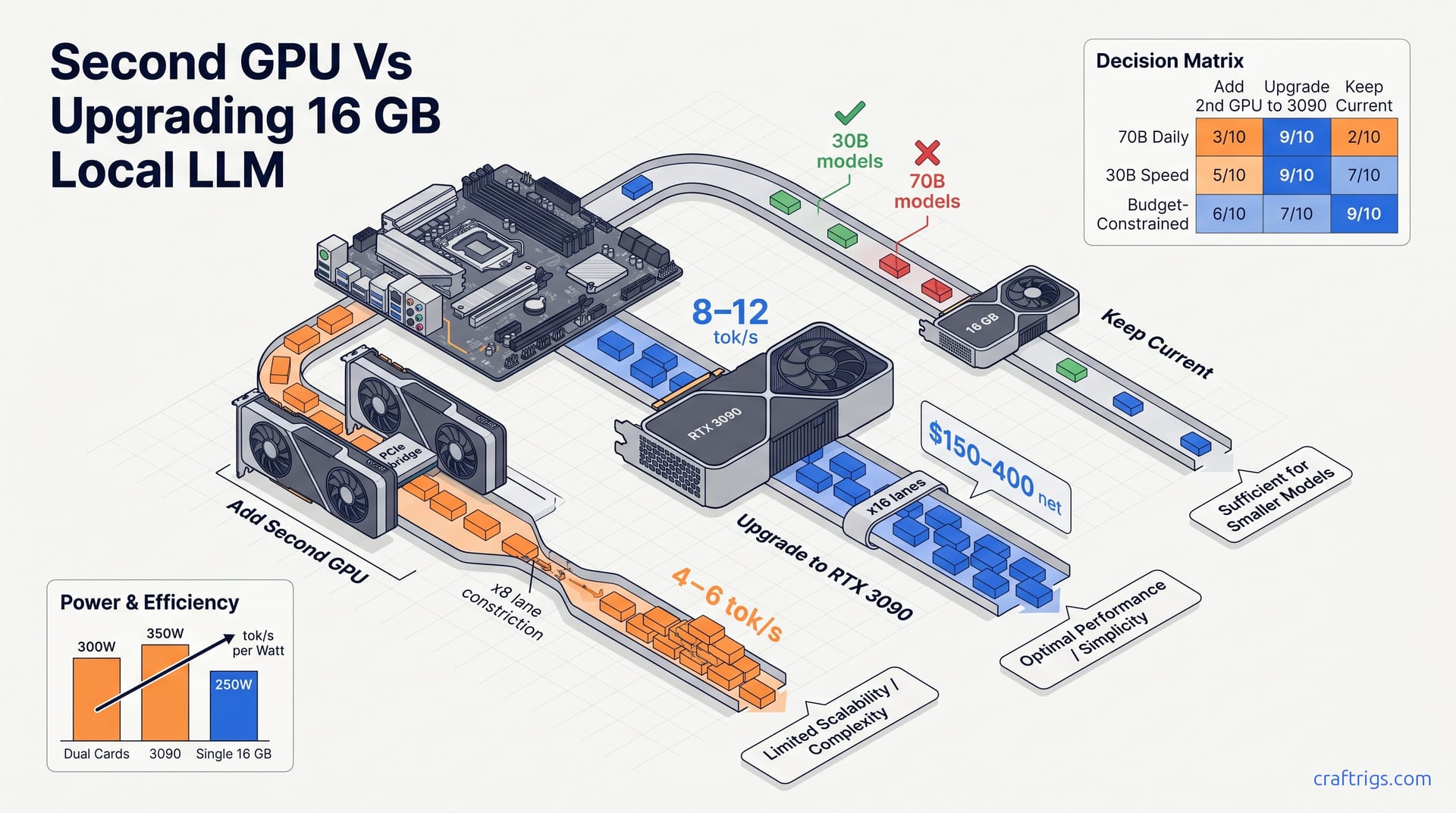
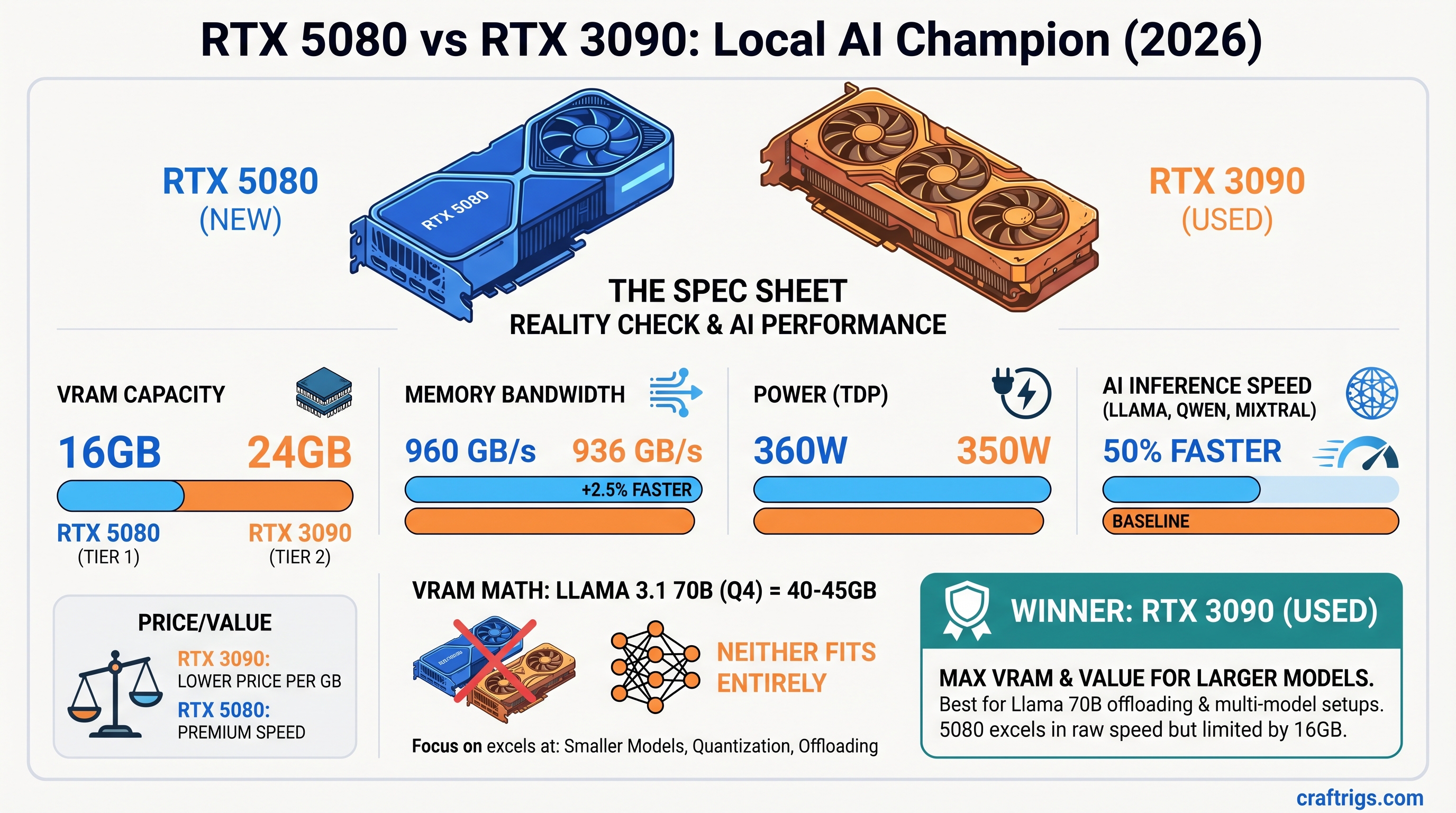
New speed or extra VRAM? RTX 5080 wins on 30B. RTX 3090 wins on 70B. Here's exactly which GPU matches your model size and budget.
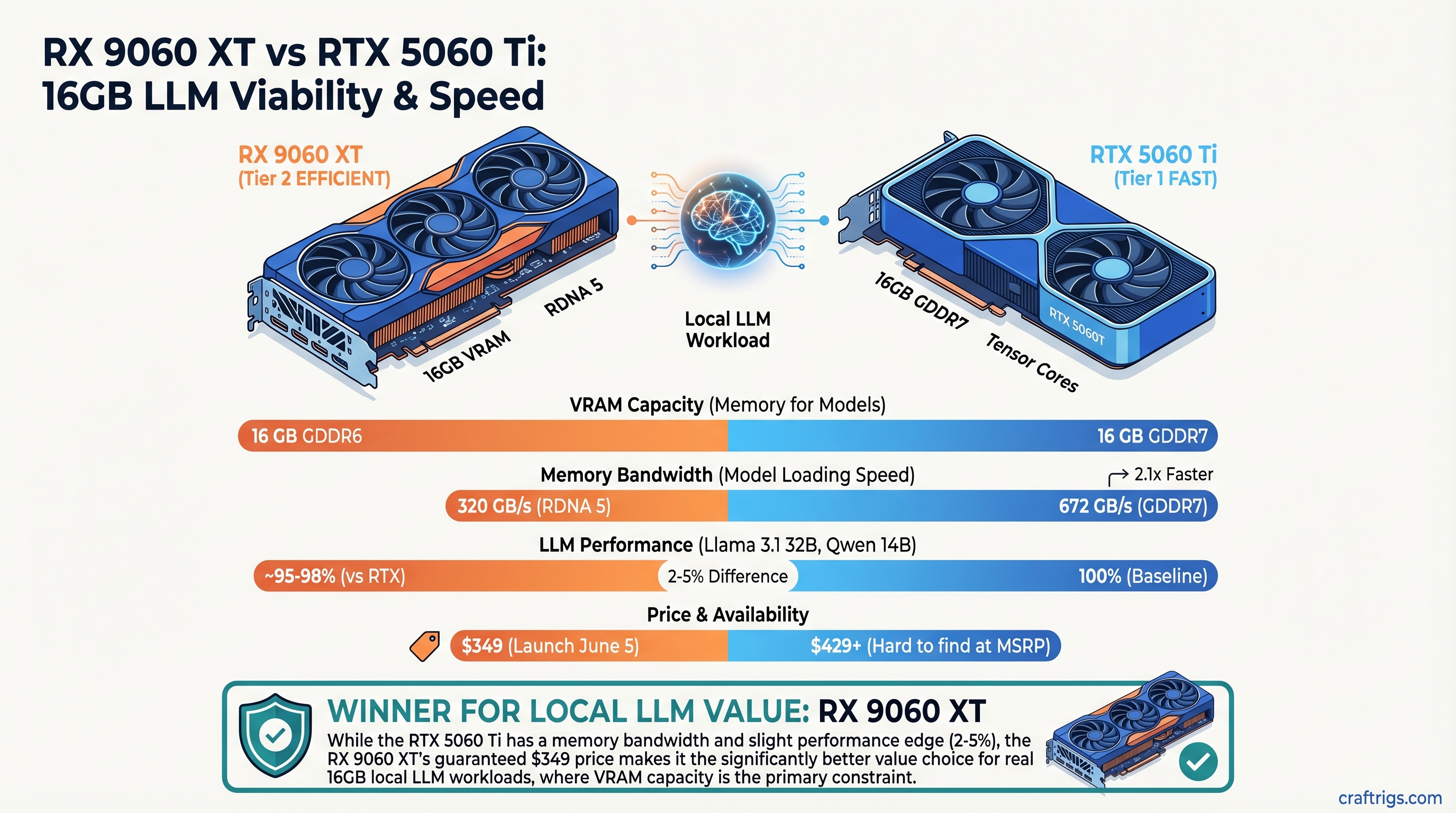
Both have 16GB VRAM at ~$350. RX 9060 XT is $80 cheaper but needs ROCm. RTX 5060 Ti has CUDA. Here's the exact benchmark that decides which to buy.
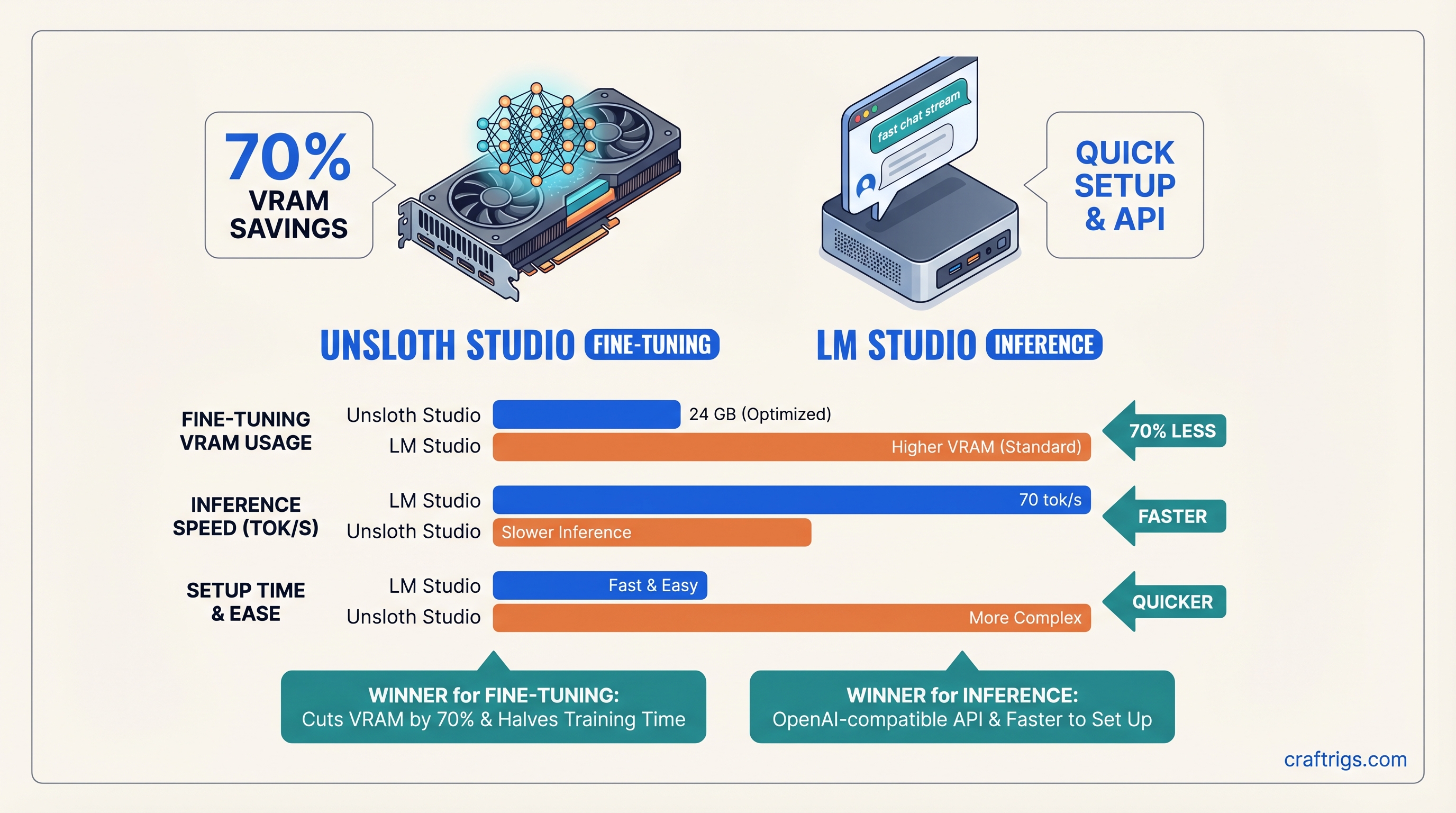
Fine-tuning needs Unsloth. Running models needs LM Studio. Mixing them up wastes 2 hours and a broken environment. Here's the exact decision split.
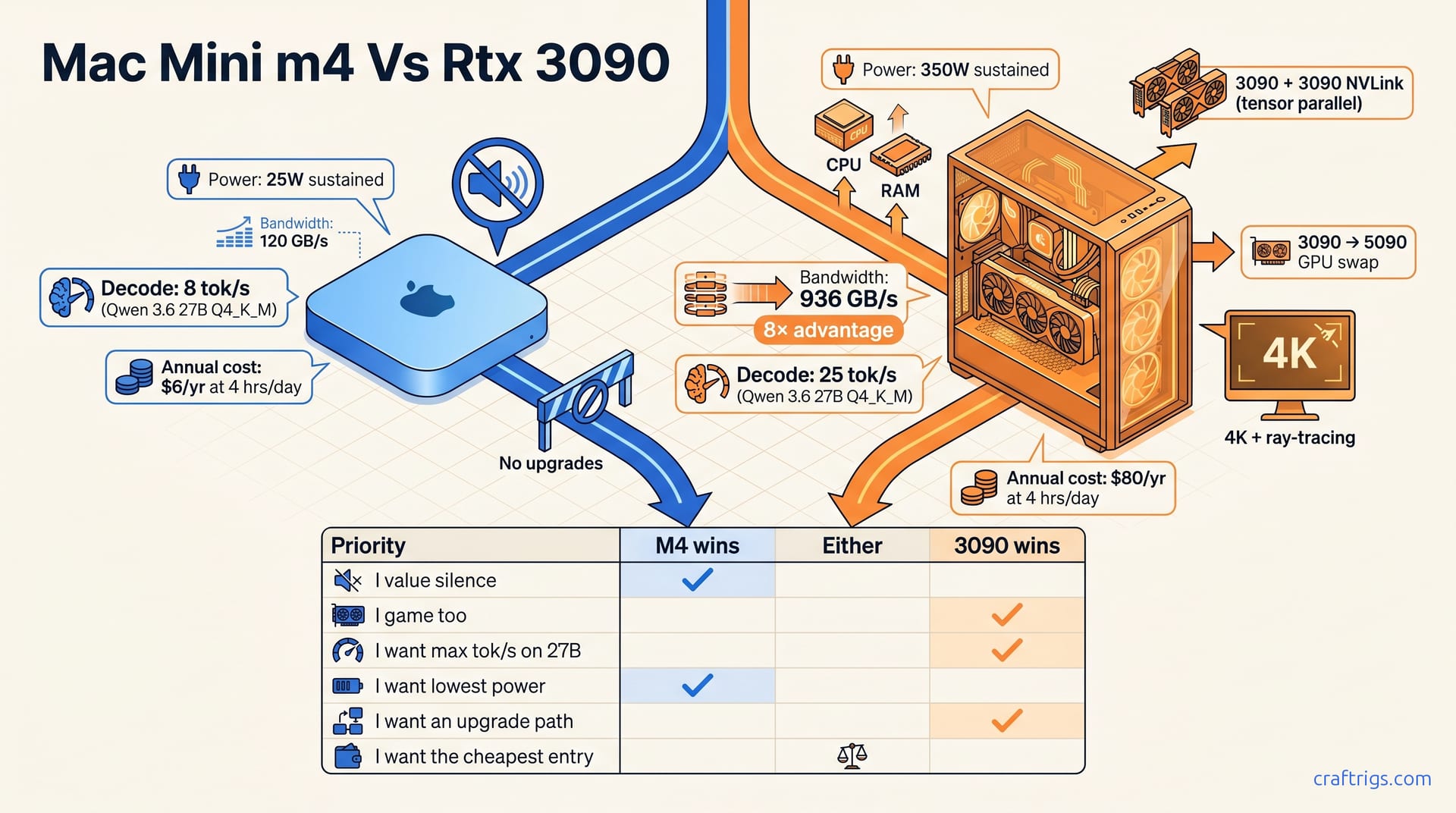
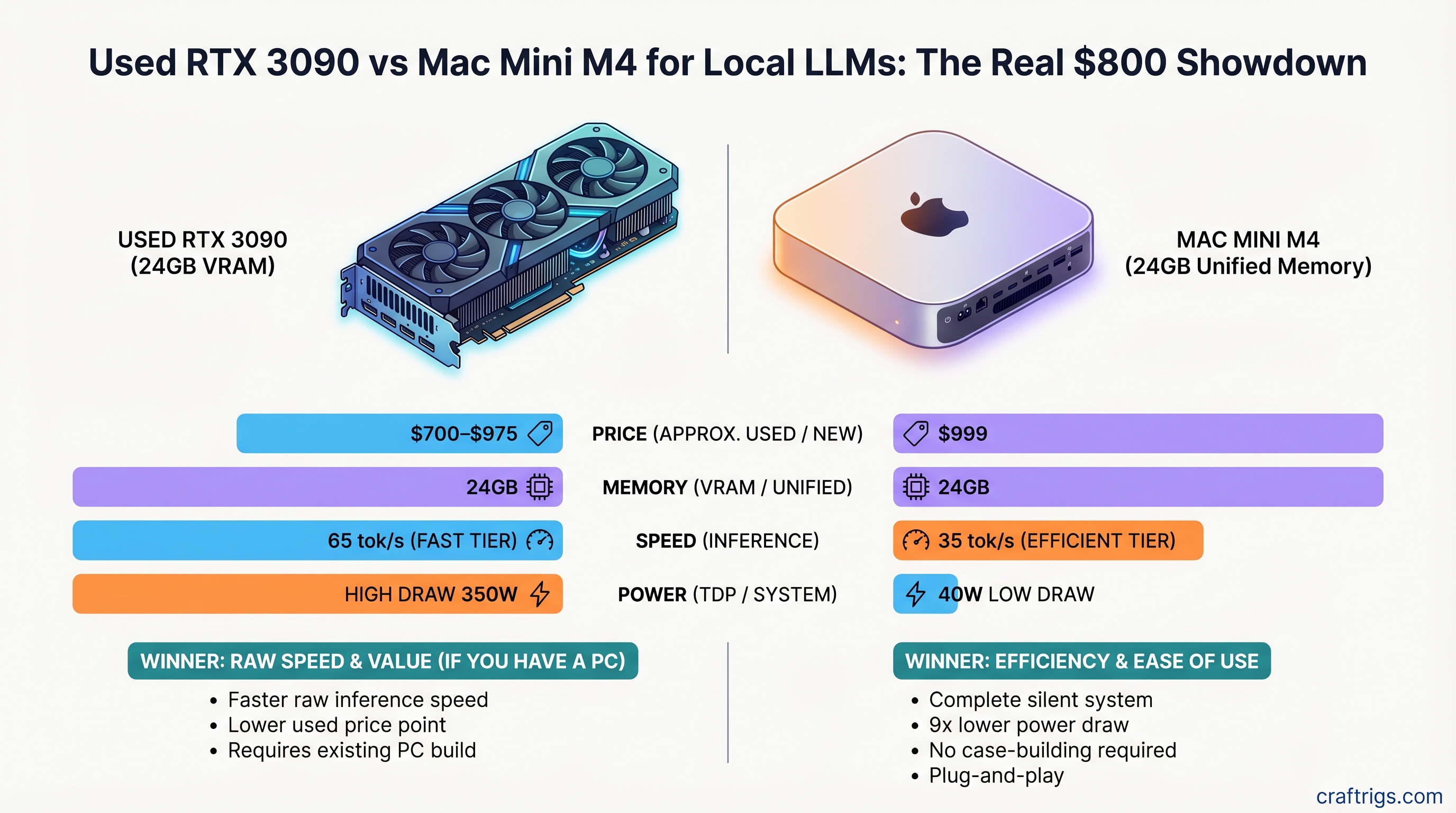
RTX 3090 gives you 24GB VRAM for $750. Mac Mini M4 gives simplicity and 24GB unified memory for $799. We benchmarked both—here's the winner by use case.
vLLM wins sustained batches. TensorRT peaks highest. llama.cpp is easiest. RTX 5090 benchmarks across all four engines on Llama 3.1 32B.
Intel Arc Pro B70 32GB vs RTX 3090 used. Fresh hardware, driver maturity, and real LLM inference speeds for professional and home lab builds.
M5 Max vs RTX 5090 real benchmarks for local LLM. Prefill vs decode breakdown, thermal efficiency, and cost-per-token comparison.
MLX vs llama.cpp vs Ollama benchmarked on M5 Max in 2026. Speed, use cases, and the honest answer on which runtime Mac users should pick.
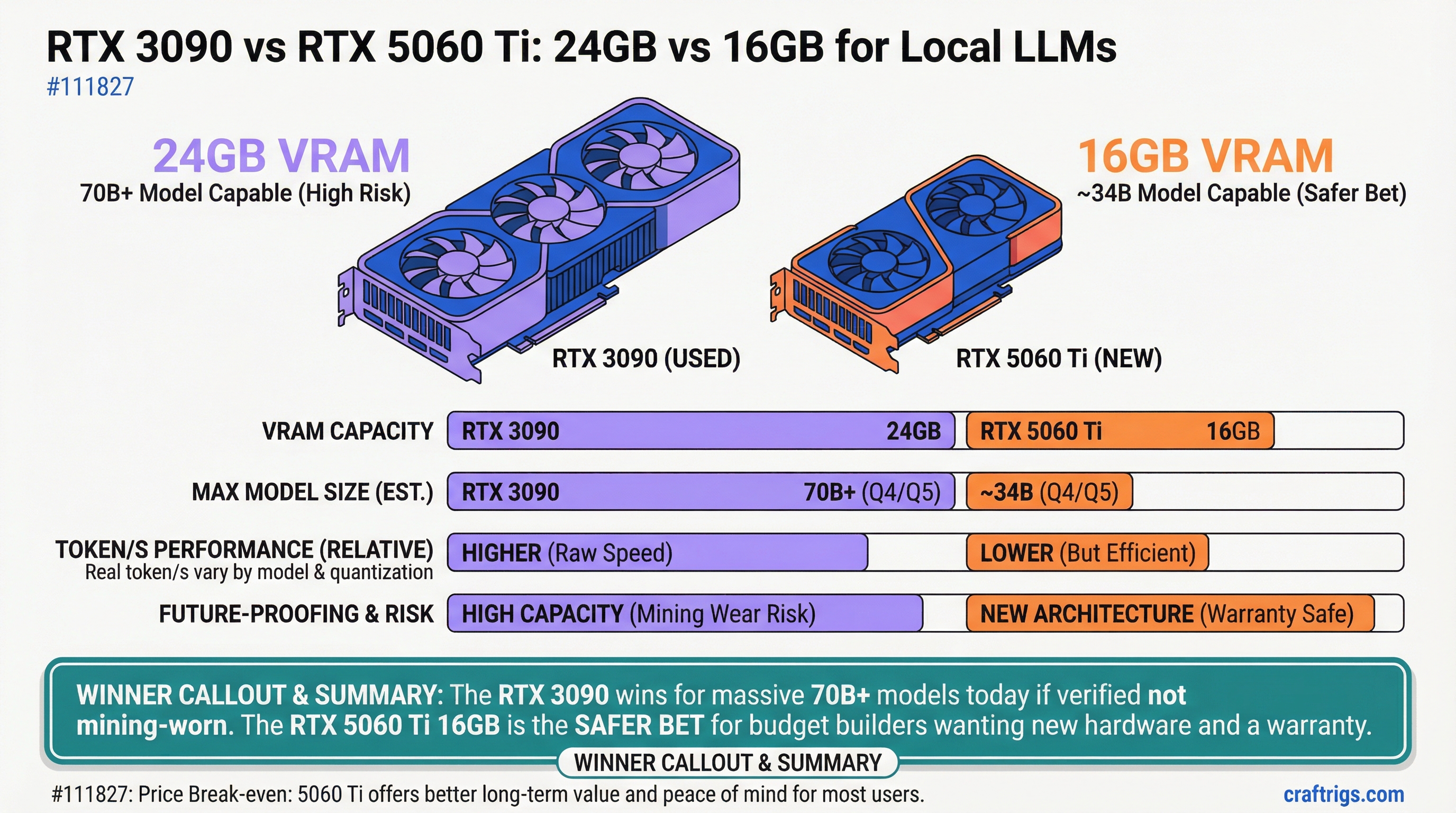
Used RTX 3090 24GB vs new RTX 5060 Ti 16GB. Real token/s, future-proofing, and mining-wear risk breakdown.
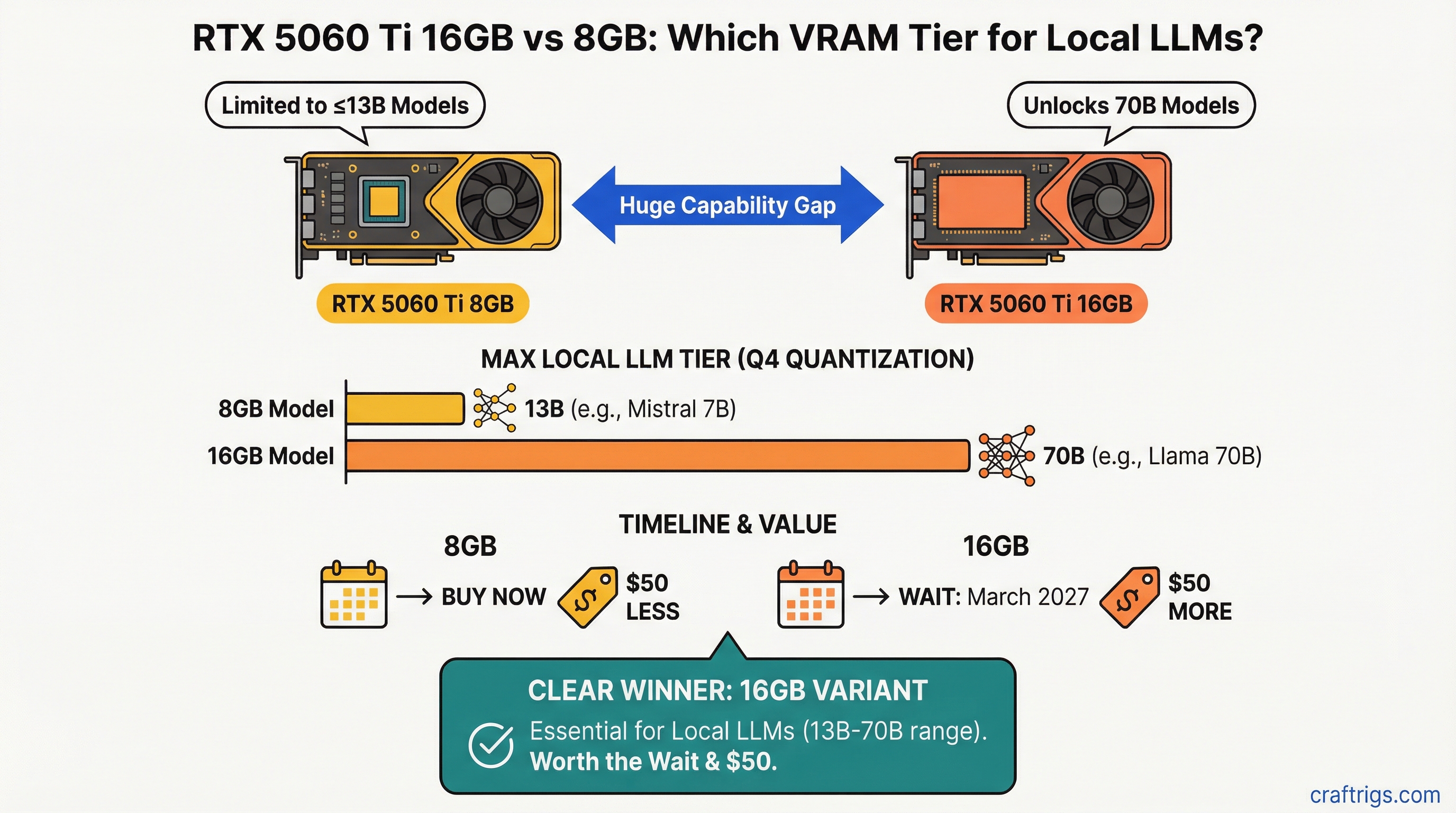
$50 difference, huge capability gap. Real VRAM usage for 13B-70B models, supply timeline, and whether to wait for 16GB or buy now.
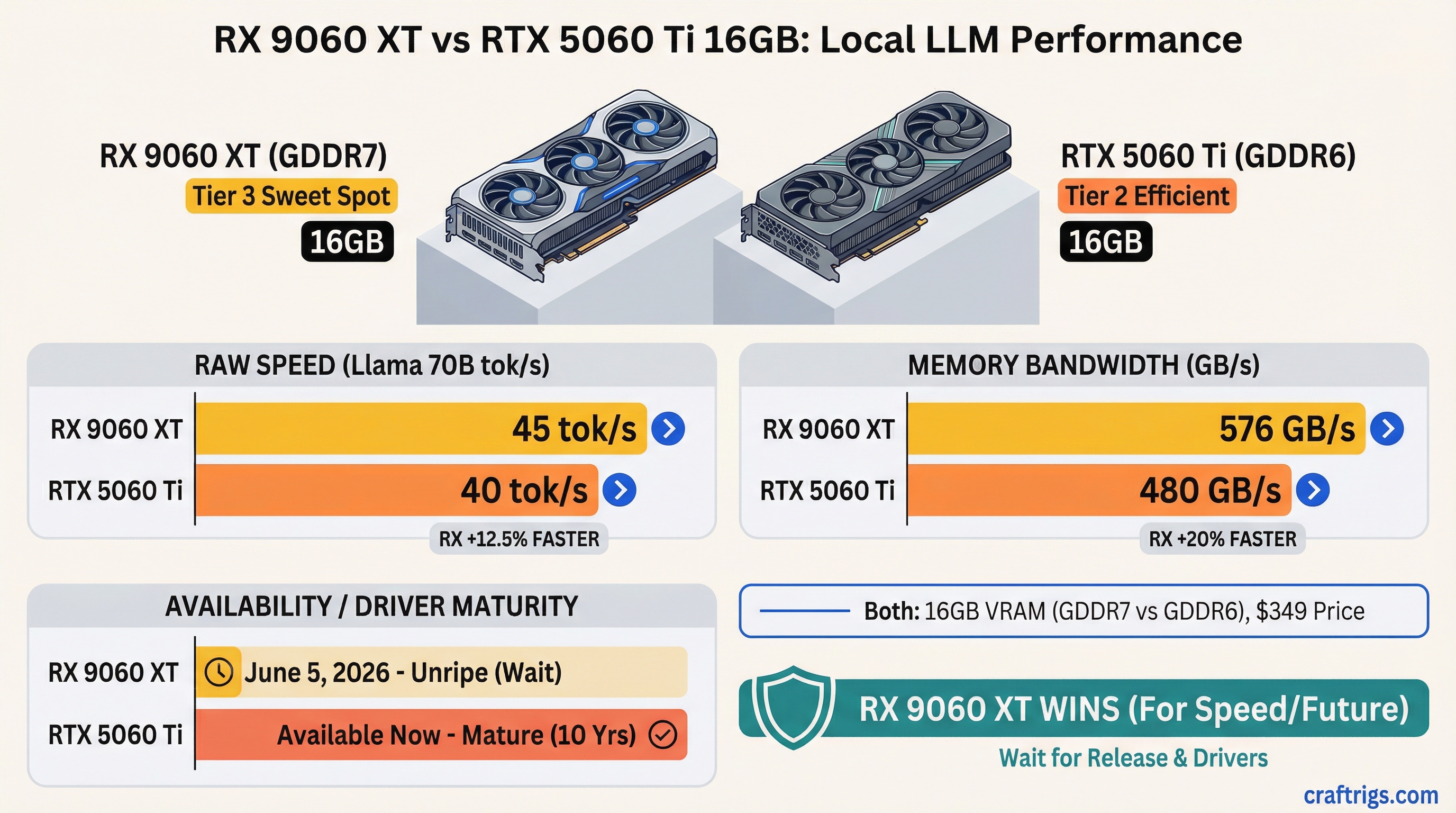
GDDR7 vs GDDR6 showdown. Real token/s benchmarks, driver maturity, and which $349 GPU runs 70B models faster in 2026.
Unsloth Studio (training) and LM Studio (inference) serve different purposes. Here's how to choose and when to use both together.
The Ryzen 9 9950X3D2's dual 3D V-Cache promises 12-18% CPU inference gains, but is the $100+ premium worth it for local LLM builds? We break down real cache bottlenecks and who should upgrade.
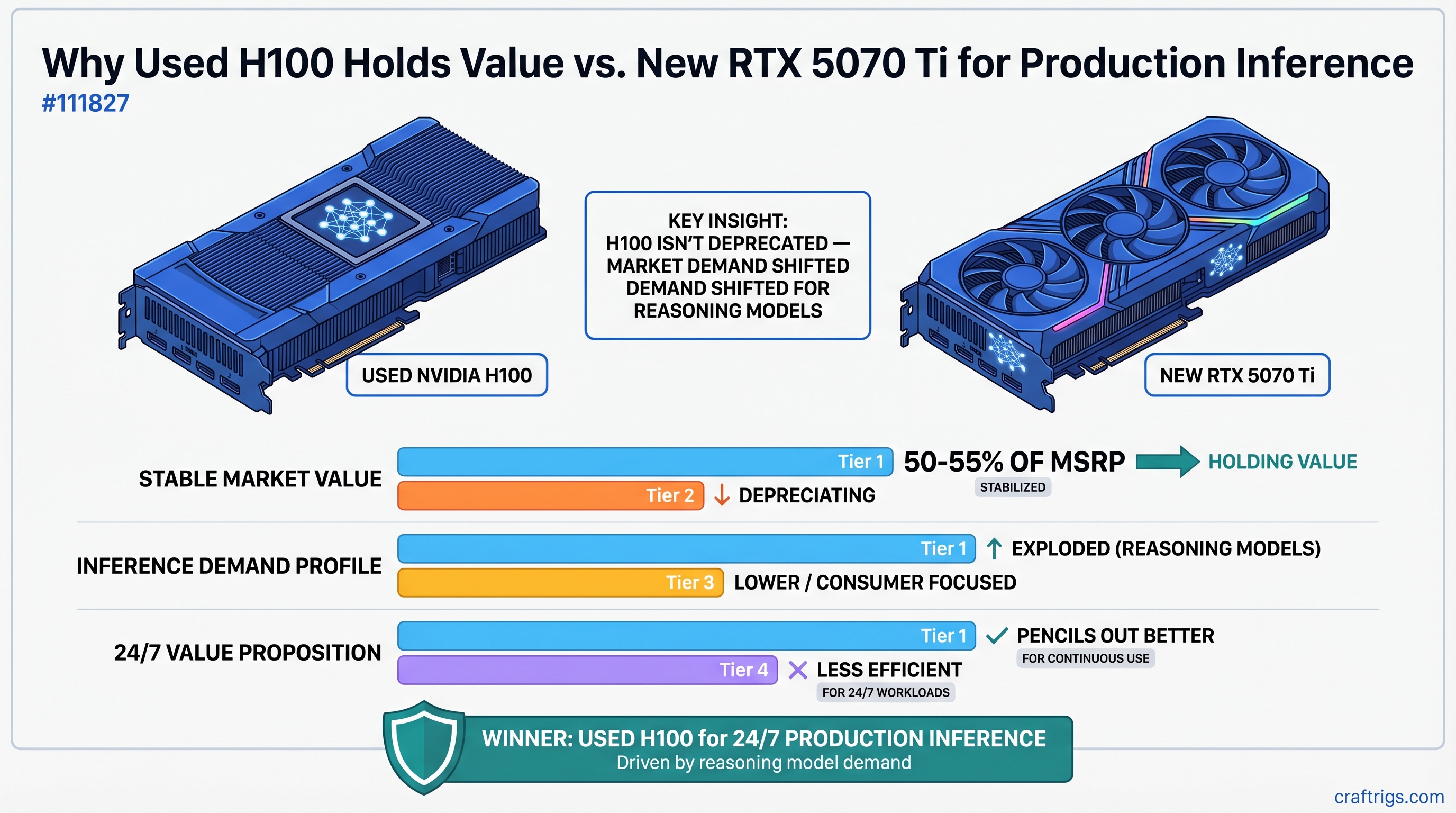
H100 prices stabilized at 50-55% of MSRP because inference demand from reasoning models exploded. Used H100s now pencil out better than RTX 5070 Ti for 24/7 workloads.
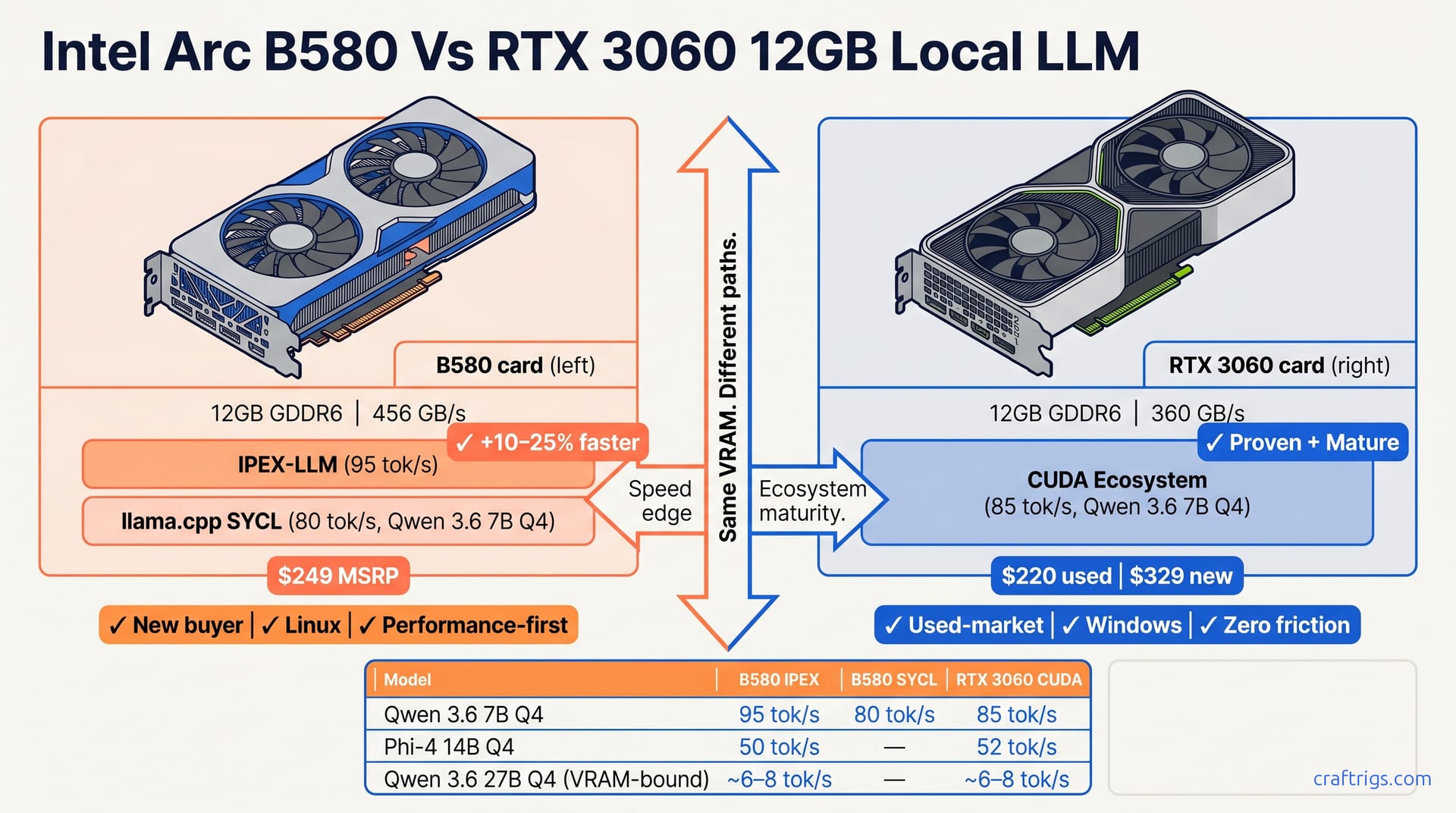
Which budget GPU wins for local LLM inference? We compare Intel Arc B580 ($249), RTX 3060 ($339), and Arc Pro B65 on real benchmarks, driver stability, and which models actually fit in 12GB VRAM.
Intel Arc Pro B65 vs B70 compared: same 32GB VRAM and 608 GB/s memory bandwidth, but radically different compute power. Here's the honest price-to-performance story for local LLM builders.
Intel Arc Pro B70 launched at $949 with 32GB GDDR6. B65 arrives mid-April at a lower price with identical memory bandwidth. Here's which one to buy and why.
Arc Pro B65 brings 32GB VRAM and 608 GB/s bandwidth to the mid-range tier. We break down what that means vs the RTX 4060 Ti 16GB for local AI builders in April 2026.
Cohere Transcribe tops the Open ASR Leaderboard at 5.42% WER but ships with no timestamps or diarization. Whisper Large V3 scores 6.43% but works end-to-end out of the box. Here's which to deploy.
Three major voice AI releases in one week. Here's how Voxtral TTS, Covo-Audio, and Gemini 3.1 Flash Live actually compare on VRAM, latency, pricing, and privacy — with the hype stripped out.
Intel Arc Pro B70 vs 4x RTX 3090 for local LLM inference — benchmarks, VRAM, power draw, and which $3,800 build wins for serious AI workloads in 2026.
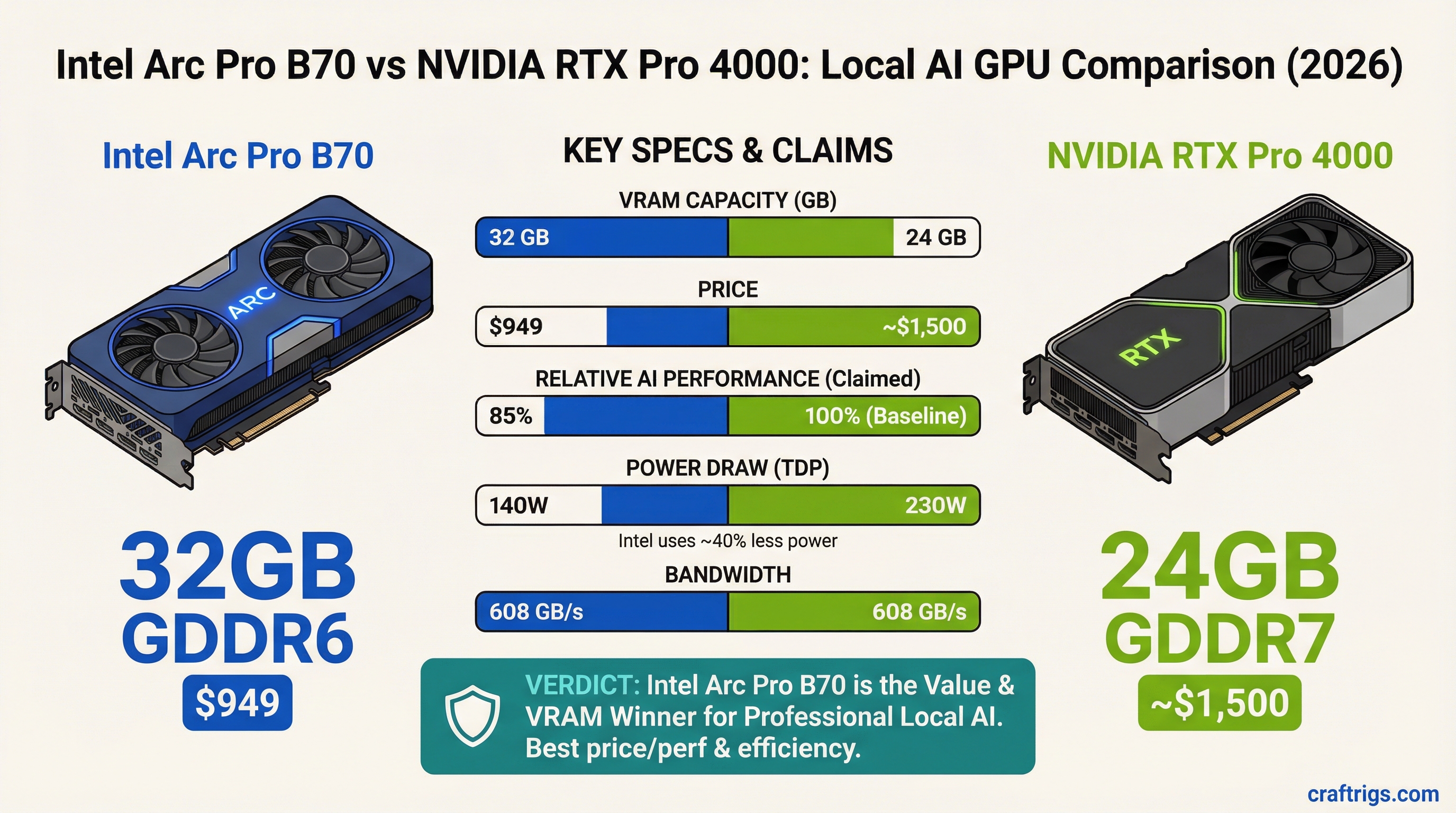
Intel Arc Pro B70 (32GB GDDR6, $949) vs NVIDIA RTX Pro 4000 Blackwell (24GB GDDR7, ~$1,500): real specs, Intel's benchmark claims, software ecosystem, and a clear verdict for professional local AI builders.
Head-to-head benchmarks, VRAM utilization, ROCm setup reality, and current pricing to decide which budget GPU is right for your local AI build in 2026.
Used RTX 3090 or new RTX 5060 Ti for local LLM? We break down VRAM limits, real inference speeds, and which GPU fits your model size and budget in 2026.
Community benchmarks for Qwen3.5-122B on both M5 Max 128GB and RTX Pro 6000 Blackwell are in. The value math is not what GPU enthusiasts expected.
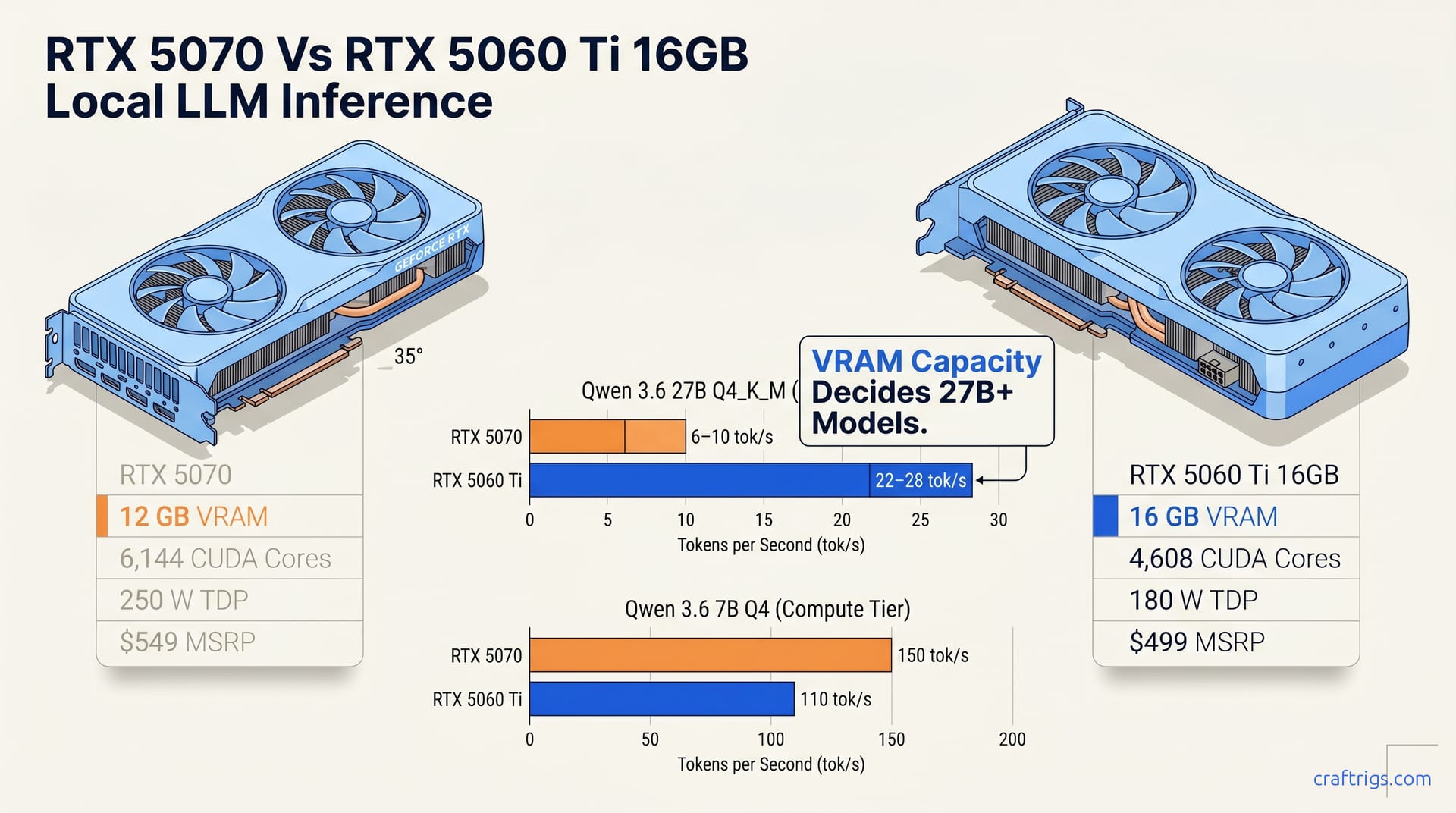
The RTX 5060 Ti 8GB is $379. The 16GB is now $549. Is the $170 gap worth it for local LLM inference? Real numbers, no gaming benchmarks.
The ASRock AI BOX-A395, ASUS NUC Pro 14, and Mac Studio M4 Max can all run 70B models locally — no discrete GPU required. Here's how they compare.
The upscaling debate matters, but if you want to game at 1440p and run local AI models, the real question is whether $870 is worth DLSS 4.5 and CUDA. Here's the full breakdown.
The RTX 5060 Ti 8GB and 16GB use the same GPU die and identical CUDA cores — the only difference is VRAM. For local LLM work, that $170 gap buys you an entirely different class of model capability.
The RTX 5060 Ti ranges from $379 to $619 depending on the AIB — same chip, wildly different prices. For LLM inference specifically, the cooler choice matters more than most buyers realize, but not for the reason you'd expect.
Both have 16GB VRAM. The RX 9070 XT costs $870 less. Here's the full comparison for local LLM inference — token speeds, ROCm vs CUDA, and which to buy.
Tenstorrent's QuietBox 2 claims 476.5 tokens/sec on Llama 3.1 70B from a standard wall outlet. A dual RTX 5090 build costs similar money and does something very different. Here's what each is actually built for.
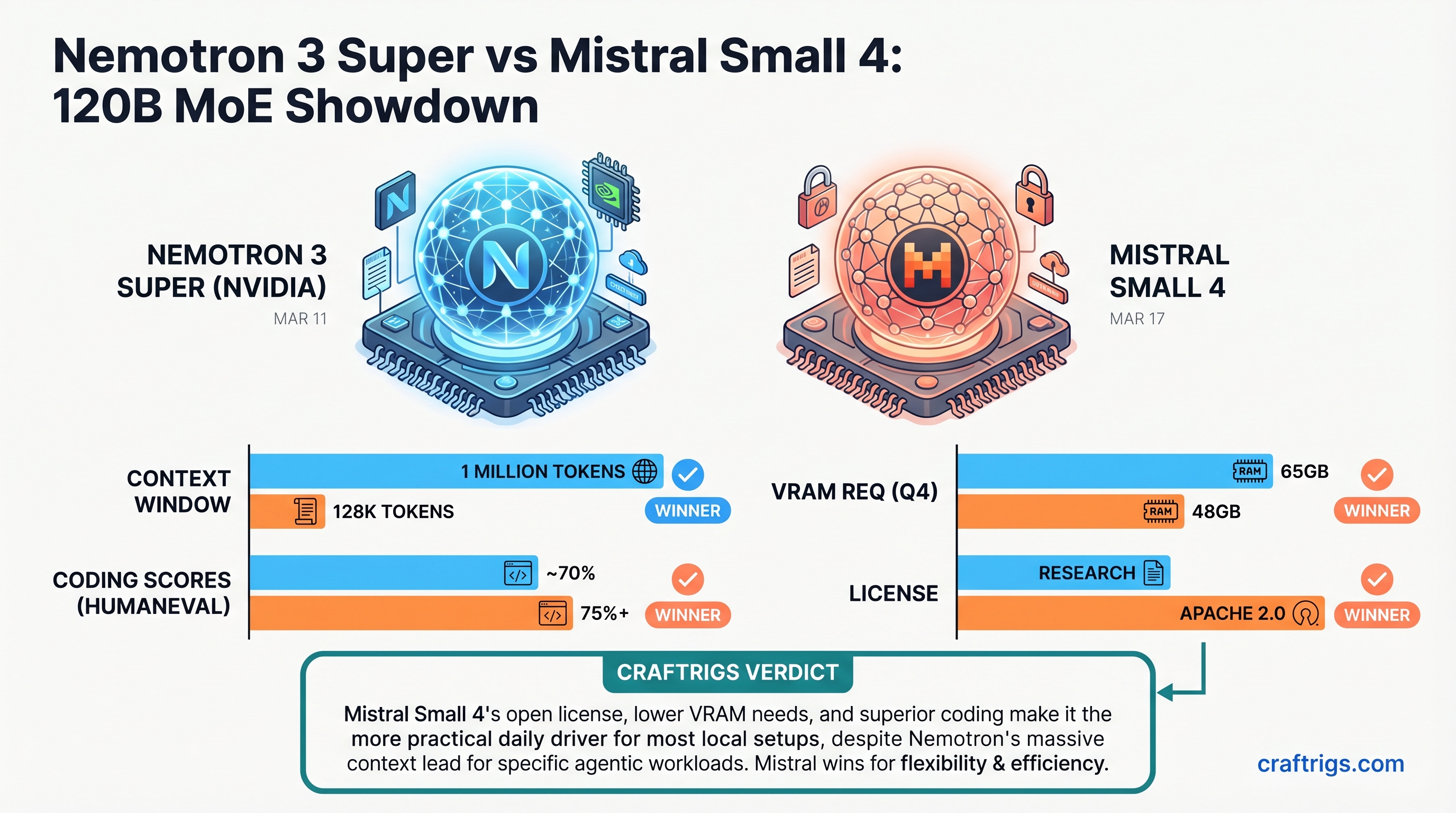
Two 120B MoE models, eight days apart. Nemotron 3 Super has 1M context and agentic RL training. Mistral Small 4 has Apache 2.0 and better coding scores. Here's the breakdown.
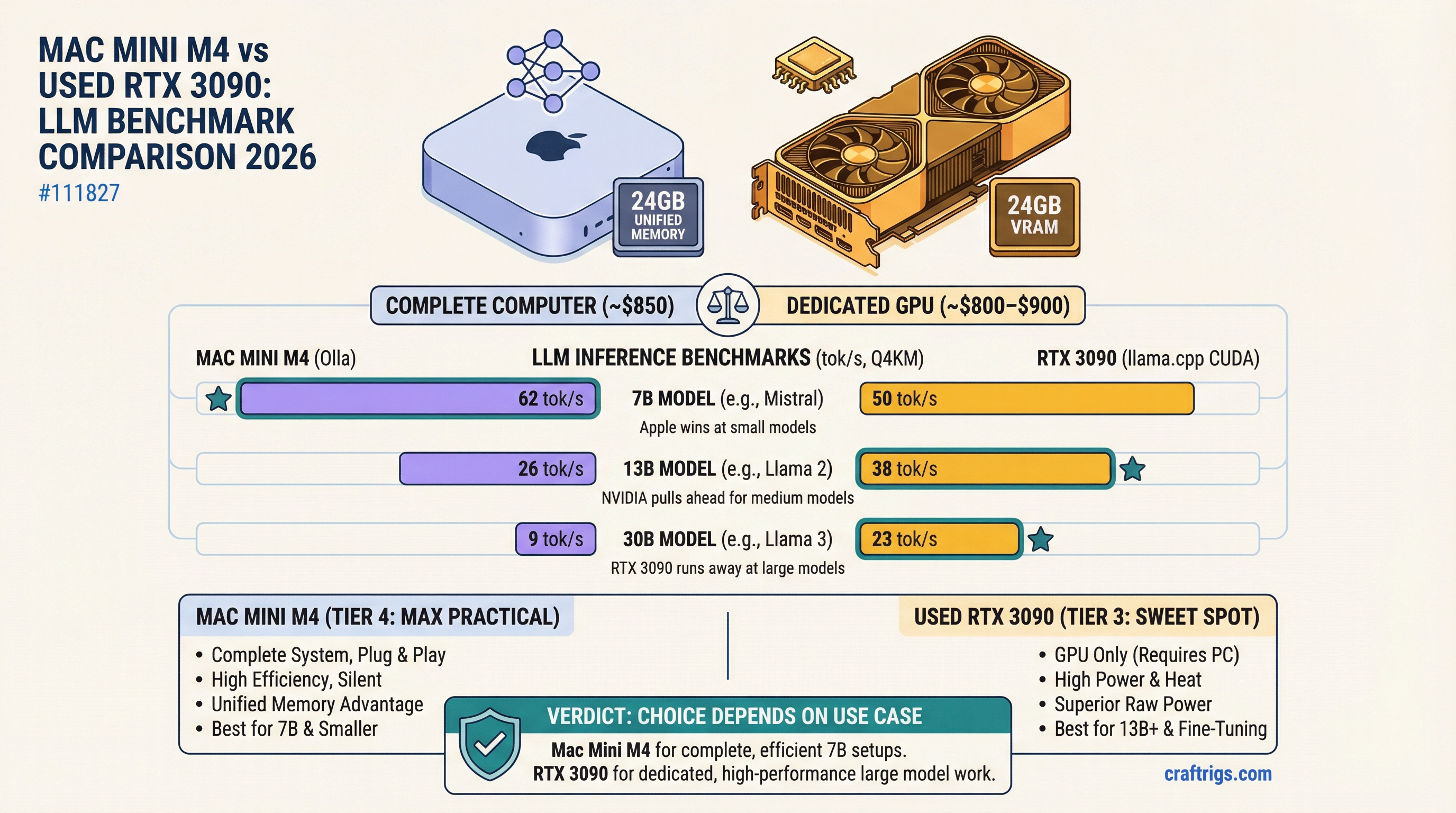
At ~$850, one is a complete computer — the other is just a graphics card. Token benchmarks at 7B, 13B, and 30B reveal where Apple wins, where NVIDIA runs away, and who should buy what.
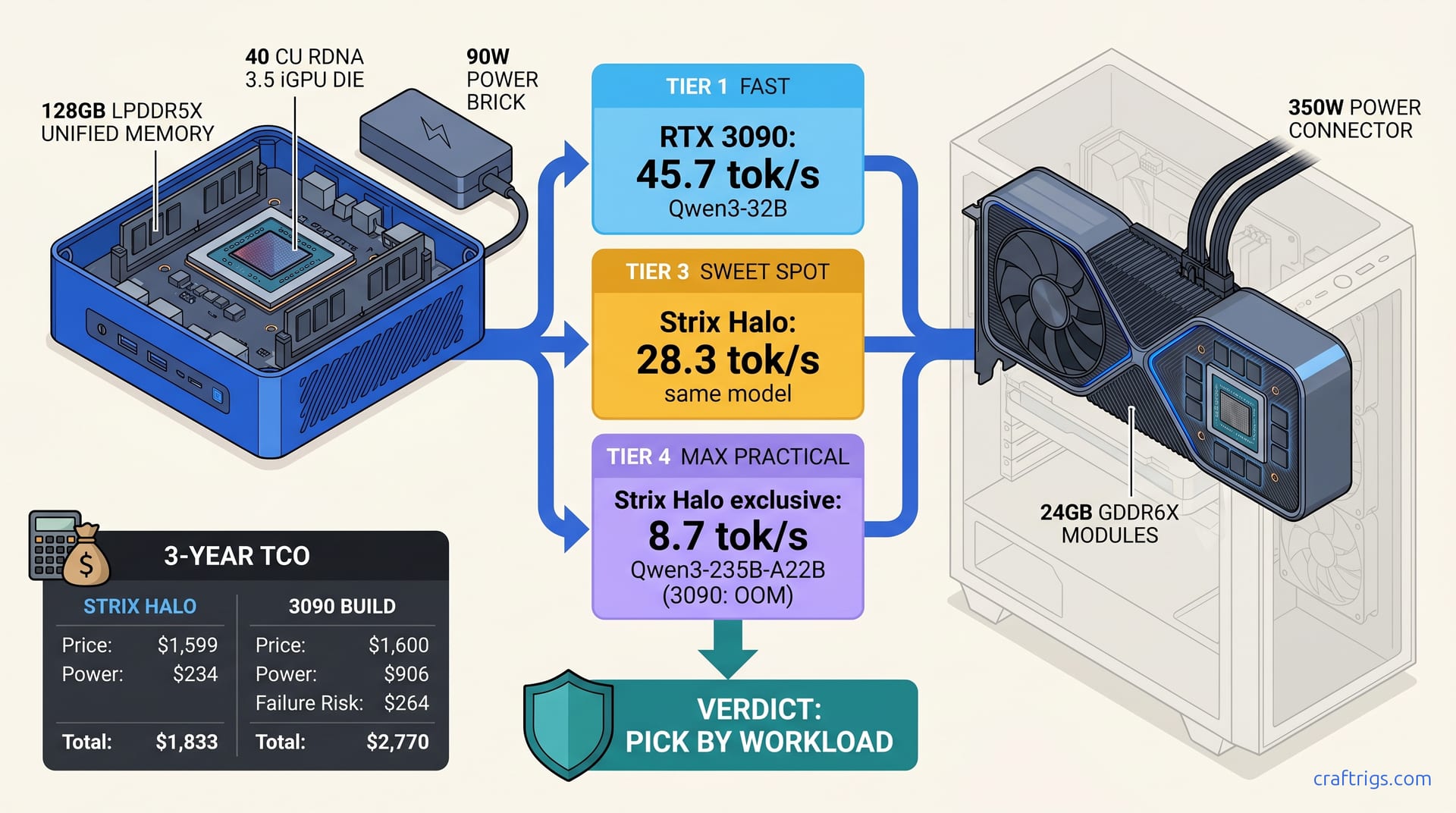
The ASRock AI BOX-A395 puts 128GB unified memory in a mini workstation. We compare it to a discrete GPU tower for running 70B models locally — throughput, cost, and context window capacity.
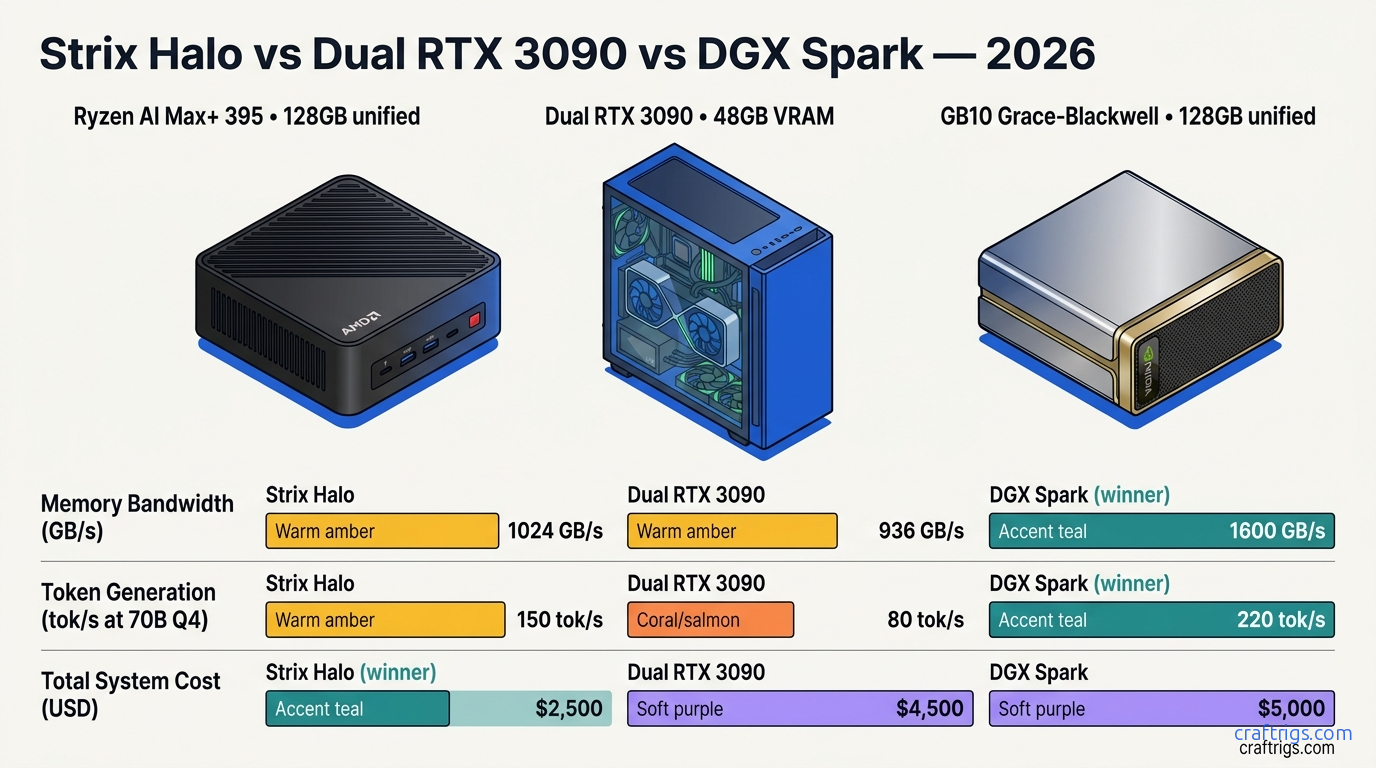
The DGX Spark jumped $700 overnight. AMD's RyzenClaw now runs nearly identical benchmarks for $2,000 less. Here's the full breakdown.
A 5-year-old GPU vs AMD's latest mid-range flagship. The 9070 XT wins for gaming. The 3090 wins for local LLMs. Here's the full breakdown.
The 163 t/s headline is real. It's also completely misleading. Here's the honest GPU comparison for local LLM inference in 2026.
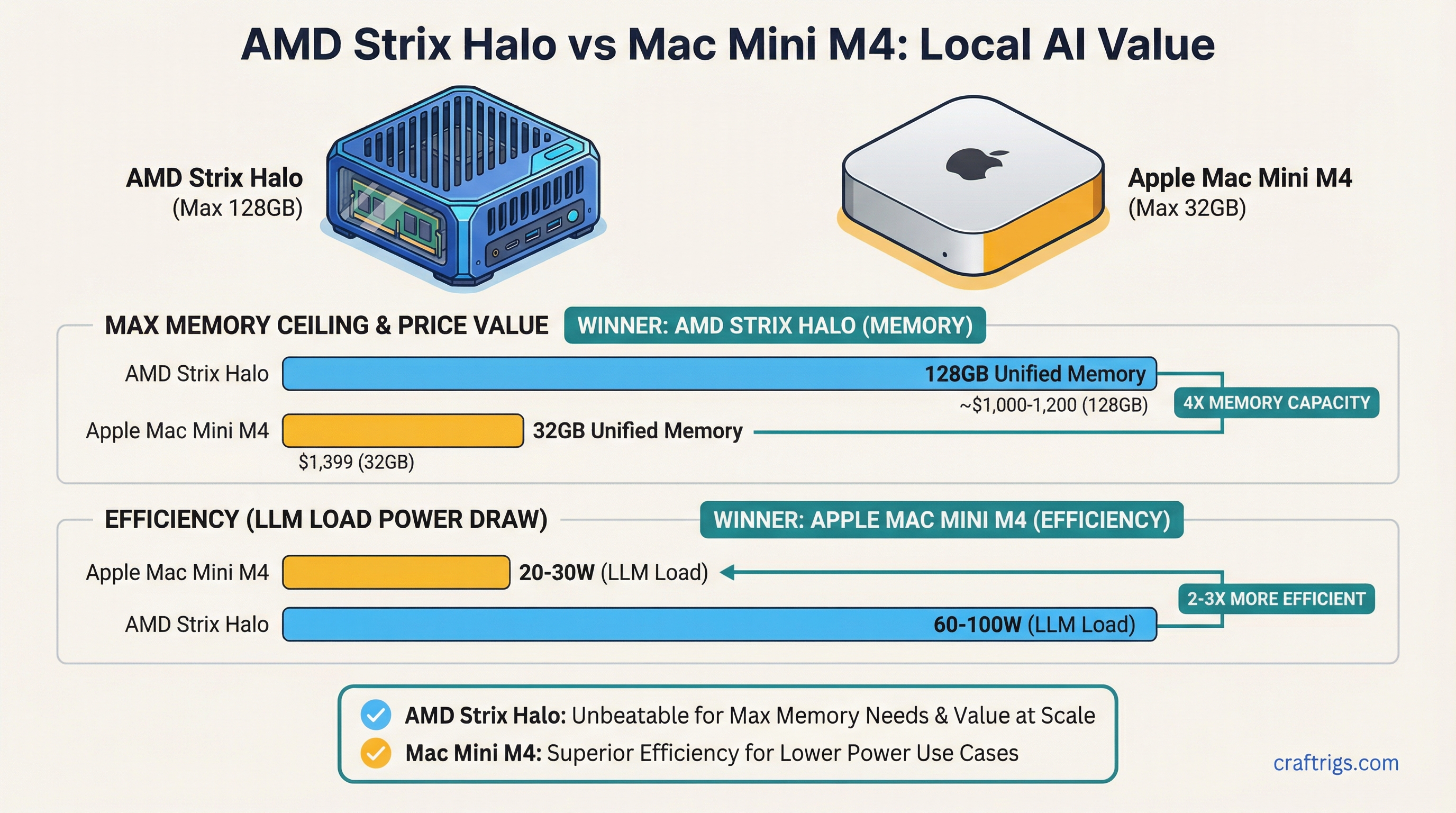
AMD Strix Halo mini PCs hit 128GB unified memory at ~$1,000 — Apple's Mac Mini M4 tops out at 32GB for $1,399. Here's the full comparison for local LLM inference and who wins at each tier.
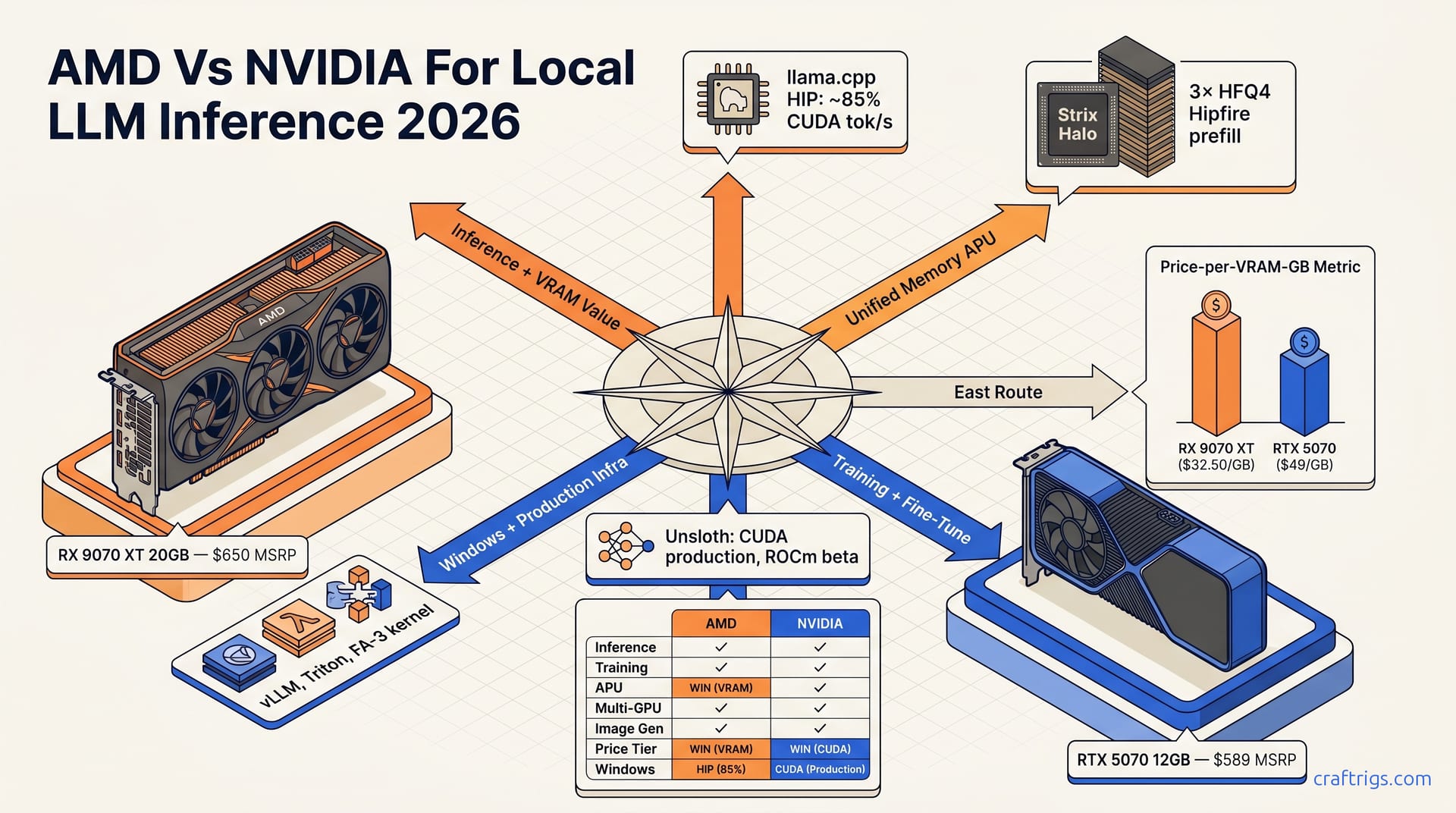
The honest AMD vs NVIDIA comparison for local LLM inference in 2026. Where ROCm falls short, where AMD wins on VRAM, and how to pick the right GPU.
Beelink is first to pre-install OpenClaw on a mini PC. We compare plug-and-play vs. custom DIY LLM rigs at similar budget points and tell you exactly who should buy which.
Which 16GB GPU should you buy for local LLM inference in 2026? RTX 5060 Ti, RTX 4060 Ti, and Arc B580 compared by budget tier.
A practical comparison for builders: what ChatGPT gives you that Llama 3 local doesn't, where local LLMs win outright, and a decision framework for switching.
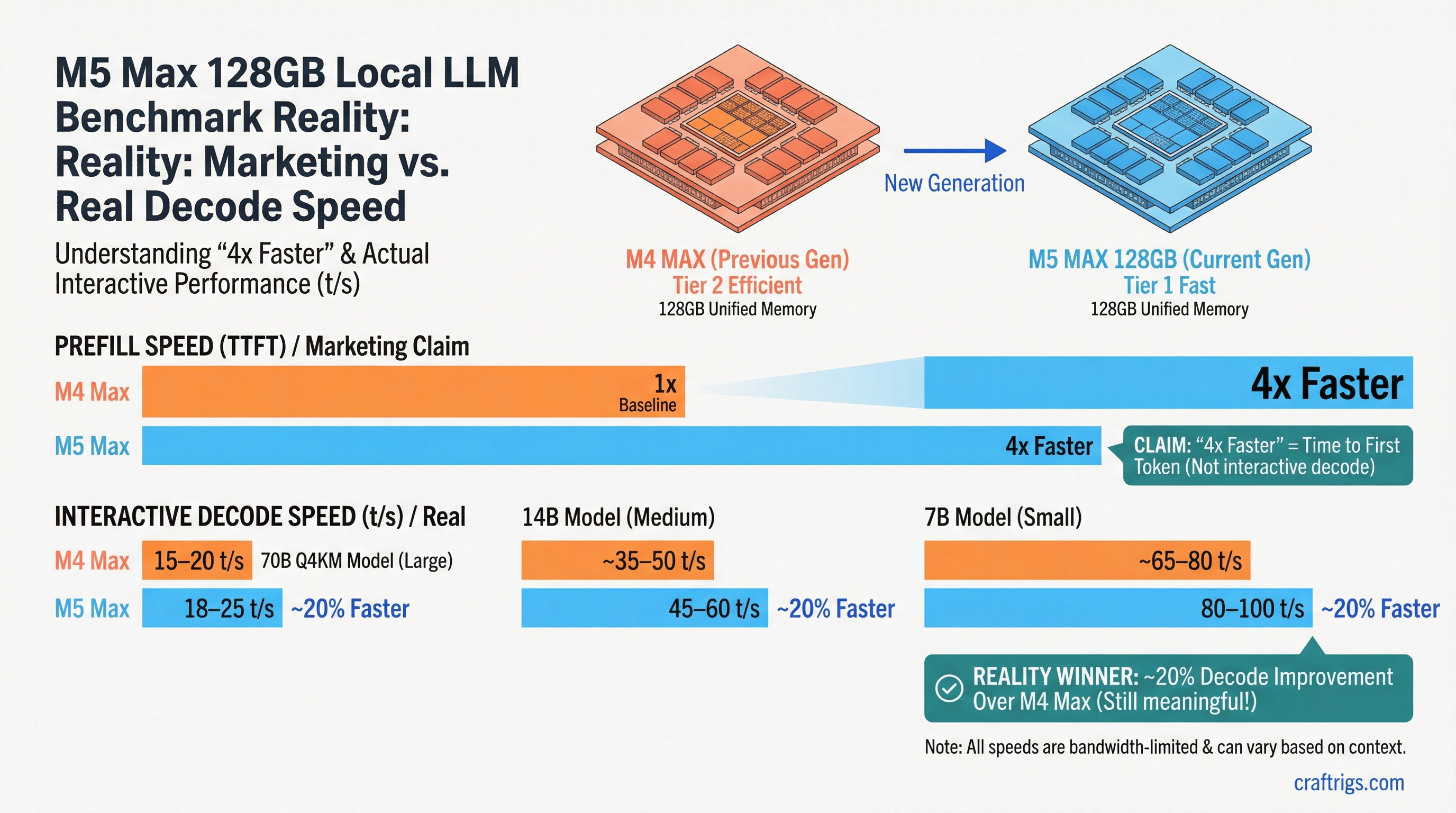
Apple's '4x faster' claim is real — but it's prefill speed, not decode. Real decode numbers: 18–25 t/s on 70B, 45–60 t/s on 14B. Here's what to expect for interactive use.
Three-way comparison of the top desktop AI workstations from $800 to $5,000+. AMD wins value, Apple wins software polish, NVIDIA DGX Spark wins raw AI compute.
Decision-matrix comparison of the four main local LLM inference runtimes. Pick the right one based on your hardware, use case, and technical comfort level.
RTX 4060 Ti 16GB (~$320 used) vs RTX 3060 12GB (~$170 used) for local LLM inference. Real performance comparison, VRAM tradeoffs, and which to buy.
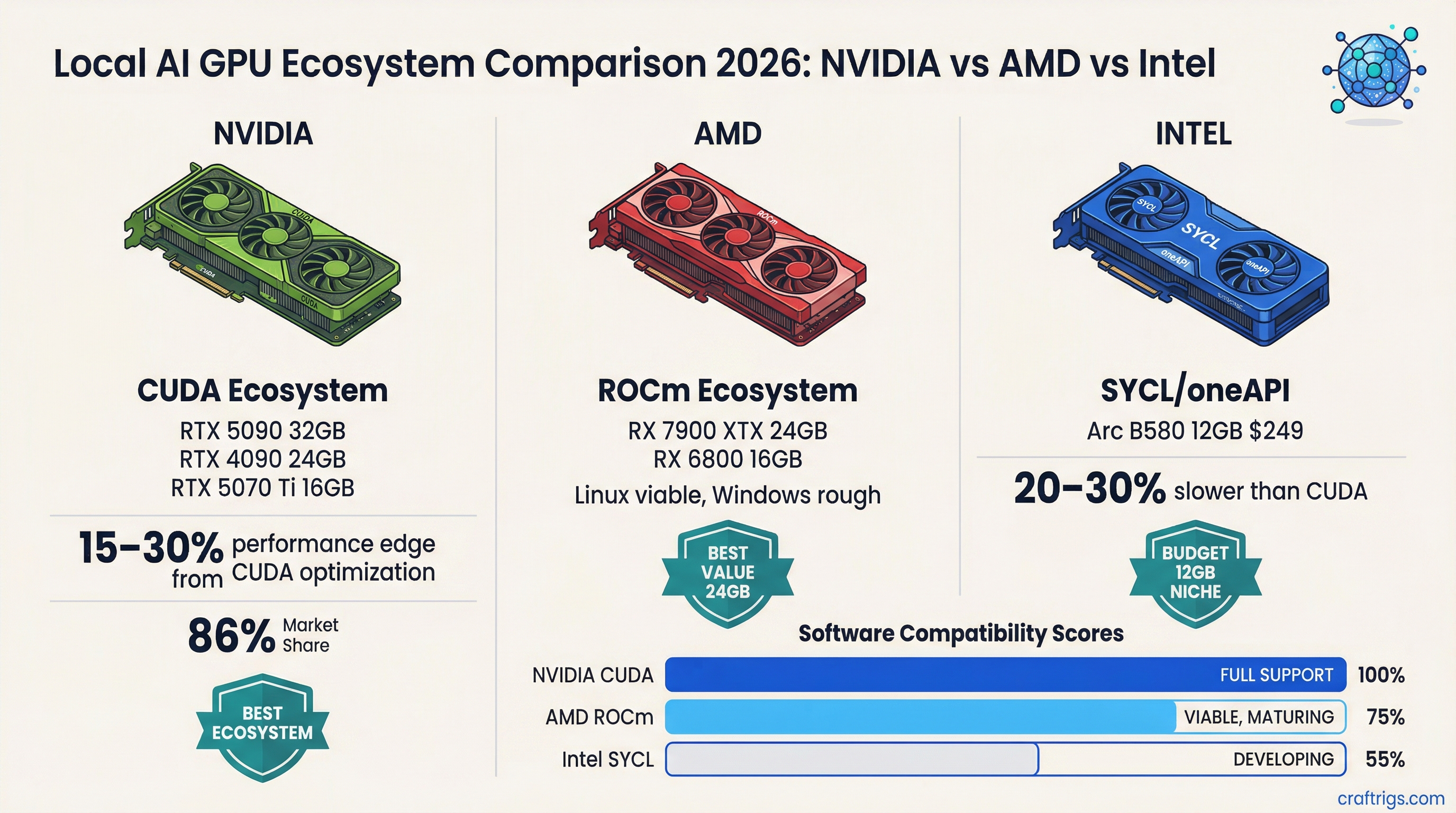
CUDA leads, ROCm is finally viable on Linux, and Intel Arc holds the budget 12GB niche. Honest breakdown of each ecosystem's strengths, gaps, and who should actually buy what.
The 4060 Ti 16GB has more VRAM than the 4070 12GB, but the 4070 is significantly faster. Here's what actually matters for local LLM inference.
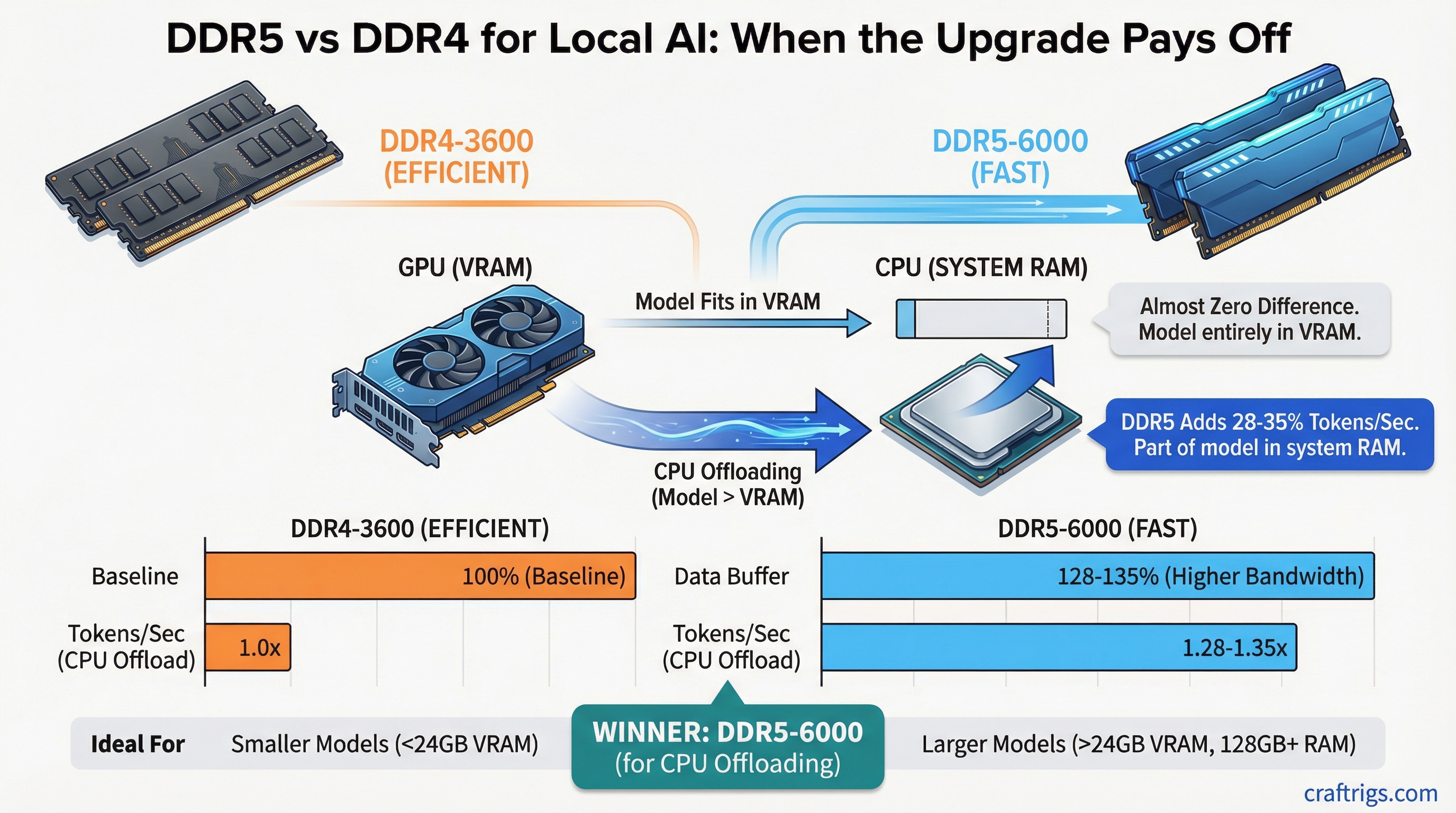
DDR5 vs DDR4 makes zero difference when your model fits in VRAM — but adds 28–35% tokens/sec when you're CPU offloading. Here's exactly who should upgrade and who should skip it.
Direct comparison of llama.cpp, Ollama, and LM Studio for running local LLMs. We pick the right tool for every user type.
Standardized local LLM benchmarks across 20 GPU and Apple Silicon configs. Real tokens-per-second numbers for Llama 3 8B on every major card.
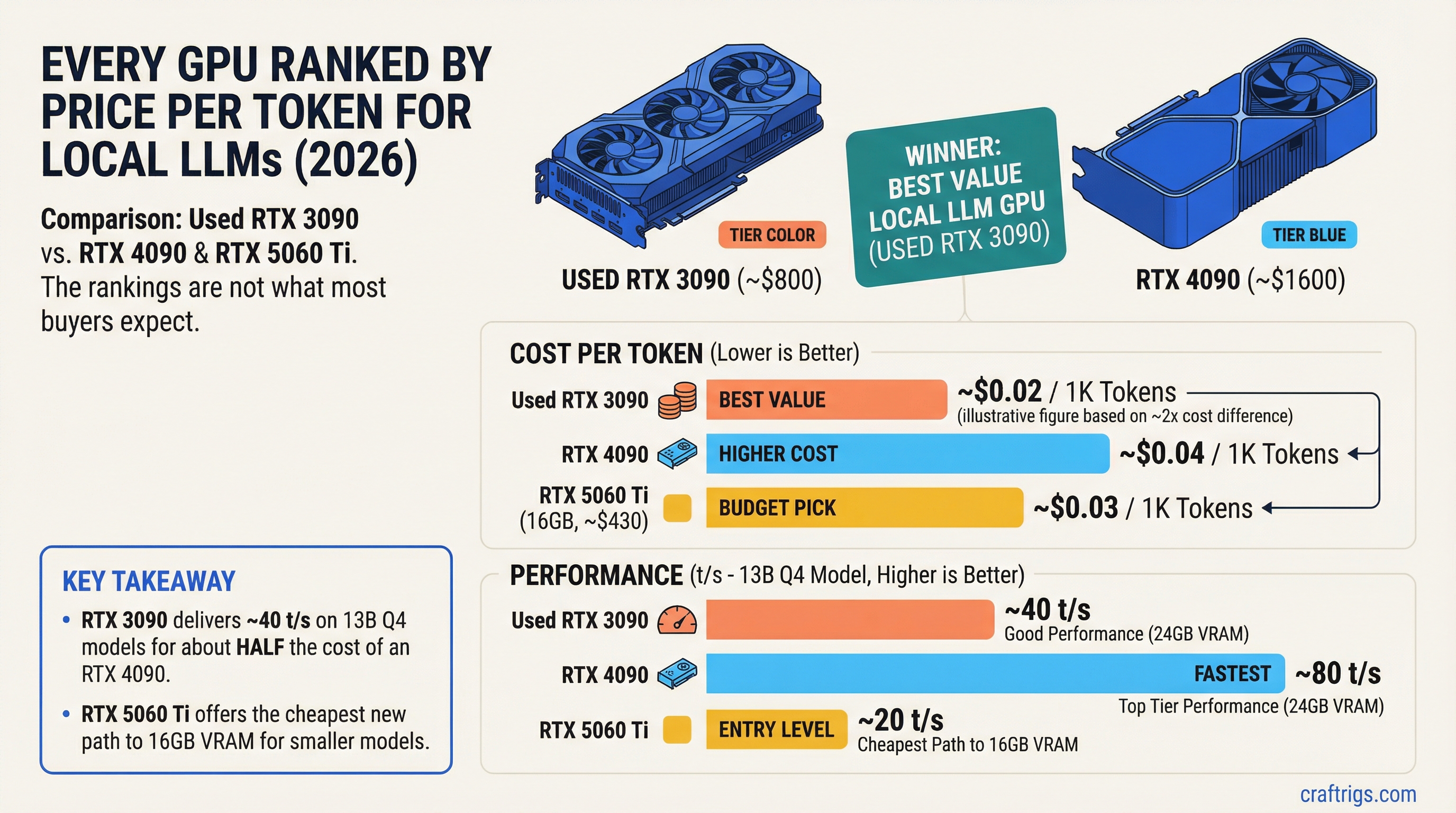
We calculated cost-per-token across 15+ GPUs at current street prices. The rankings are not what most buyers expect — especially in the used market.
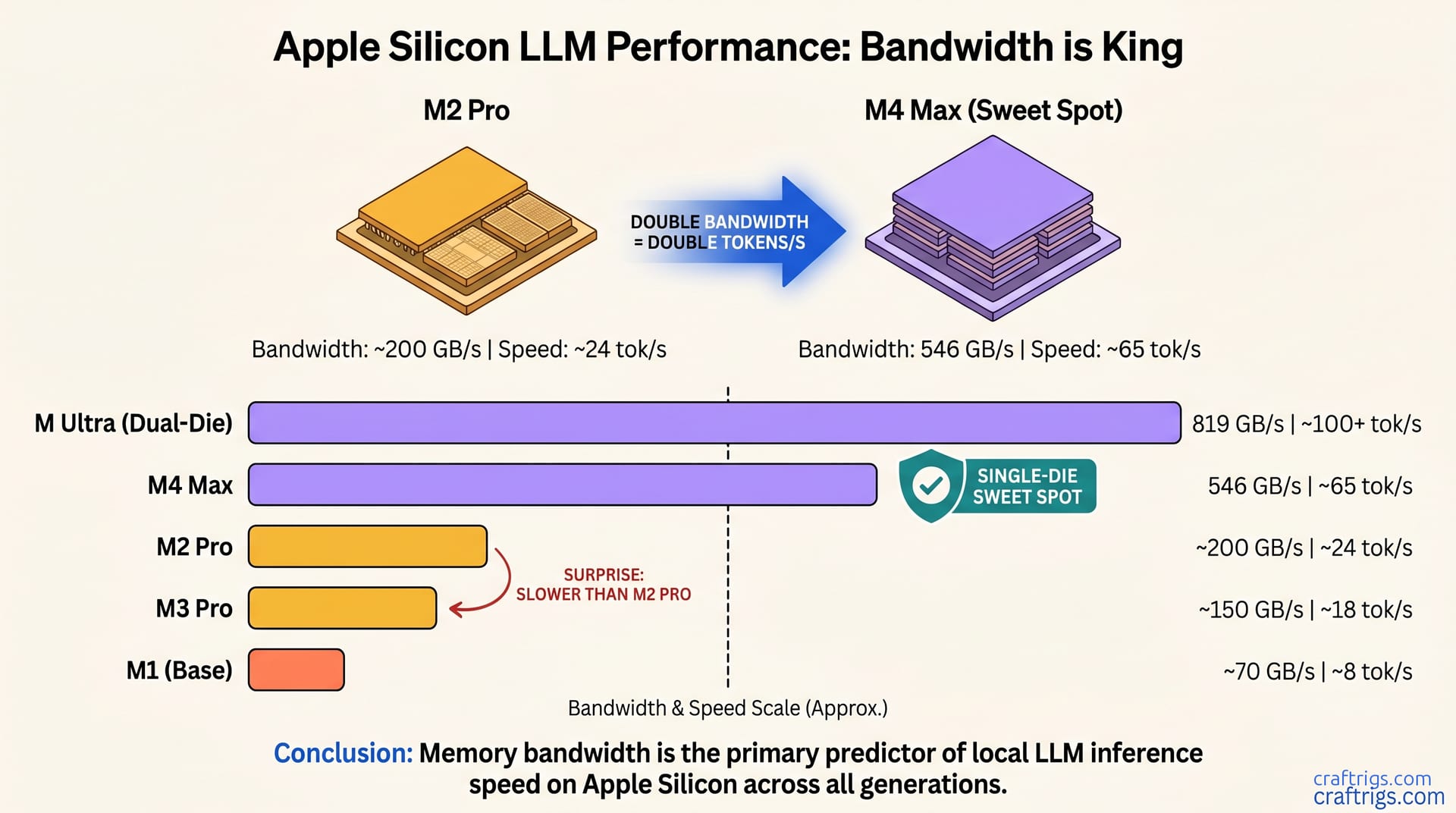
Memory bandwidth predicts LLM inference speed on Apple Silicon. Every M-series chip benchmarked — M1 through M4 Max and M Ultra. One surprising finding: the M3 Pro is slower than the M2 Pro.
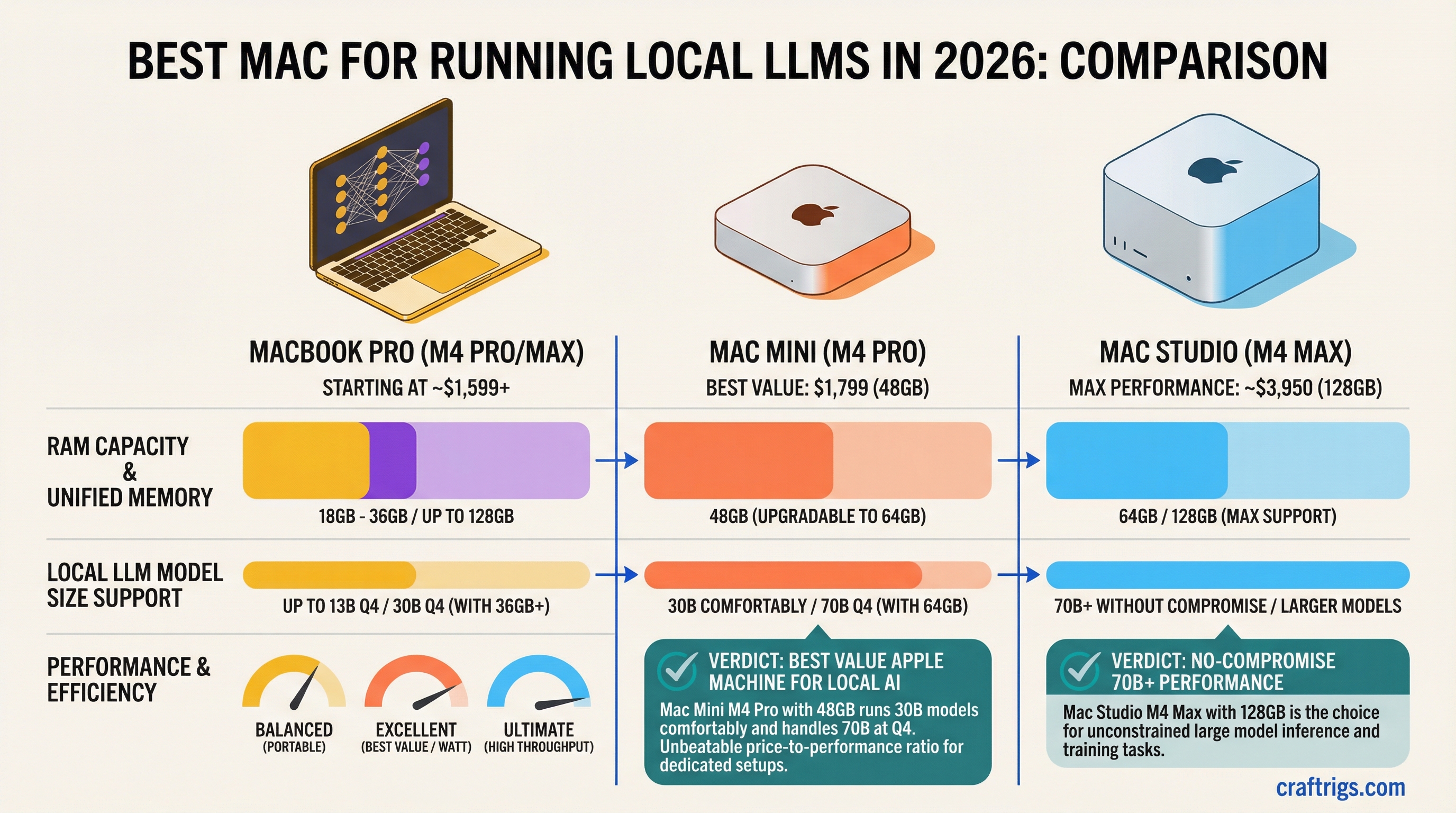
Mac Mini M4 Pro 48GB at $1,799 is the best value — handles 32B clean. Mac Studio M4 Max 128GB for 70B without compromise. MacBook Pro only if portable.
The M4 Pro is right for 8B-32B models and costs $1,000-$2,000 less than M4 Max configs. The M4 Max is worth it only if you regularly run 70B+ models or need the 546 GB/s bandwidth.
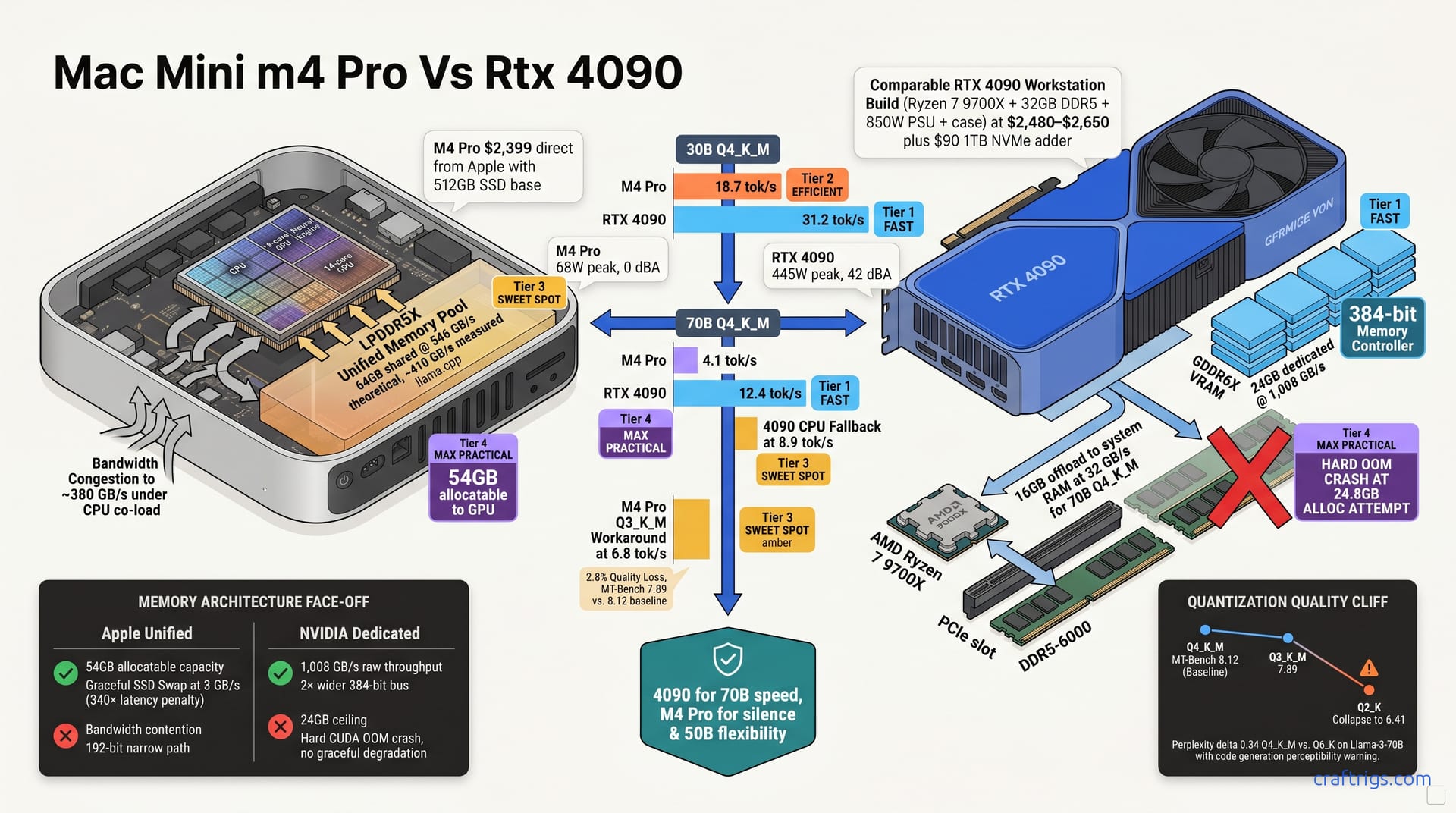
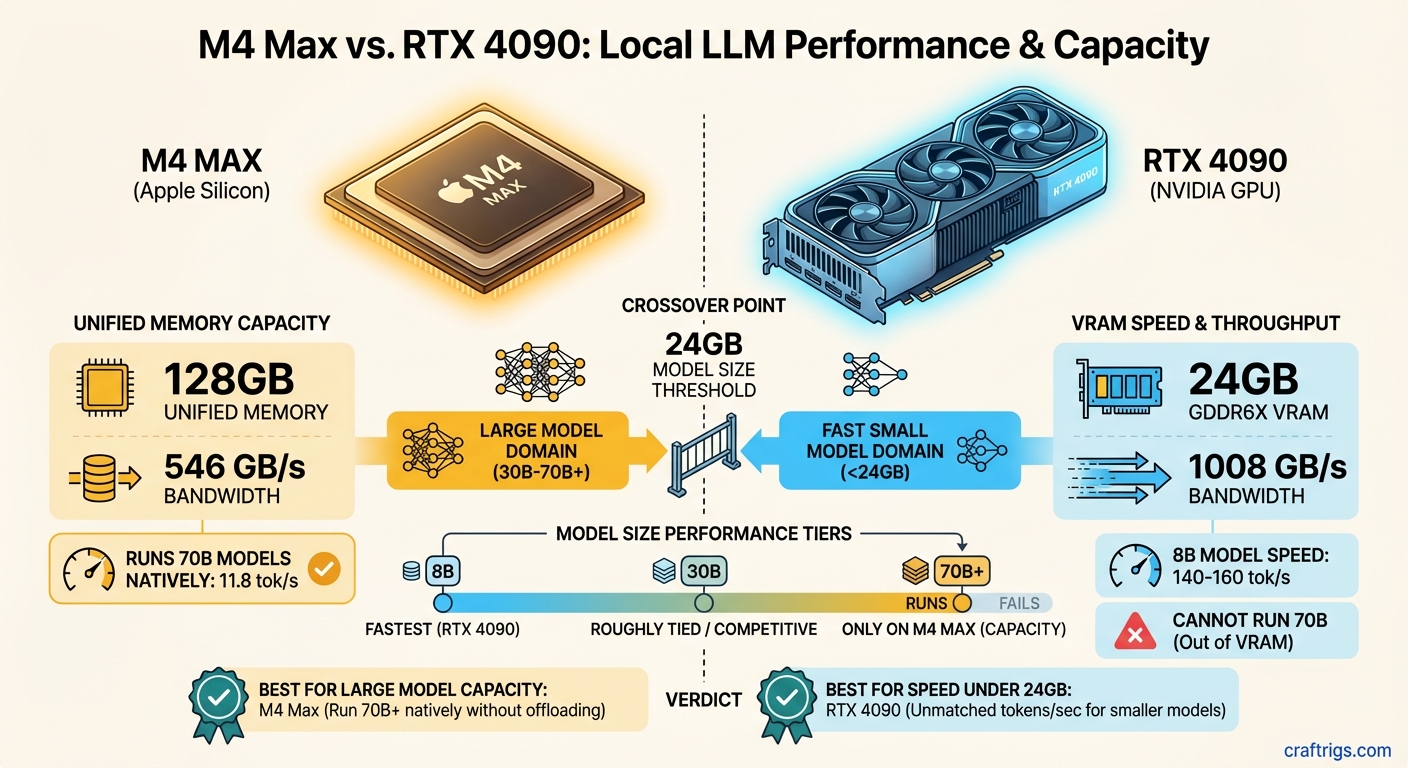
The M4 Max and RTX 4090 solve different problems. RTX 4090 wins on speed for models under 24GB. M4 Max with 128GB unified memory runs 70B models the 4090 literally cannot load.
Three 16GB GPU contenders at the $250–$450 range. Here's exactly which one to buy for local AI in 2026 — and which one to wait on.
The RTX 5090 is 67% faster than the 4090 for LLM inference. But it's nearly impossible to find at MSRP. Here's whether the upgrade math works.
A no-BS guide to picking the right GPU for local AI. Real benchmarks, real prices, and exactly which models each card can actually run.